






 Business
Trade & Industry
WTO urges Philippines to cut high trade costs through faster reforms
Business
Trade & Industry
WTO urges Philippines to cut high trade costs through faster reforms
WTO urges Philippines to cut high trade costs through faster reforms


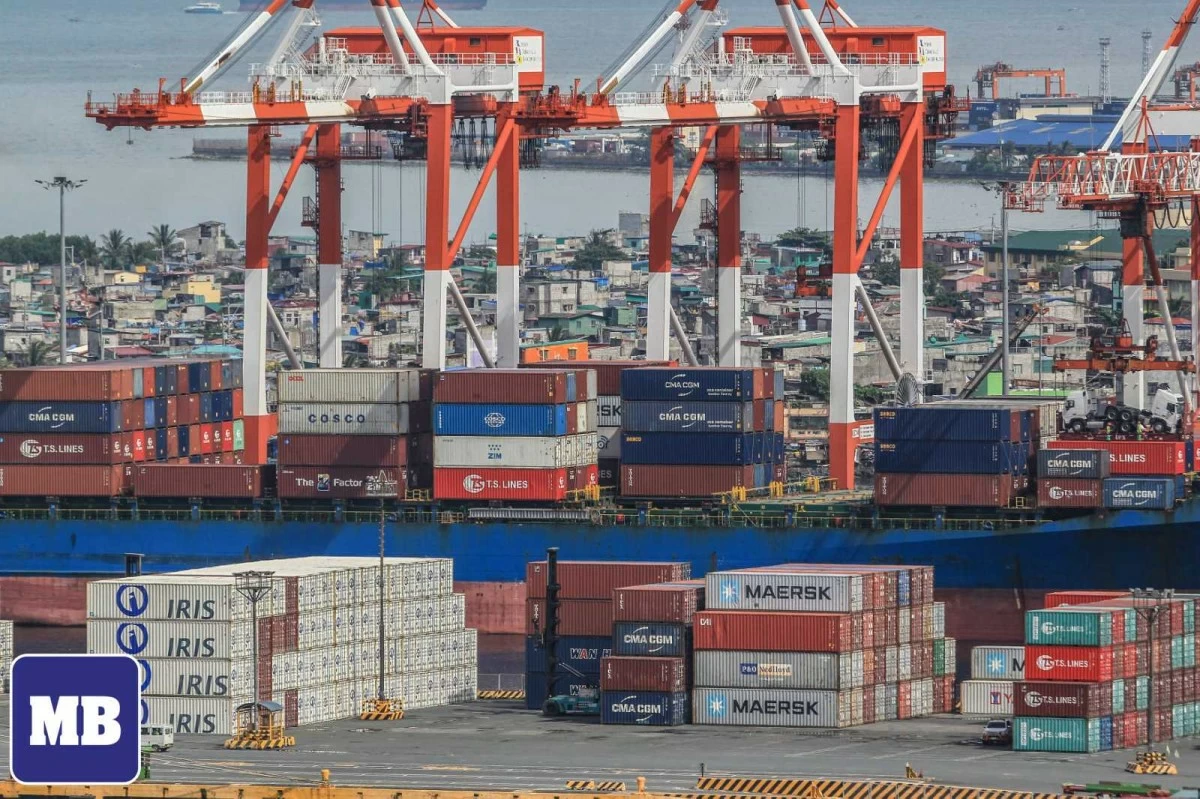
The World Trade Organization (WTO) has encouraged the Philippines to expedite the implementation of trade facilitation reforms to reduce excessive costs associated with trade, making its products more competitive on the global stage.
As part of its sixth Philippine trade policy review, the Geneva-based WTO said the country faces one of the highest trade costs in the world, driven largely by inadequate infrastructure and regulatory inefficiencies.
Citing data from the World Bank and the United Nations Economic and Social Commission for Asia and the Pacific (UNESCAP), the WTO said importing and exporting in the country are 20 percent more costly than in neighboring Southeast Asian countries.
These higher costs are seen to weigh heavily on the country’s inflation dynamics, especially since logistics account for more than a quarter of retail prices.
“Also, as a net importer of energy and food, the Philippines remains susceptible to external shocks impacting the supply of essential commodities,” the WTO said.
Since the WTO’s last review of the Philippines’ trade policies in 2018, it noted that the country has implemented a number of supply-side reforms aimed at reducing trade costs.
These reforms include streamlining of trade procedures, changes to government procurement rules, and removal of quantitative restrictions (QR) on rice importation, among others.
As trade costs remain elevated, the WTO said it is crucial for the government to fast-track trade reforms such as the long-delayed national single window-integrated trade facilitation platform (NSW-ITFP).
Expected to be fully operational by 2028, NSW-ITFP is a digital platform that would provide access to import-, export-, and transit-related processes.
While NSW-ITFP would enable faster transactions by reducing paperwork, it is also expected to crack down on smuggling and make trade more seamless.
In addition, the WTO recommended the establishment of non-preferential rules of origin to ensure transparent trade classification, as well as the revival of the unified logistics pass initiative to facilitate the unhampered movement of goods.
“These actions would further strengthen the trade regime, reduce trade costs, enhance competition, and enable the Philippines to fully realize the benefits of trade,” the WTO said.
For its part, the Philippine government said it is committed to driving a resilient and globally competitive trade sector through initiatives such as advancing a robust campaign strategy for local products.
Based on its report to the WTO, the government plans to leverage free trade agreements (FTAs) to help local firms grow and expand in the global export market.
“One of the strategies includes the advancement of purposive, assertive, and forward-looking FTA strategies to open new markets and to address trade-restricting non-tariff measures,” it said.
The government also intends to harness both local and foreign investments to expand trade, alongside driving inclusive growth and sustainability.
“Taken together, these directions reflect a whole-of-government approach to sustaining an open, competitive, and resilient economy that delivers tangible gains and opportunities for all Filipinos,” the Philippine government said.
The WTO’s trade policy review provides opportunities for members to engage with the Philippines on recent developments in its trade, investment, and economic policy framework, including reforms.