

ADVERTISEMENT

What if our kids got bored again? Why 'staring at the wall' may be good for them

A teenager's response to a social media ban for children under 16 raises a bigger question—Have today's children lost the gift of boredom?

Published Jun 25, 2026 11:16 am
"I'd stare at the wall."
It was a teenager's answer in a now-viral BBC interview about the proposed social media ban for children under 16 in the UK. When asked what she would do if she no longer had access to social media, she replied that she would simply stare at the wall.
The answer garnered many reactions, but it also prompted a bigger question. What do children do when outside of social media? Or even screentime?
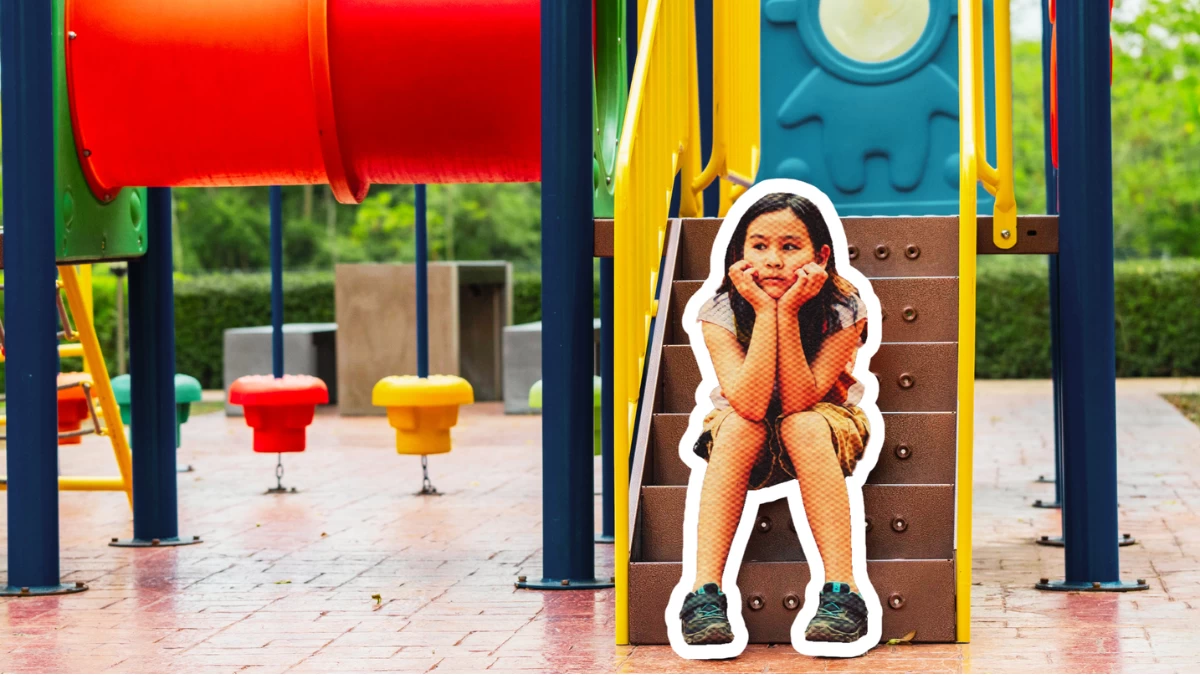
(Artwork: Nancy Marie Andam)
Many parents remember how they dealt with boredom when they were young. There were long car rides spent looking out the window and imagining shapes in the clouds. Rainy afternoons meant making up stories, drawing comics, building forts from pillows, or creating entire worlds with toys and cardboard boxes. We complained about being bored, but those moments rarely stayed empty for long because we allowed our imaginations to take over.
The case for boredom
Today's children are growing up in an overstimulated world where there is hardly any stillness. A video plays while waiting in line. A game occupies a car ride. A tablet appears during a lull in conversation.
Boredom has become something many adults instinctively try to fix.
According to developmental pediatrician Dr. Jack Herrin, perhaps we should rethink the way we view it. "When we were kids, we were not always filled with so much stimulation," he tells Manila Bulletin Lifestyle.
Herrin prefers the term "unstructured free play" over boredom. These are moments when children are not being told exactly what to do and are not constantly consuming content created by others.
"You need time to process everything you've learned throughout the day. You need time to think about the stuff you want to do." He points out that much of today's entertainment leaves little room for original thinking. "If you're just watching cartoons every day, none of that is your original thought anymore."
Unstructured moments allow children to experiment, make mistakes, and discover things on their own. Building a pillow fort that repeatedly collapses teaches problem-solving. Mixing crayons and unexpectedly discovering a new color creates a sense of wonder.
"Child development really thrives when a child has the time to plan things out for himself or herself through trial and error," he says.
When the mind wanders
Psychologist Elaine Ferrer agrees that boredom and daydreaming are far from wasted time.
"When the mind is allowed to wander, the brain isn't shut off. Children process experiences, reflect on what happened during the day, and make connections between ideas."
Daydreaming can help children become more self-aware and encourage imagination. "It allows children to mentally time-travel. They think about possibilities and imagine future scenarios."
The concern is not that children use technology. Experts say many have become accustomed to constant stimulation and rapid shifts in attention. The result? Slower moments can start to feel uncomfortable. "Boredom might feel more noticeable because it's different from their usual experience," Ferrer says.
Making room to wonder
Instead of immediately handing children a device whenever there is downtime, both experts encourage parents to make room for unstructured moments. That could mean playing games during long drives instead of scrolling through phones. It could be allowing children to invent their own games, draw, build something out of random materials at home, or simply sit quietly and think.
Ferrer suggests creating "anti-boredom lists" with children—screen-free activities they enjoy and can turn to whenever they feel they have nothing to do. Most importantly, she says parents should stop treating boredom like a problem.
"It's okay to be bored. It's a normal experience."
So let children stare at the wall. And perhaps, after a few minutes, they would start imagining stories, planning something new, replaying memories, or coming up with an idea that didn't exist before. Let their imaginations wander. They don't need another thing to consume. They simply need a little more room to wonder.

Related Tags

Parenting Social media ban
ADVERTISEMENT
.most-popular .layout-ratio{ padding-bottom: 79.13%; } @media (min-width: 768px) and (max-width: 1024px) { .widget-title { font-size: 15px !important; } }

{{ articles_filter_1561_widget.title }}

.most-popular .layout-ratio{ padding-bottom: 79.13%; } @media (min-width: 768px) and (max-width: 1024px) { .widget-title { font-size: 15px !important; } }

{{ static_articles_1562_widget.title }}

.most-popular .layout-ratio{ padding-bottom: 79.13%; } @media (min-width: 768px) and (max-width: 1024px) { .widget-title { font-size: 15px !important; } }

{{ articles_filter_1563_widget.title }}

{{ articles_filter_1564_widget.title }}

.mb-article-details { position: relative; } .mb-article-details .article-body-preview, .mb-article-details .article-body-summary{ font-size: 17px; line-height: 30px; font-family: "Libre Caslon Text", serif; color: #000; } .mb-article-details .article-body-preview iframe , .mb-article-details .article-body-summary iframe{ width: 100%; margin: auto; } .read-more-background { background: linear-gradient(180deg, color(display-p3 1.000 1.000 1.000 / 0) 13.75%, color(display-p3 1.000 1.000 1.000 / 0.8) 30.79%, color(display-p3 1.000 1.000 1.000) 72.5%); position: absolute; height: 200px; width: 100%; bottom: 0; display: flex; justify-content: center; align-items: center; padding: 0; } .read-more-background a{ color: #000; } .read-more-btn { padding: 17px 45px; font-family: Inter; font-weight: 700; font-size: 18px; line-height: 16px; text-align: center; vertical-align: middle; border: 1px solid black; background-color: white; } .hidden { display: none; }
function initializeAllSwipers() { // Get all hidden inputs with cms_article_id document.querySelectorAll('[id^="cms_article_id_"]').forEach(function (input) { const cmsArticleId = input.value; const articleSelector = '#article-' + cmsArticleId + ' .body_images'; const swiperElement = document.querySelector(articleSelector); if (swiperElement && !swiperElement.classList.contains('swiper-initialized')) { new Swiper(articleSelector, { loop: true, pagination: false, navigation: { nextEl: '#article-' + cmsArticleId + ' .swiper-button-next', prevEl: '#article-' + cmsArticleId + ' .swiper-button-prev', }, }); } }); } setTimeout(initializeAllSwipers, 3000); const intersectionObserver = new IntersectionObserver( (entries) => { entries.forEach((entry) => { if (entry.isIntersecting) { const newUrl = entry.target.getAttribute("data-url"); if (newUrl) { history.pushState(null, null, newUrl); let article = entry.target; // Extract metadata const author = article.querySelector('.author-section').textContent.replace('By', '').trim(); const section = article.querySelector('.section-info ').textContent.replace(' ', ' '); const title = article.querySelector('.article-title h1').textContent; // Parse URL for Chartbeat path format const parsedUrl = new URL(newUrl, window.location.origin); const cleanUrl = parsedUrl.host + parsedUrl.pathname; // Update Chartbeat configuration if (typeof window._sf_async_config !== 'undefined') { window._sf_async_config.path = cleanUrl; window._sf_async_config.sections = section; window._sf_async_config.authors = author; } // Track virtual page view with Chartbeat if (typeof pSUPERFLY !== 'undefined' && typeof pSUPERFLY.virtualPage === 'function') { try { pSUPERFLY.virtualPage({ path: cleanUrl, title: title, sections: section, authors: author }); } catch (error) { console.error('ping error', error); } } // Optional: Update document title if (title && title !== document.title) { document.title = title; } } } }); }, { threshold: 0.1 } ); function showArticleBody(button) { const article = button.closest("article"); const summary = article.querySelector(".article-body-summary"); const body = article.querySelector(".article-body-preview"); const readMoreSection = article.querySelector(".read-more-background"); // Hide summary and read-more section summary.style.display = "none"; readMoreSection.style.display = "none"; // Show the full article body body.classList.remove("hidden"); } document.addEventListener("DOMContentLoaded", () => { let loadCount = 0; // Track how many times articles are loaded const offset = [1, 2, 3, 4, 5, 6, 7, 8, 9, 10]; // Offset values const currentUrl = window.location.pathname.substring(1); let isLoading = false; // Prevent multiple calls if (!currentUrl) { console.log("Current URL is invalid."); return; } const sentinel = document.getElementById("load-more-sentinel"); if (!sentinel) { console.log("Sentinel element not found."); return; } function isSentinelVisible() { const rect = sentinel.getBoundingClientRect(); return ( rect.top < window.innerHeight && rect.bottom >= 0 ); } function onScroll() { if (isLoading) return; if (isSentinelVisible()) { if (loadCount >= offset.length) { console.log("Maximum load attempts reached."); window.removeEventListener("scroll", onScroll); return; } isLoading = true; const currentOffset = offset[loadCount]; window.loadMoreItems().then(() => { let article = document.querySelector('#widget_1690 > div:nth-last-of-type(2) article'); intersectionObserver.observe(article) loadCount++; }).catch(error => { console.error("Error loading more items:", error); }).finally(() => { isLoading = false; }); } } window.addEventListener("scroll", onScroll); });

Sign up by email to receive news.