







Macacua urges BARMM: Be ready vs El Niño
Published Jun 25, 2026 01:39 pm


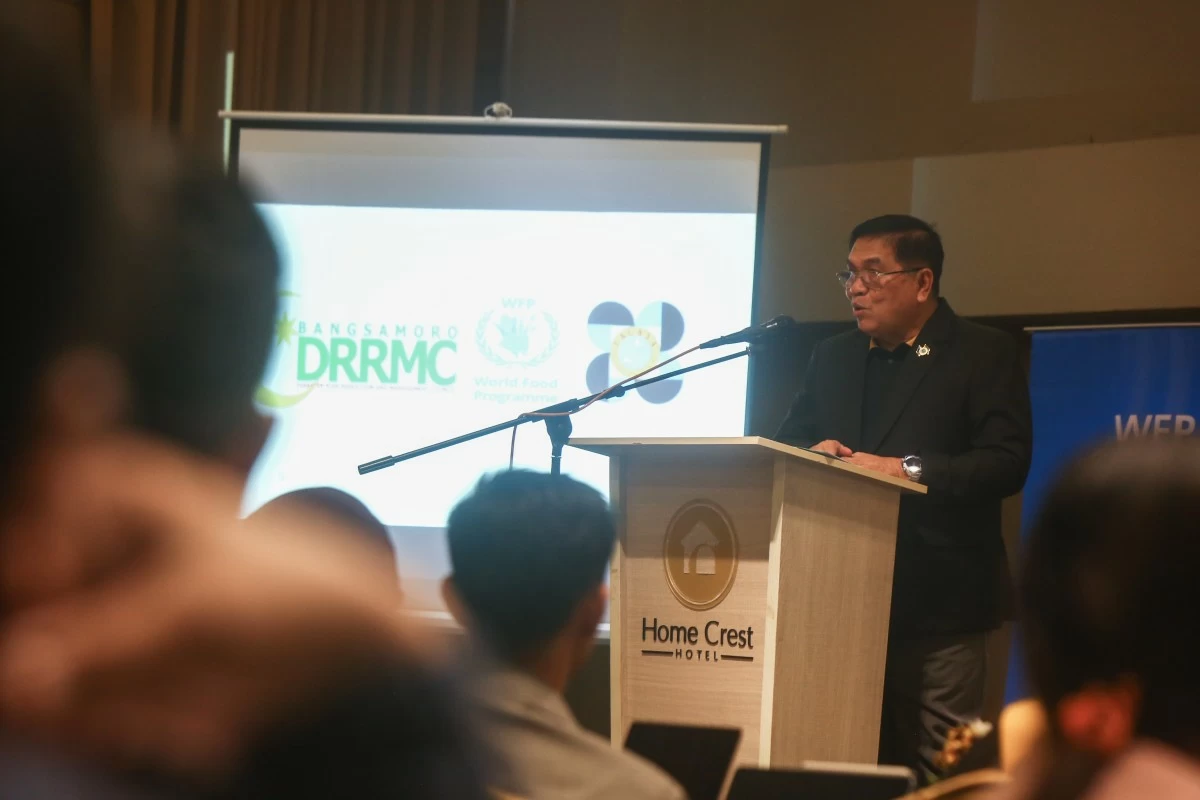
BARMM interim Chief Minister Abdulraof Macacua speaks before participants of the climate forum in Davao City on Wednesday, June 24. (Keith Bacongco)
DAVAO CITY – Bangsamoro Autonomous Region in Muslim Mindanao (BARMM) interim Chief Minister Abdulraof Macacua has urged key ministries in the region to closely work together to prepare communities against the possible adverse impact of the El Niño phenomenon.
Macacua issued the call on Wednesday, June 24, during the BARMM Regional Climate Forum participated in by representatives from key agencies and local government units in the region.
He acknowledged that the dry spell is already affecting the region and cited climate models indicating that El Niño will intensify through the latter part of 2026 and persist into early 2027.
“Sana hindi totoo ito. Pero kapag nagkatotoo ito, talagang malaking problema,” Macacua told the participants in jest.
(I hope this is not true. This is a big problem if it is)
The Philippine Atmospheric, Geophysical, and Astronomical Services Administration (PAGASA) announced that there is an 80 percent probability that current conditions will develop into a full-blown El Niño.
PAGASA added that the event may persist until early 2027, warning that El Niño could become a “strong” to “very strong” event by the end of the year.
El Niño is the warm phase of the El Niño Southern Oscillation and is characterized by warmer-than-average sea surface temperatures (SSTs) in the Central and Eastern Equatorial Pacific and generally, cooler-than-average sea surface temperature over the Philippine Sea, according to the State weather bureau’s briefer.
Amid the threat of El Niño, Macacua underscored the vital roles of the Ministry of Science and Technology (MOST) and the Ministry of Agriculture, Fisheries, and Agrarian Reform (MAFAR) in crafting measures to safeguard communities.
“Our strategy against this severe 2026 El Niño relies on the synchronized strength of science and agriculture,” he said.
Macacua noted that MOST will lead the region in technological foresight and research to map out vulnerable groundwater tables. “Science must serve as our look-out, turning raw data into early warnings so our Bangsamoro communities are never caught unprepared.”
MOST Minister Baileng S. Mantawil said that on top of the priority list discussed in the forum was the hastening of ongoing inventory of crucial water sources to be able to craft solutions.
Mantawil added that they are looking to complete the inventory as early as July.
She emphasized that the effort involves comprehensive assessments of surface and groundwater resources, including availability, quality, and usage patterns.
Once the inventory is completed, Mantawil said that the baseline data will be utilized to develop more effective strategies for water allocation, management, and conservation.
Aside from water security, the Bangsamoro Action Plan (BAP) on El Niño also includes food security, energy security, health, and public safety, she said.
Mantawil said that aside from MOST, other lead agencies in implementing the BAP are MILG, MSSD, and the Bangsamoro READi.
BARMM has been under a state of calamity due to the impact of the dry spell and global oil crisis.
MAFAR said the dry spell has affected over 800 rice and corn farmers in Maguindanao del Sur and Maguindanao del Norte.
Macacua urged MAFAR to translate early warnings into direct, life-saving agricultural interventions. He added that MAFAR should continue to be aggressive in establishing preventive and mitigating measures to aid the region's agricultural sector's resilient approach to avert food crisis in the region.
“For the Bangsamoro people, agriculture and fisheries are not just economic indicators. They are our food security, our culture, and our survival,” Macacua said.
Through the forum, he added, key agencies and the World Food Programme will be able to close the capacity gaps that have made local leaders and farmers vulnerable.
“We are transforming science from abstract numbers into actionable, localized advisories that protect a farmer's yield and a fisher's livelihood.”