






Manila Bulletin
 Business
Banking & Finance
GSIS budgets ₱69 million for Mindanao earthquake damage claims
Business
Banking & Finance
GSIS budgets ₱69 million for Mindanao earthquake damage claims
Business
Banking & Finance
GSIS budgets ₱69 million for Mindanao earthquake damage claims
GSIS budgets ₱69 million for Mindanao earthquake damage claims
Published Jun 25, 2026 06:18 am


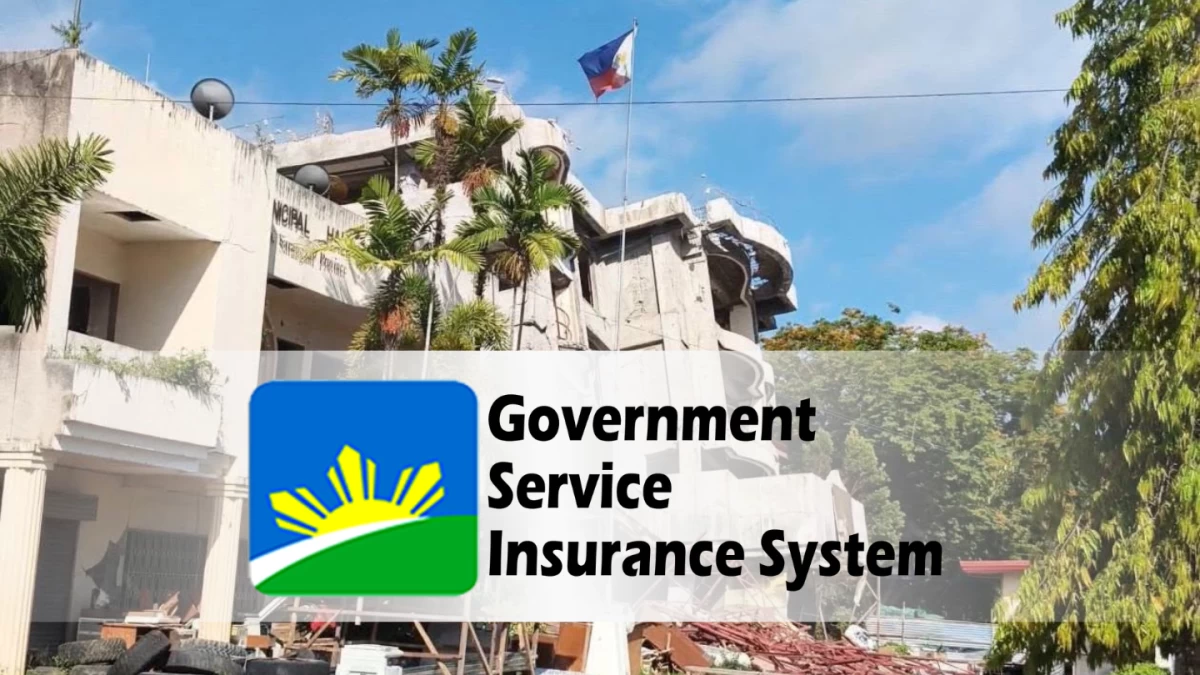
The Government Service Insurance System (GSIS) set aside an initial ₱69.1 million in loss reserves to cover reported damages to government properties following the magnitude 7.8 earthquake that struck Mindanao.
In a statement, GSIS said the state pension fund’s allocation follows a directive from President Ferdinand Marcos Jr. for a coordinated government response to help local government units and state agencies restore public services.
Alongside the funding, GSIS is pushing government entities to review and update their insurance policies, warning that outdated valuations leave key public assets underinsured against escalating climate and natural disaster risks.
Initial damage reports submitted to the state insurer span 4,403 insurance policies, representing a total sum insured of ₱23.59 billion. General Santos City holds the largest concentration of affected, insured government properties, according to GSIS data.
“The earthquake highlights the critical role of insurance in protecting government assets and ensuring the continuity of public services,” GSIS President and General Manager Wick Veloso said. “We encourage agencies to regularly review their coverage and asset valuations so they can recover more quickly when disasters occur.”
The ₱69.1 million reserve serves as a preliminary buffer as state agencies continue to inspect the integrity of buildings, equipment, and public facilities.
GSIS noted that the loss reserve figure will likely adjust upward as additional damage reports arrive and field assessments wrap up.
To accelerate the payout timeline, the GSIS General Santos branch deployed teams for on-site inspections at Mindanao State University–General Santos, the General Santos City Government, and the Municipality of Alabel. The teams are working with local officials to validate property damage and expedite the claims process.
Veloso noted that natural disasters frequently expose significant gaps in state insurance coverage, particularly when agencies fail to adjust insured values to reflect current asset replacement costs.
He cautioned that relying on legacy valuations leaves agencies vulnerable to funding shortfalls during reconstruction.
“Insurance should not be treated as a compliance requirement alone,” Veloso said. “It is a risk management tool that enables agencies to restore damaged facilities and resume services without placing additional strain on public funds.”
As the primary insurer for the Philippine government, GSIS is mandated to protect public infrastructure against catastrophic risks, including earthquakes, typhoons, floods, and fires.