






Manila Bulletin
 Business
Trade & Industry
ERC defends controversial move allowing private power lines in Philippines
Business
Trade & Industry
ERC defends controversial move allowing private power lines in Philippines
Business
Trade & Industry
ERC defends controversial move allowing private power lines in Philippines
ERC defends controversial move allowing private power lines in Philippines
Published Jun 25, 2026 02:45 pm


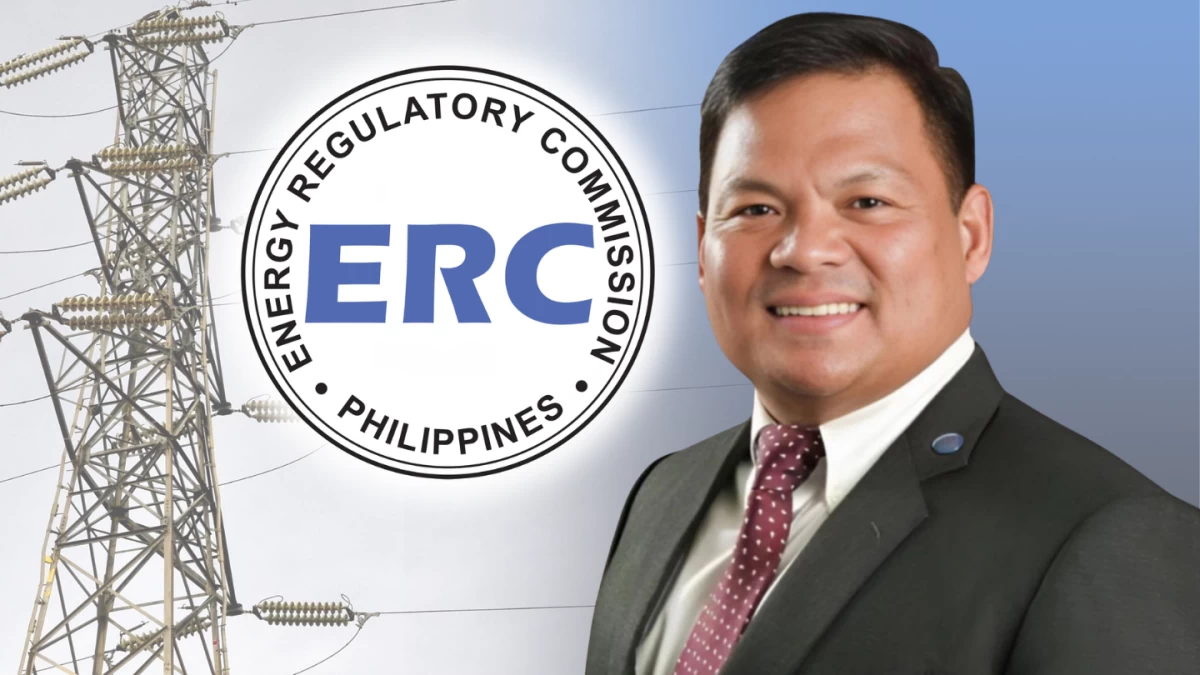
Atty. Francis Saturnino “Nino” Juan
The Energy Regulatory Commission (ERC) defended a contentious new policy that strips the state transmission operator of its exclusive building rights, arguing the shift is vital to unlock more than 1,000 megawatts of stranded renewable energy.
Speaking at a European Chamber of Commerce of the Philippines meeting, ERC Chairman Francis Saturnino Juan dismissed concerns that allowing power generators and the National Transmission Co. (TransCo) to construct their own transmission lines would trigger a “messy” and uncoordinated expansion of the country’s power grid.
Critics have warned that bypassing the centralized grid operator could spark technical failures, stranded assets, and bitter cost-recovery disputes.
But Juan countered that the regulator is not creating a “free-for-all” environment where developers can lay lines unchecked. Instead, the ERC’s new framework segregates projects into distinct and highly regulated categories. These include associated transmission lines directly tied to new generation facilities and priority projects designated by TransCo as critical for maintaining system integrity.
To prevent grid complications, the ERC mandated that every single project secure regulatory approval before breaking ground, with all infrastructure legally required to conform to the strict technical benchmarks of the Philippine Grid Code.
The policy also addresses a key bottleneck in the Philippines’ transition toward cleaner energy. Under the previous regime, multi-billion peso solar and wind projects frequently sat idle, fully constructed but unable to feed electricity into the grid because the government-backed operator lagged on building the necessary connection lines.
The regulator also brushed aside fears that the policy could saddle consumers with unnecessary costs or result in abandoned, unutilized infrastructure. Juan emphasized that the framework targets projects with guaranteed, committed purposes rather than speculative plays.
Furthermore, all capital expenditure and financial arrangements will face rigorous ERC audits. Developers will have to prove that their construction costs are reasonable before they are permitted to recover a single centavo from consumers through electricity tariffs.
“The investor building a grid connection to their solar farm has a direct economic interest in ensuring that asset performs,” Juan said, noting that private capital faces natural pressure to ensure efficiency. “There is natural alignment between the builder and the outcome.”
While acknowledging that a fragmented grid poses a theoretical risk, the ERC maintained that strict regulatory oversight will mitigate any operational chaos. The commission pledged to continuously monitor the rollout and refine the rules as needed, but insisted that the sluggish status quo had become untenable for the developing economy.
“Leaving more than 1,000 megawatts of approved solar projects stranded because we are waiting for a single entity to build the connections is not a tolerable status quo,” Juan said.