






Manila Bulletin
 Business
Trade & Industry
Electrified car sales double in Philippines as traditional auto sales plunge
Business
Trade & Industry
Electrified car sales double in Philippines as traditional auto sales plunge
Business
Trade & Industry
Electrified car sales double in Philippines as traditional auto sales plunge
Electrified car sales double in Philippines as traditional auto sales plunge
Published Jun 25, 2026 04:15 pm


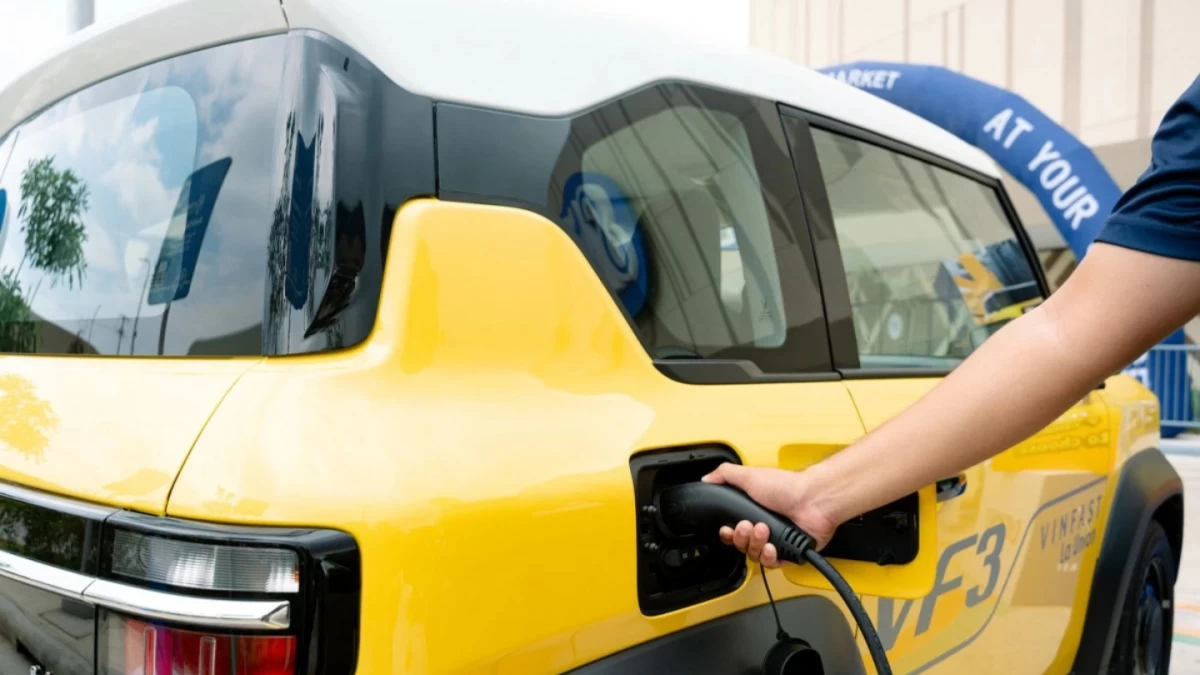
Electric vehicles (xEVs) seized nearly 15 percent of the automotive industry’s total sales from January to May, driven by high fuel prices, while purchases of traditional gas-powered cars continued to plummet.
A joint report by the Chamber of Automotive Manufacturers of the Philippines Inc. (CAMPI) and the Truck Manufacturers Association (TMA) showed that overall vehicle sales plunged 12 percent to 167,234 units in the first five months of the year from 190,429 units in the same period last year.
Commercial vehicles, which account for nearly 80 percent of total sales, fell 11 percent to 134,882 units by the end of May from 151,704 units the previous year.
Likewise, passenger vehicle sales declined 16 percent to 32,442 units in the reference period from 38,725 units.
In contrast, xEV sales more than doubled to 24,356 units in the five-month period from 10,431 units last year, pushing their market share up to 14.6 percent from 5.5 percent a year earlier.
Hybrid EVs (HEVs) were the highest-selling xEVs through May, with sales surging nearly 80 percent to 15,299 units from the 8,534 units sold a year ago. This was followed by battery EVs, whose sales expanded 193 percent to 5,294 units from 1,779 units. Meanwhile, plug-in HEV sales ballooned to 3,853 units from just 118 units last year.
Among CAMPI-TMA members, Toyota Motor Philippines Corp. remained the country’s leading automotive firm with a 49.77 percent market share, representing 83,282 units sold. Mitsubishi Motors Philippines Corp. followed with a 17.80 percent market share, while Suzuki Philippines Inc. held 4.62 percent, Ford Motor Company Philippines Inc. took 3.67 percent, and Nissan Philippines Inc. captured 3.63 percent.
For May alone, total vehicle sales reached 33,532 units, down 15.7 percent from the 39,775 units recorded in the same month last year. However, on a month-on-month basis, CAMPI-TMA data showed that vehicle sales in May improved by nearly a quarter from the 27,089 units recorded in April.
CAMPI President Jose Maria Atienza said May's figures reflect a potential rebound in the country’s vehicle market, though he noted that energy efficiency remains a dominant factor in consumer purchasing decisions.
"The accelerating growth trend [for xEVs] is only held back by availability constraints resulting from the sudden surge in demand," Atienza said.
With elevated fuel prices stemming from conflicts in the Middle East prompting higher xEV adoption, Atienza previously noted that dealership supply has been insufficient to meet the strong demand.
For the full year, he projects the country’s overall vehicle sales will decline by 5 to 8 percent—a more optimistic outlook than the group’s initial forecast of an 8- to 10-percent drop.
“Our overall market outlook has improved, with actual vehicle sales performing better than previously expected despite the fuel crisis," Atienza said.
Last year, the country’s total vehicle sales dipped 0.8 percent to 463,646 units from the record 467,252 units moved in 2024, according to CAMPI-TMA data.