






Manila Bulletin
 Philippines
National
DFA chief: Philippines must speak with one voice on foreign policy
Philippines
National
DFA chief: Philippines must speak with one voice on foreign policy
Philippines
National
DFA chief: Philippines must speak with one voice on foreign policy
DFA chief: Philippines must speak with one voice on foreign policy
Lazaro says the DFA remains the primary agency for implementing President Marcos' foreign policy and coordinating the country's diplomatic messaging abroad
Published Jun 25, 2026 04:48 pm


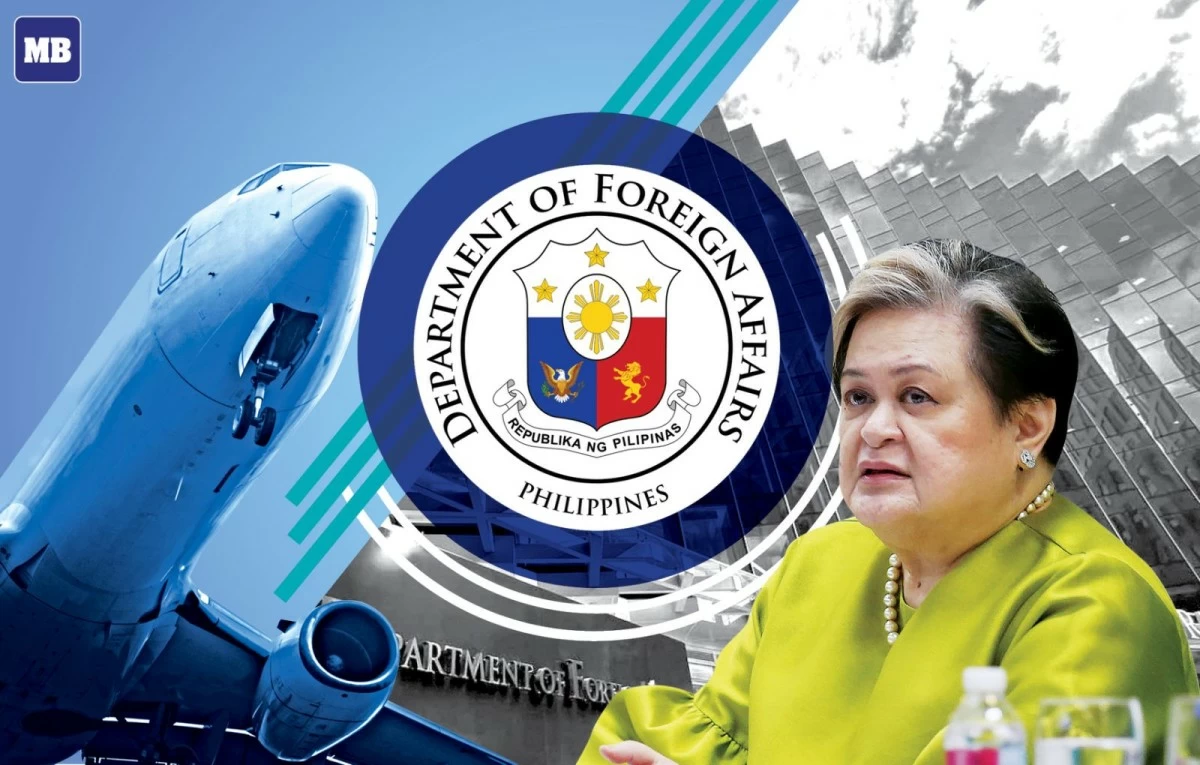
Foreign Affairs Secretary Ma. Theresa P. Lazaro reaffirmed the Department of Foreign Affairs' role as the primary agency responsible for implementing President Marcos' foreign policy and stressed that the Philippines must ‘speak with one voice’ in international affairs during the department's 128th founding anniversary celebration. (DFA/MB Visual Content Group)
Foreign Affairs Secretary Ma. Theresa P. Lazaro reaffirmed that the Department of Foreign Affairs (DFA) remains the primary agency responsible for implementing President Ferdinand Marcos Jr.'s foreign policy, stressing that the Philippines must "speak with one voice" in its engagement with the international community.
Speaking during the DFA's 128th founding anniversary celebration on June 23, Lazaro said the President alone sets the country's foreign policy direction, while the DFA serves as the government's principal instrument for carrying it out.
"As we execute this mandate, we must remain absolutely clear about our institutional role. The President is the sole architect of our foreign policy; it is his vision that sets our country's course," Lazaro said.
"But let there be no ambiguity: the Department of Foreign Affairs is the premier and primary instrument for the execution of that policy," she added.
Primacy of the DFA
Lazaro emphasized that while foreign affairs increasingly require coordination among government agencies, the DFA must remain at the center of shaping and conveying the Philippines' position abroad.
"In a world where global issues intersect with every domestic agency, we must assert and maintain the primacy of the DFA in coordinating and articulating our nation's voice abroad," Lazaro said.
"When the Philippines speaks to the world, it must speak with one voice—a professional, disciplined, and strategic voice crafted and delivered by this Department," she added.
Lazaro stressed the need for a unified and consistent foreign policy, saying the DFA must remain the country's authoritative voice in dealing with the international community.
"We cannot afford fragmented messaging," Lazaro said, warning that conflicting statements could undermine the country's credibility and diplomatic standing.
"Our partners, and indeed the international community, must know that the road to Philippine foreign policy begins and ends with the DFA," she added.
National interest remains guiding principle
Lazaro said the DFA will continue pursuing a pragmatic, national interest-driven foreign policy focused on protecting Philippine sovereignty, expanding economic opportunities, and safeguarding overseas Filipinos.
"True diplomacy is rarely found in the limelight. It is forged in the quiet, relentless work we do every single day," Lazaro said.
"It is found in defending our sovereignty, expanding economic horizons for our people, and ensuring the safety of millions of our overseas Filipinos," she added.
The DFA chief cited the recent release of 24 Filipino detainees from Russia, including six whom she personally welcomed home, as an example of diplomacy producing concrete results through sustained engagement between the Philippine government and its foreign counterparts.
"This breakthrough did not happen by chance," Lazaro said, noting that it was the "result of deliberate, high-level engagement" raised directly by President Marcos with Russian President Vladimir Putin during their bilateral meeting.
"This is Philippine diplomacy in its truest form—quiet, persistent, principled, and life-changing," she added.
Strong institutions support effective diplomacy
Lazaro said the DFA has undertaken reforms over the past year to strengthen its capacity to carry out the country's foreign policy, including organizational restructuring, improved fiscal management, and digital modernization.
"Over the past year, we have embarked on a deliberate thrust to rebuild, strengthen, and modernize our institution," Lazaro said.
"We have initiated a strategic reorganization, streamlining our offices to eliminate redundancies, enhance responsiveness, and ensure that our diplomatic assets yield the highest strategic returns for our country," she added.
Among the department's recent achievements, she cited its recognition as the No. 1 Most Improved Agency by the Anti-Red Tape Authority (ARTA), its leadership in digital procurement recognized by PhilGEPS, and the renewal of its ISO 9001:2015 certification.
Lazaro said these reforms are intended to ensure that the DFA remains an effective and credible institution in representing the country's interests abroad.
Continuing Philippine engagement abroad
"A pragmatic foreign policy also means having the maturity to view both our victories and our setbacks with equal composure," Lazaro said.
Lazaro acknowledged the Philippines' unsuccessful bid for a non-permanent seat on the United Nations Security Council earlier this month, saying the experience provided valuable lessons and would not diminish the country's commitment to multilateral diplomacy and international law.
"A missed bid is not a failure of purpose; it is a lesson in contemporary geopolitical realities," Lazaro said.
"We have analyzed the results, absorbed the lessons, and we will continue to engage the multilateral system with a sharper, more strategic edge. Our commitment to international law and global peace remains undiminished," she added.
Looking ahead, she said the DFA remains focused on the Philippines' ASEAN chairship, describing it as a major responsibility that will require professionalism, unity, and sustained diplomatic engagement.
"Our diplomatic calendar demands our utmost focus," Lazaro said, noting that the Philippines' ASEAN chairship is "in full swing" and will continue through the end of the year.
"This is a monumental, historic responsibility," Lazaro said, stressing that as chair, the Philippines is "leading the region through complex, turbulent waters—driving economic integration, fostering regional stability, and championing ASEAN centrality."
Lazaro also underscored the need for the Philippines to be prepared to navigate an increasingly uncertain global environment, urging the country's foreign service to remain steadfast and united as it faces growing diplomatic challenges.
"The global horizon remains turbulent, and the demands on our foreign service will only grow heavier," Lazaro said. "Together, let us be the anchor that holds our nation fast, and the sail that carries her forward," she ended.