






Manila Bulletin
 Philippines
National
Marcos backs bigger LGU share as NTA rises to record P1.32 trillion in 2027
Philippines
National
Marcos backs bigger LGU share as NTA rises to record P1.32 trillion in 2027
Philippines
National
Marcos backs bigger LGU share as NTA rises to record P1.32 trillion in 2027
Marcos backs bigger LGU share as NTA rises to record P1.32 trillion in 2027
Published Jun 24, 2026 08:57 am
|
Updated Jun 24, 2026 06:51 pm


At A Glance
- Local government units (LGUs) will receive a record P1.32 trillion in National Tax Allotments (NTA) in 2027, up by P129.32 billion from the previous year.
- Executive Secretary Ralph Recto said President Marcos views the allocations as the people's entitlement and a key tool for strengthening local governance.
- The increase comes on top of the record P57.87-billion Local Government Support Fund earmarked for 2026.
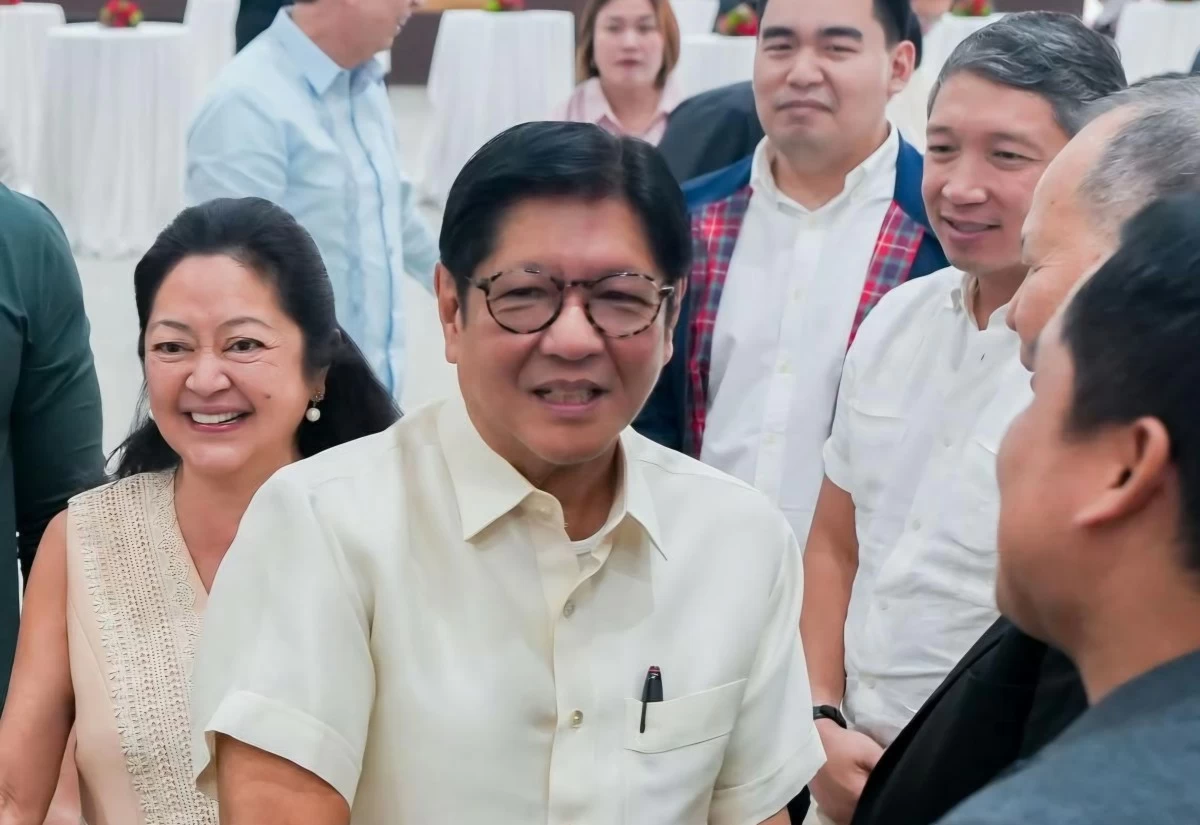
President Ferdinand 'Bongbong' Marcos Jr. (Facebook)
Local government units (LGUs) across the country will receive a record P1.32 trillion in National Tax Allotments (NTA) in 2027, as President Marcos continues to push for stronger local governance and greater participation of local governments in national development.
In a statement, Executive Secretary Ralph Recto said the 2027 NTA will increase by P129.32 billion from the previous year's allocation and is expected to be among the largest spending items in the proposed national budget.
"As a former local executive official himself, the President sees and honors these as people's entitlements. These are guaranteed plowbacks that will go from big cities to the remotest barangays," Recto said on Wednesday, June 24.
Officially known as National Tax Allotments, the allocations represent the share of LGUs from national tax collections and are computed based on collections made three years earlier, as required by law.
Recto said the allocation formula is fixed by law and cannot be altered.
"Ang sabi kasi ng batas at mga reglamento na ang dividends ng mga lokal na pamahalaan ay batay sa koleksyon ng mga pambansang buwis (The law and regulations state that the dividends of local governments are based on national tax collections),” he said.
Among biggest items in 2027 budget
The Department of Budget and Management (DBM) is finalizing the proposed 2027 national budget, which President Marcos is expected to submit to Congress within 30 days after delivering his State of the Nation Address (SONA) on July 26.
Under the allocation formula, provinces will receive P303.56 billion, cities another P303.56 billion, municipalities P448.84 billion, and barangays P263.97 billion.
The distribution is based primarily on population and land area.
Recto noted that larger land areas result in higher allocations for some local government units.
For 2026, Davao City received the biggest city allocation at P10.1 billion, nearly 15 percent higher than the previous year.
In Metro Manila, Quezon City received P9.82 billion, Manila P6.09 billion, Caloocan City P5.5 billion, Taguig City P4.4 billion, and Pasig City P3.05 billion.
"So next year, may increase na naman hindi lang sila, pero lahat ng LGU (So next year, not only they, but all LGUs will receive increases),” Recto said.
Of the P1.32-trillion allocation, P990.68 billion will come from collections of the Bureau of Internal Revenue (BIR), P329.09 billion from the Bureau of Customs (BOC), and P63.6 million from other collections certified by the Bureau of the Treasury.
The NTA increase follows the continued growth of government tax collections and the implementation of the Supreme Court's Mandanas-Garcia ruling, which expanded the revenue base used in computing LGU shares.
More funds for local projects
Recto said the Marcos administration is complementing the NTA increase with a record P57.87-billion Local Government Support Fund (LGSF) for 2026.
"The conventional and traditional thinking is that the NTA for LGUs is enough. But the President said we should tap the expertise and resources of LGUs in implementing national projects and programs," he said.
According to Recto, President Marcos has consistently emphasized that national government projects and local government initiatives should not be treated separately.
"In many meetings, he said that treating national government projects as separate from local government projects is a false dichotomy. Kaya may pivot sa LGU na gawing katuwang sila sa mga pagpapatupad ng mga proyekto (That is why there is now a pivot toward LGUs, making them partners in implementing projects),” he said.
One example is the Department of Education's partnership with local governments to address the country's classroom shortage by allowing LGUs to implement school infrastructure projects.