






Manila Bulletin
 Business
Trade & Industry
Gov't rolls out QR-enabled work licenses for Grab, JoyRide, delivery riders
Business
Trade & Industry
Gov't rolls out QR-enabled work licenses for Grab, JoyRide, delivery riders
Business
Trade & Industry
Gov't rolls out QR-enabled work licenses for Grab, JoyRide, delivery riders
Gov't rolls out QR-enabled work licenses for Grab, JoyRide, delivery riders
Published Jun 24, 2026 03:50 pm


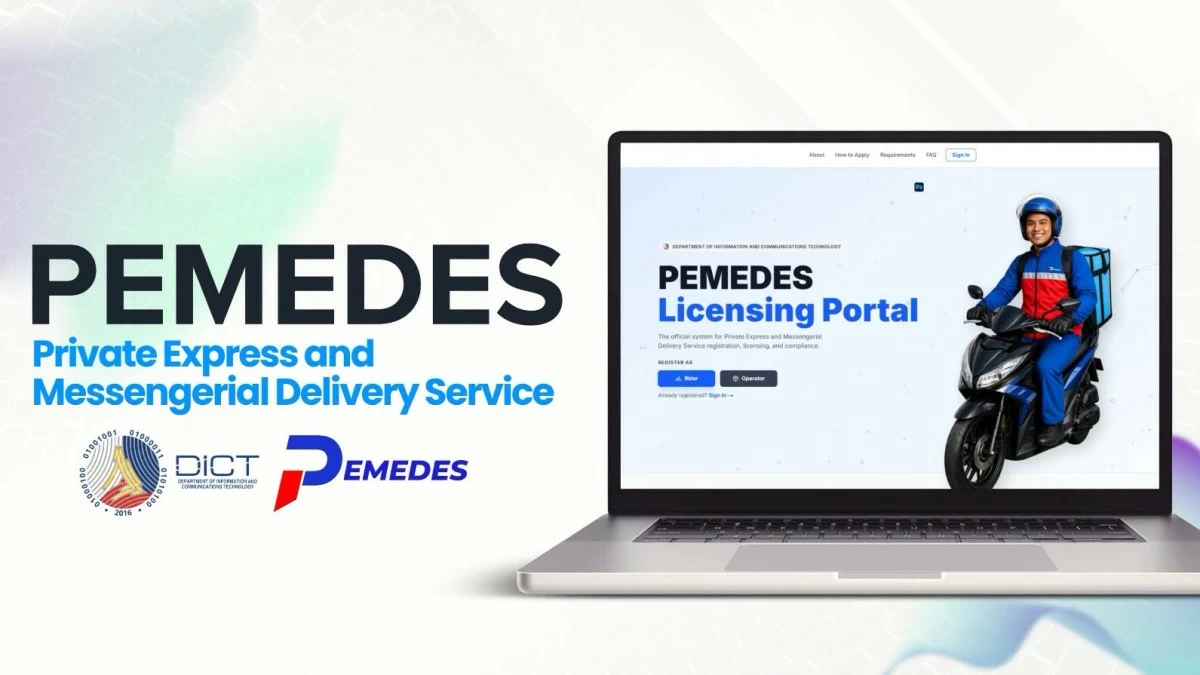
The government launched a digital identification system for delivery couriers, moving to tighten oversight and curb rampant fraud in the rapidly expanding e-commerce market that has outpaced traditional regulatory frameworks.
The Department of Information and Communications Technology (DITC) debuted the Messenger Work License Virtual ID during the Phase 2 rollout of its Private Express and Messengerial Delivery Service licensing portal in Quezon City.
The initiative marked the government’s most aggressive push yet to formalize a sprawling, fragmented gig economy workforce that has become vital to domestic retail logistics.
The updated digital portal integrates the Philippine Statistics Authority’s e-Verify system, utilizing facial recognition and biometric databases to cross-reference applicants with the national identity registry.
The automated platform employs artificial intelligence for data extraction and document processing, allowing delivery riders and operators to secure real-time approvals and QR-enabled credentials online.
Major logistics and ride-hailing operators, including Foodpanda, LBC Express Holdings Inc., Flash Express, and JoyRide, attended the launch, signaling industry compliance with the new standard.
The regulatory tightening comes as the government attempts to balance consumer safety with the financial realities of low-income gig workers. Delivery couriers in the Philippines earn an average of approximately ₱17,000 a month, rendering them vulnerable to fuel price shocks and rising operational costs. Earlier this year, the tech agency used preliminary registry data to distribute targeted fuel subsidies and cash relief to more than 100,000 riders amid fluctuating global energy prices.
“Through the PEMEDES licensing portal, we are making delivery services more professional, more accountable, and more secure for everyone,” DICT Secretary Henry Aguda said during the launch.
The move addresses long-standing vulnerabilities in the local logistics chain, where anonymous or unverified riders have occasionally been linked to e-commerce scams, cargo theft, and fake cash-on-delivery transactions. Undersecretary Faye Condez-de Sagon, who oversees the agency’s postal regulation division, said the system was designed specifically to establish a baseline of accountability and consumer trust across the digital marketplace.
The digital registry is now live and accessible to operators and independent couriers nationwide via the government's dedicated web portal.