







Designing everyday spaces that matter
ASDA 2026 names Filipino designer Patricia Danielle Malijan as its Asia-Pacific Grand Prize winner for a design rooted in family, care, and everyday living
Published Jun 24, 2026 10:49 am


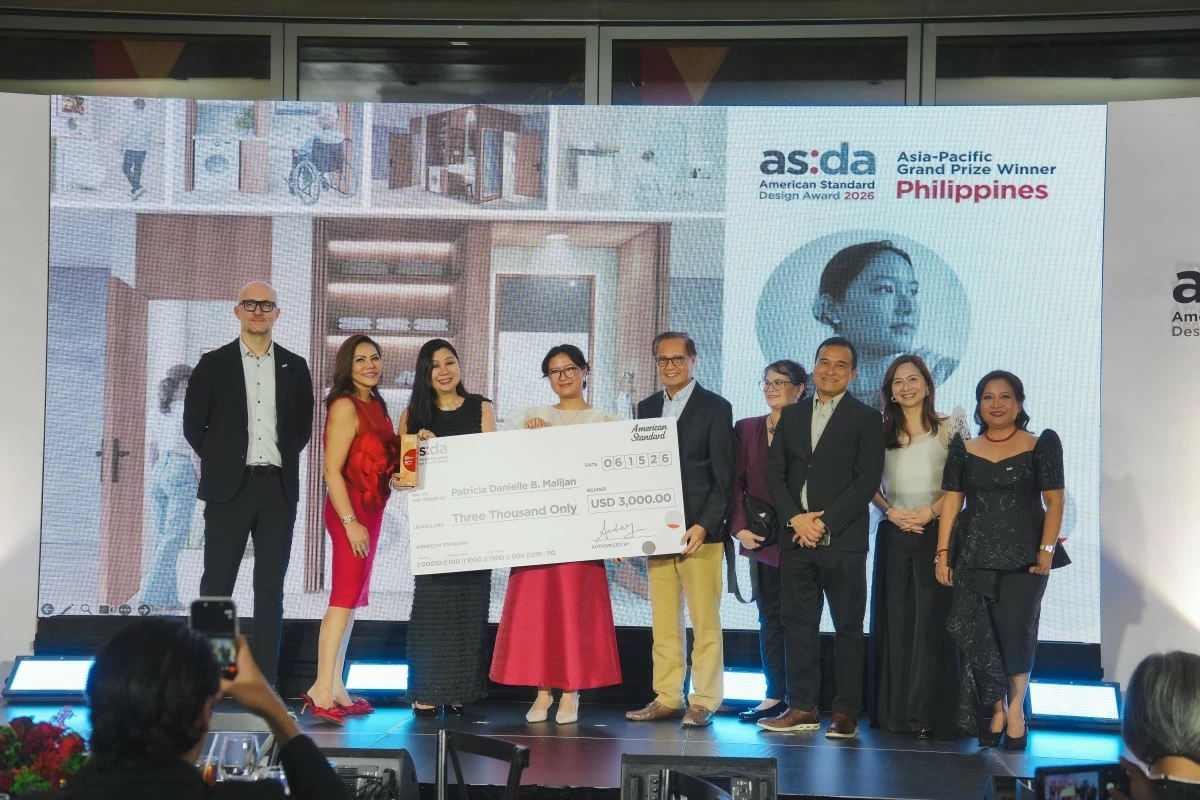
Patricia Danielle Malijan of De La Salle-College of Saint Benilde celebrates her winning moment on stage with Lixil executives and Philippine judges. (Photo: American Standard)
Some of the spaces we use most are often the ones we notice the least. Woven into daily routines, they quietly shape comfort, well-being, and human connection. Recognizing their impact, American Standard launched the American Standard Design Award (ASDA) 2026 Residential Bathroom Design Competition, challenging young designers to rethink the role of bathrooms in modern homes.
Under the theme "Inspiring Everyday Living," participants were tasked with creating practical solutions for multi-generational families, balancing creativity, accessibility, and functionality while responding to the realities of daily life.

Antoine Besseyre des Horts, leader, Global Design Asia; Audrey Yeo, leader, LWT APAC; and Liz Cancino, leader, Project Channel, LWT APAC, led the event in support of emerging designers through the American Standard Design Award (ASDA) platform. (Photo: American Standard)
Over the years, ASDA has evolved into a platform for emerging design talent across the region. Reflecting on that journey, Audrey Yeo, leader, LWT APAC of LIXIL, shared, “When we first started ASDA, we had a very simple vision: to create a dedicated platform that would support and nurture the next generation of design talent across Asia. At the time, it was something new, and we did not know what to expect. But thanks to the overwhelming support of the architecture and design community, ASDA has grown into a platform that continues to inspire young designers around the world.”
The competition drew entries from Cambodia, Laos and Myanmar, Indonesia, the Philippines, Thailand, and Vietnam, with submissions evaluated by a panel of Asia-Pacific design experts based on purposeful design, inviting style, originality and feasibility. National first-prize winners included Bounpaserth Mienglavanh of the National University of Laos for "Light of Thought," Gabriel Procellia of Ciputra University for "The Water Table: Infrastructure of Care," Jinjuta Chomputsa of Chulalongkorn University for "Seamless Living, Every Stage of Life," and Nguyen Ngoc Chung of Hanoi University of Civil Engineering for "The Jar."
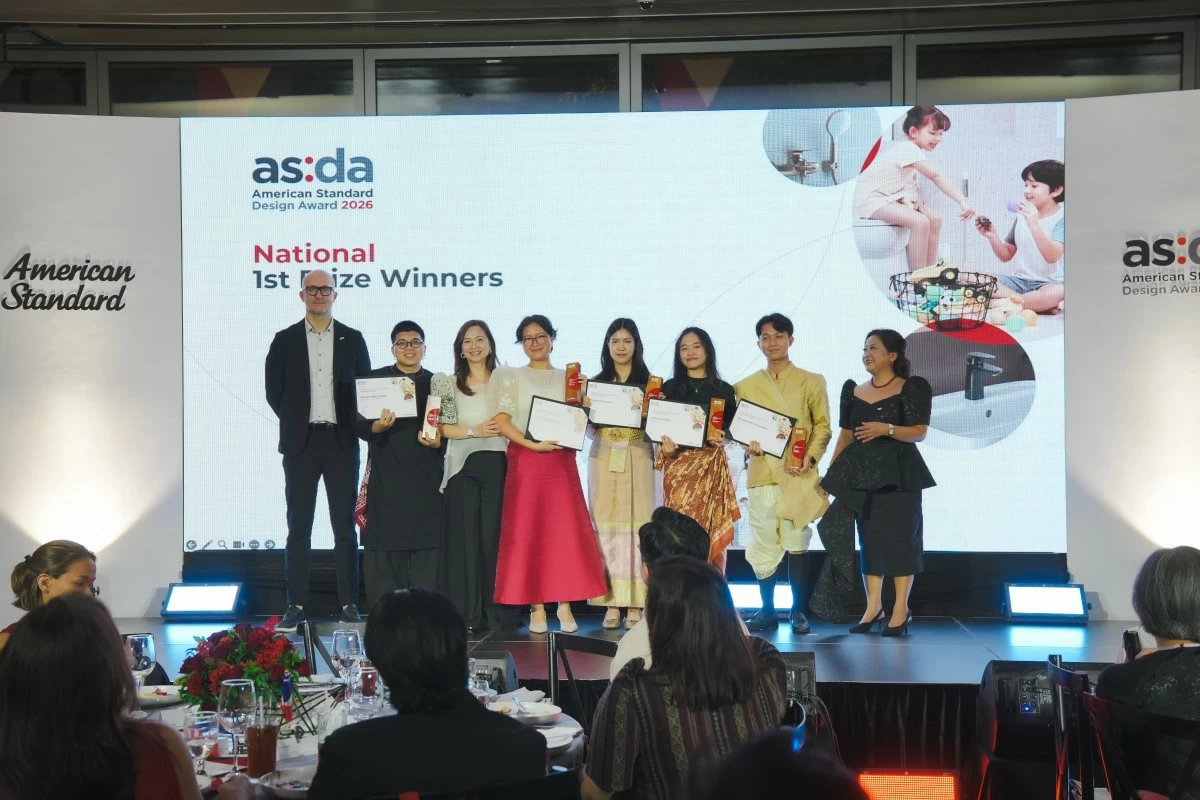
National first-prize winners Nguyen Ngoc Chung of Vietnam, Patricia Danielle Malijan of the Philippines, Jinjuta Chomputsa of Thailand, Gabriel Procellia of Indonesia, and Bounpaserth Mienglavanh of Indochina are recognized during the ASDA competition, alongside Antoine Besseyre des Horts, Audrey Yeo, and Liz Cancino. (Photo: American Standard)
Emerging above the national winners was Philippine representative Patricia Danielle Malijan of De La Salle-College of Saint Benilde, whose project, “The Humble Home: Quiet Simplicity,” earned the Asia-Pacific Grand Prize. Inspired by Filipino family living, the design stood out for its thoughtful approach to shared spaces, flexibility, and everyday functionality.
Design rooted in Filipino family life
For Patricia Danielle Malijan, good design begins with understanding how people live. Growing up in a multi-generational household, she saw how daily routines often require consideration for others and adaptation to different needs. These observations shaped her approach to ASDA 2026 and informed her view of the bathroom as a shared space that should better support everyday life.Her winning design maximizes a compact seven sqm footprint through clearly defined zones for bathing, washing, storage, laundry, and toilet. Accessibility features such as handrails, a foldable shower seat, and strategically placed storage are integrated into the layout, while durable materials were selected to ensure long-term functionality and ease of maintenance.
The concept was also influenced by the works of Fernando Amorsolo, whose paintings often depict scenes of everyday life filled with warmth and community. Malijan said she was particularly drawn to how “multi-generational Filipinos [were] sharing a space in harmony and peace,” a feeling she hoped to translate into her design.
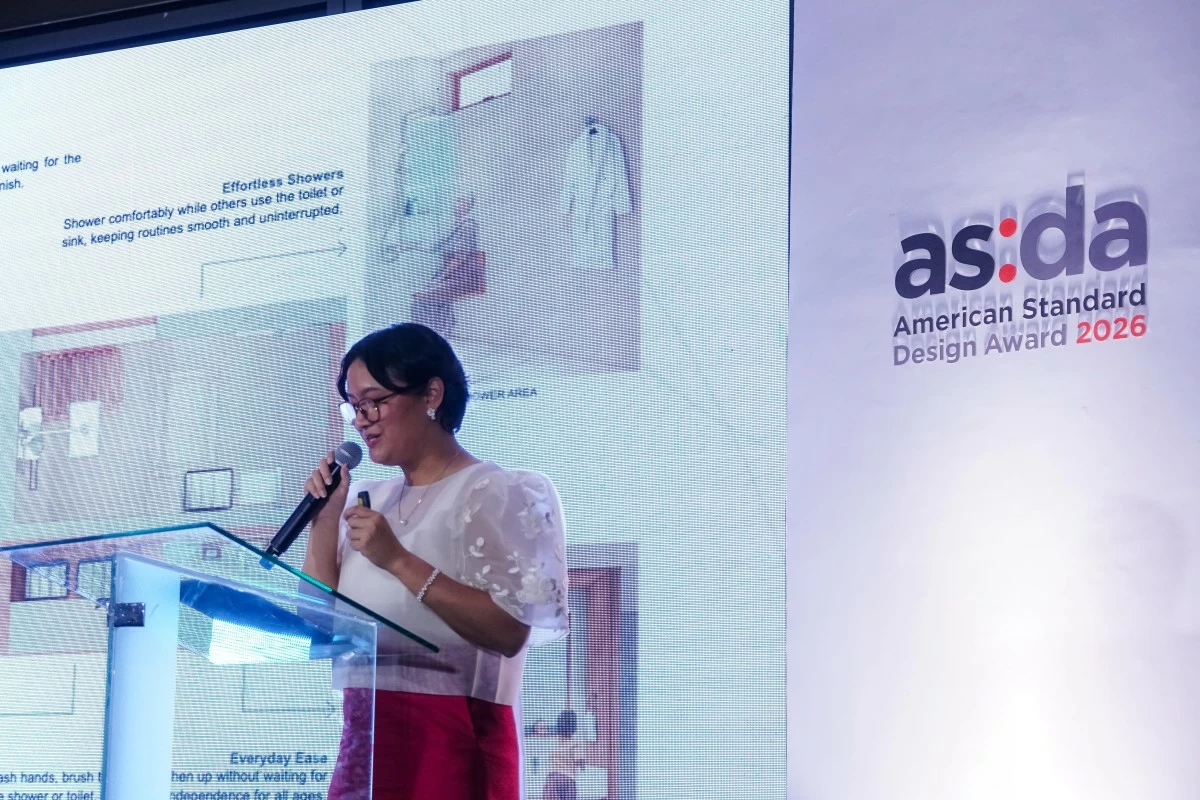
Malijan is recognized as the Asia-Pacific Grand Prize winner for ‘The Humble Home: Quiet Simplicity.’ She said the experience reinforced the importance of empathy, as every design decision must consider its impact on the user. (Photo: American Standard)
One of the biggest challenges for her was deciding which ideas to pursue while considering their impact on users. “You have to balance and think about each design decision and weigh how it will affect the design and the user,” she said. The process reinforced the importance of empathy and understanding what people truly value. Looking back on her journey from the Philippine competition to the Asia-Pacific finals, she believes her project's success stemmed from its practical approach, clear presentation, and alignment with the values of innovation, craftsmanship, and care.
Reflecting on the competition, Malijan said one of her biggest takeaways came from meeting fellow competitors from across the region. “We are more the same than we are different,” she said. “We all fall back to the same understanding of design. We speak the same language through design.” For future ASDA participants, her advice is simple: “Do it for the future of design, the next generation, and the people around you.”
Learning from the experts
Beyond recognizing outstanding concepts, ASDA gives participants the opportunity to learn directly from leading architects and design professionals across the region. For many finalists, the competition serves not only as a platform to showcase ideas but also as a chance to gain insights from experts in architecture, interior design, sustainability, and urban planning.
National judges of the ASDA competition gather during the event, representing diverse expertise across architecture, design, sustainability, and urban planning. (Photo: American Standard)
Despite coming from different disciplines and countries, this year's judges shared a common belief: the best designs are grounded in people, culture, and real-world needs. Vichera Heang, dean of the Engineering Faculty at Paragon International University and International Relations director of the Architects Association Khmer, noted that many finalists stood out by interpreting the same design brief through their own cultural contexts. “Culture and tradition bring identity and a unique message to each place,” she said, adding that local identity and traditional knowledge can coexist with modern design and sustainability.
William K. Patty, design principal at Hadiprana Design, echoed the importance of authenticity, observing that many of the strongest entries drew from personal experiences. “When a design is rooted in personal experience, it cannot be duplicated because it is highly unique and customized,” he said. While technology and AI continue to influence the industry, Patty stressed that designers still bring a human perspective that technology cannot replace.

Asia-Pacific judges support the ASDA competition by providing expert feedback and mentorship to young designers from across the region. (Photo: American Standard)
For Giang Le, founder and deputy director of GK Archi Co., Ltd. and the first woman recognized as an ASEAN architect, successful design begins with understanding how people live. “People must always be the priority,” she said, noting that livable spaces are shaped not only by buildings but also by the connections between people and their communities.
Together, the judges' insights reflected the qualities that defined this year's winning entries: designs rooted in culture, shaped by empathy, and responsive to everyday needs. In many ways, they reinforced the competition's central message that even the most familiar spaces can have a meaningful impact when designed with people in mind.