






Manila Bulletin
 Spotlight Features
A reader's dream: Cebu's tiny independent bookstore is a doorway to another world
Spotlight Features
A reader's dream: Cebu's tiny independent bookstore is a doorway to another world
Spotlight Features
A reader's dream: Cebu's tiny independent bookstore is a doorway to another world
A reader's dream: Cebu's tiny independent bookstore is a doorway to another world
By Yvette Tan
Published Jun 24, 2026 02:01 pm
|
Updated Jul 2, 2026 01:41 pm


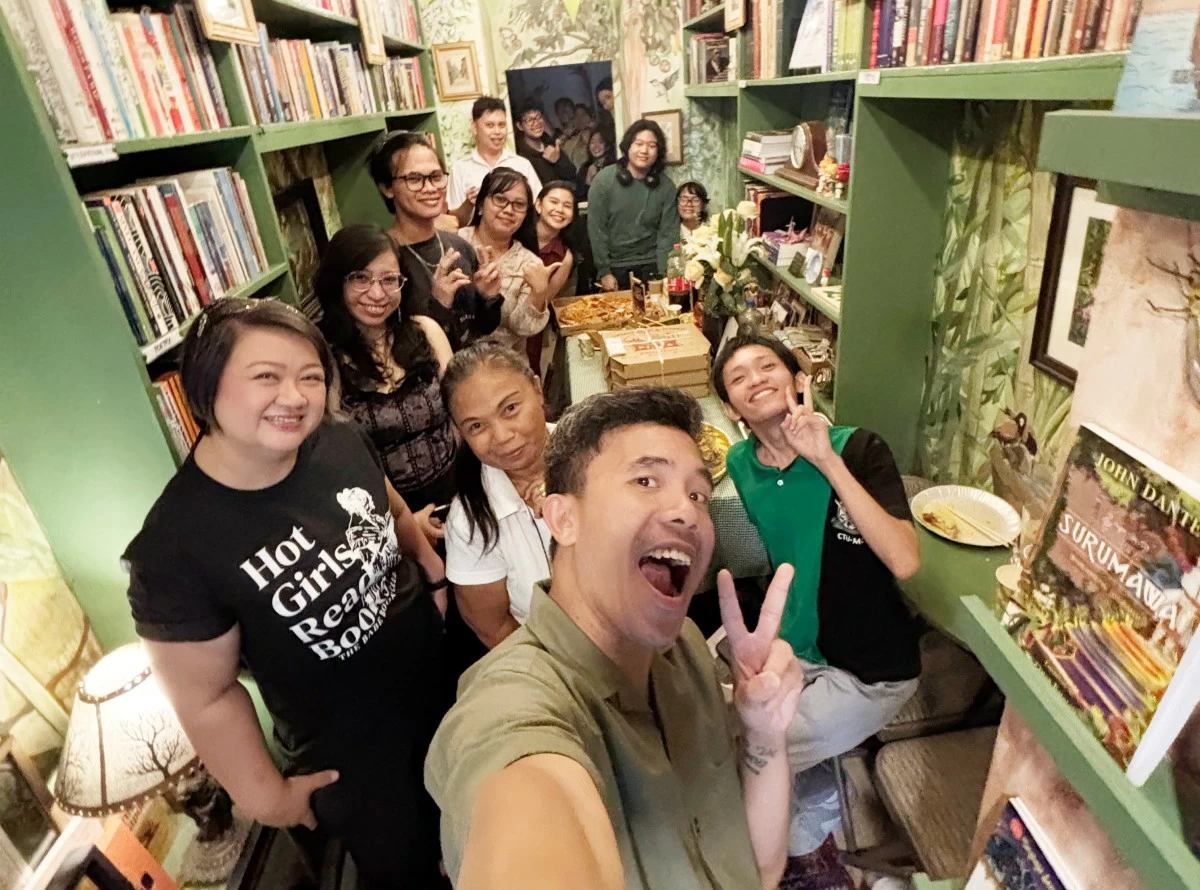
FRUITFUL YEAR — Owner Donald Villamero (center) celebrates the bookshop’s first year anniversary with the Lost Books Cebu community.
Avid readers know that it’s very easy to get lost in a good book.
This is exactly what one feels upon entering Lost Books Cebu, the province’s only independent bookstore. Located along historic Osmeña Boulevard and housed in a former ATM vestibule, stepping inside feels like entering a world especially curated for book lovers.
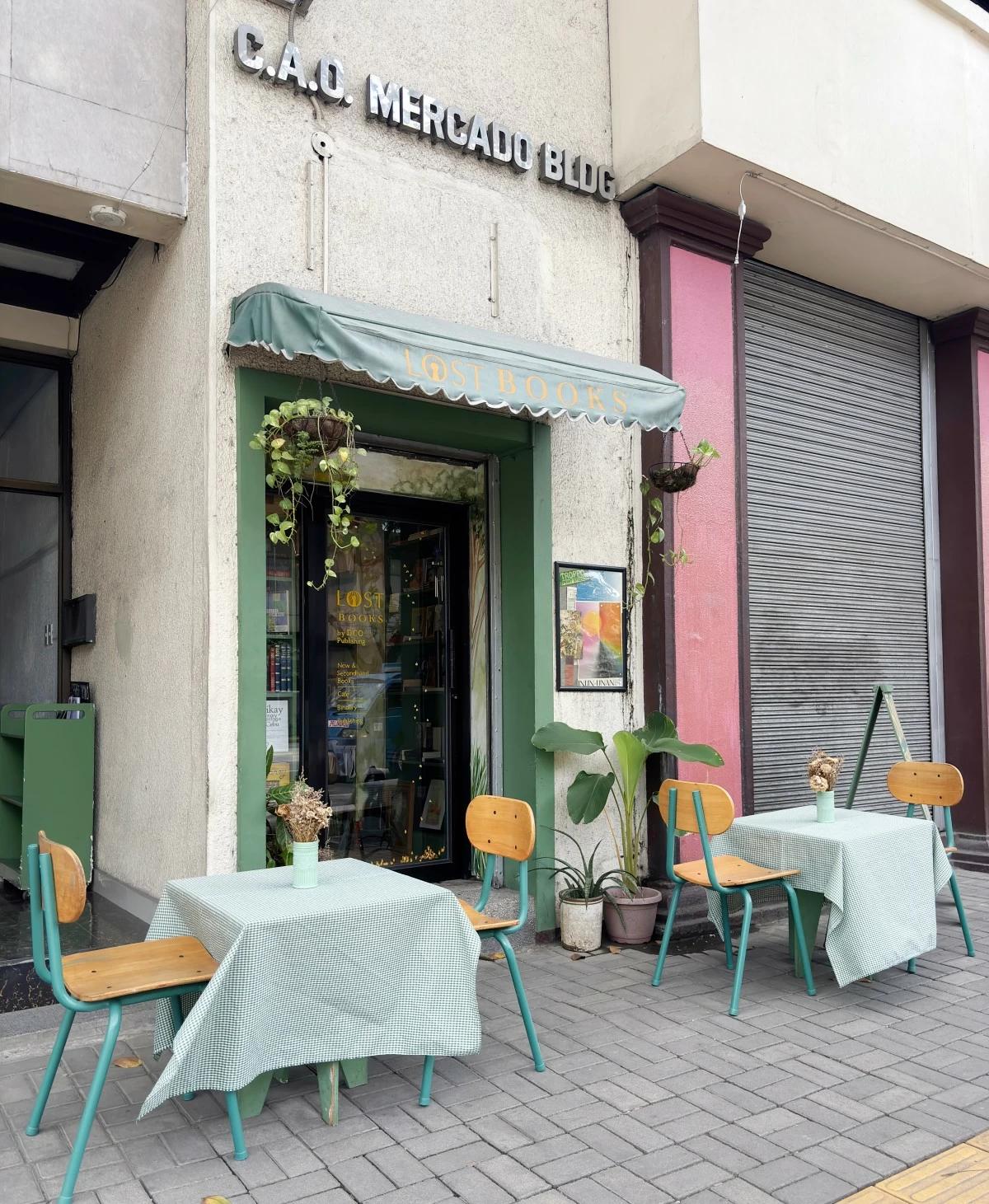
A MAGICAL WORLD — Lost Books Cebu is inside a repurposed ATM vestibule that
was converted into a bookstore.
“We thought this could be a perfect hole-in-the-wall bookstore that you find in other places of the world,” Lost Books Cebu founder Donald Villamero said. “When we pitched it to the owner of the building, they were so on board that they became one of our investors.”
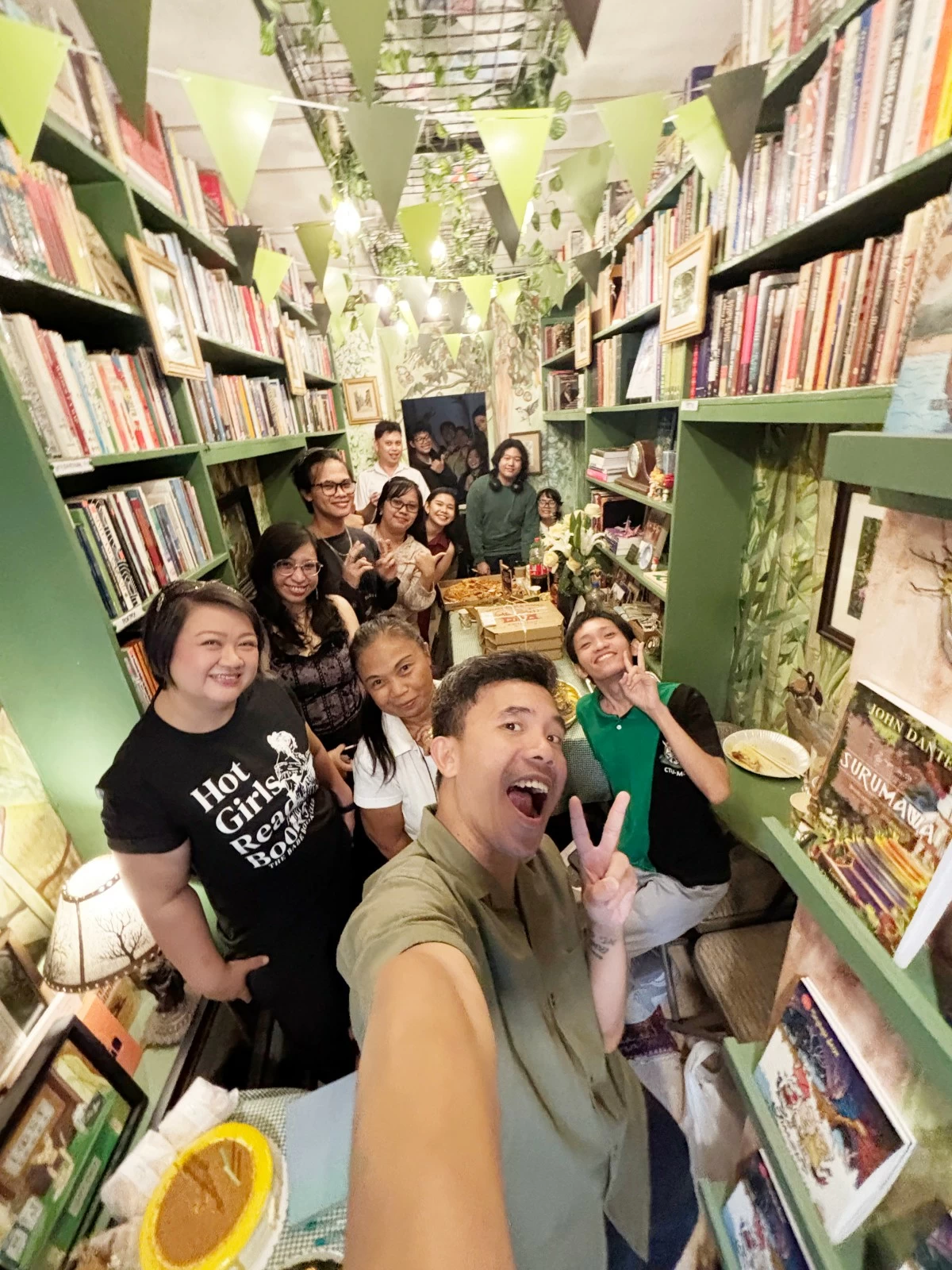
FRUITFUL YEAR — Owner Donald Villamero (center) celebrates the bookshop’s first year anniversary with the Lost Books Cebu community.
The space is cozy, its walls adorned with illustrations of local flora and fauna that complement its book-lined shelves. Banderitas hang from the ceiling, lending the space a celebratory air. There are indoor and outdoor spaces for reading or enjoying coffee-based drinks, which the bookshop also sells.
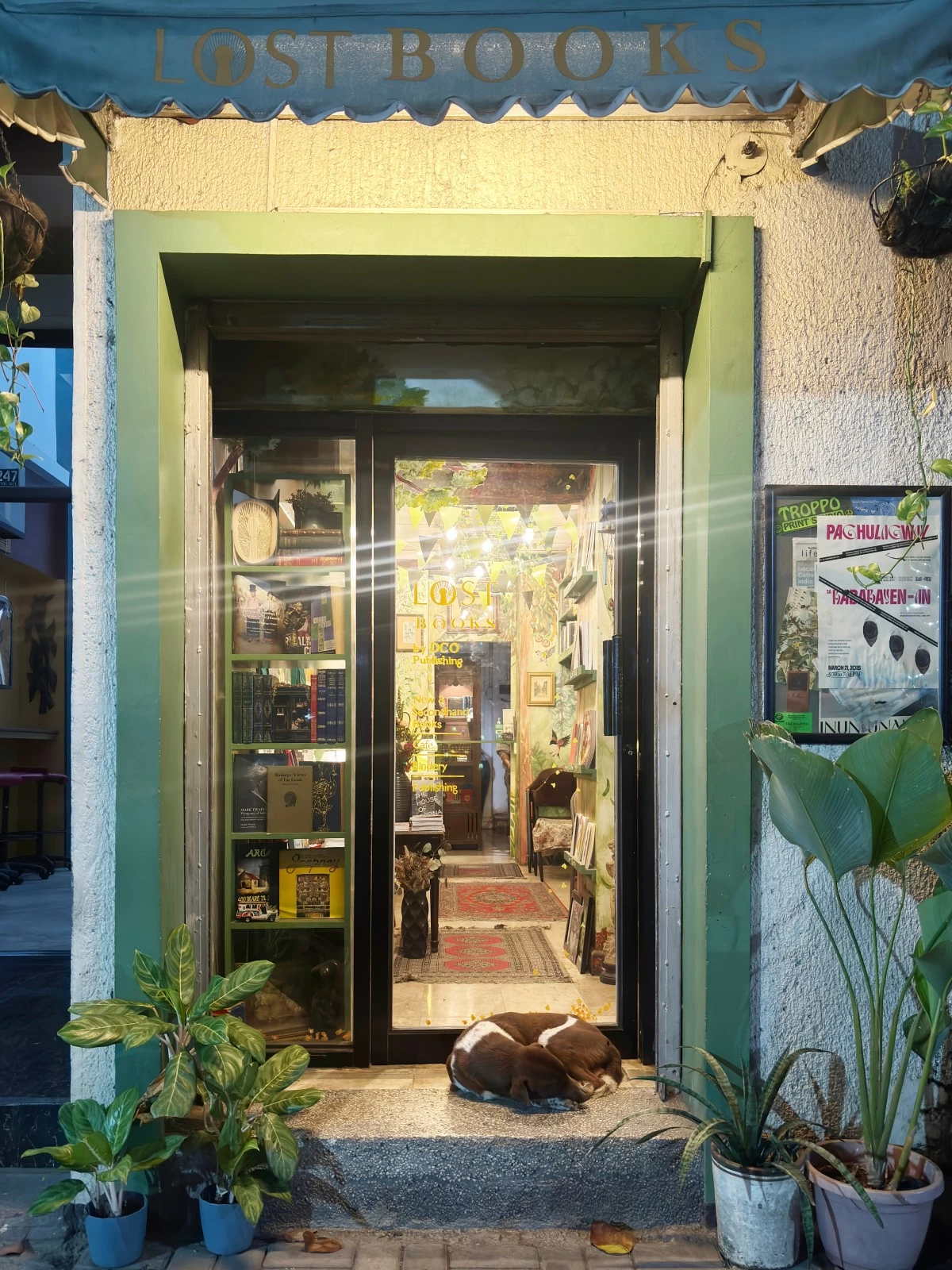
TWILIGHT SCENE — A dog takes refuge under the awning of Lost Books Cebu as night falls.
“We wanted to create a beautiful space… that really celebrates local voices, because there are not a lot of spaces that really celebrate local literature,” he said. “We have a lot of bookstores, but mostly they carry international titles. The intention of Lost Books Cebu is to lift up the voices of our community in Cebu.”
“Found” bookshop
Lost Books Cebu, short for “Lost Bookshop,” was established in 2024, inspired by La Belle Aurore, a beloved independent bookstore that closed in 2013. “Since 2013 was the last one, you feel like the independent bookstores of Cebu are lost. So in a way, this is the lost bookshop, and we found it again,” Villamero said. “But we’re so happy because after us, a lot of reading spaces and bookstores [have opened].”
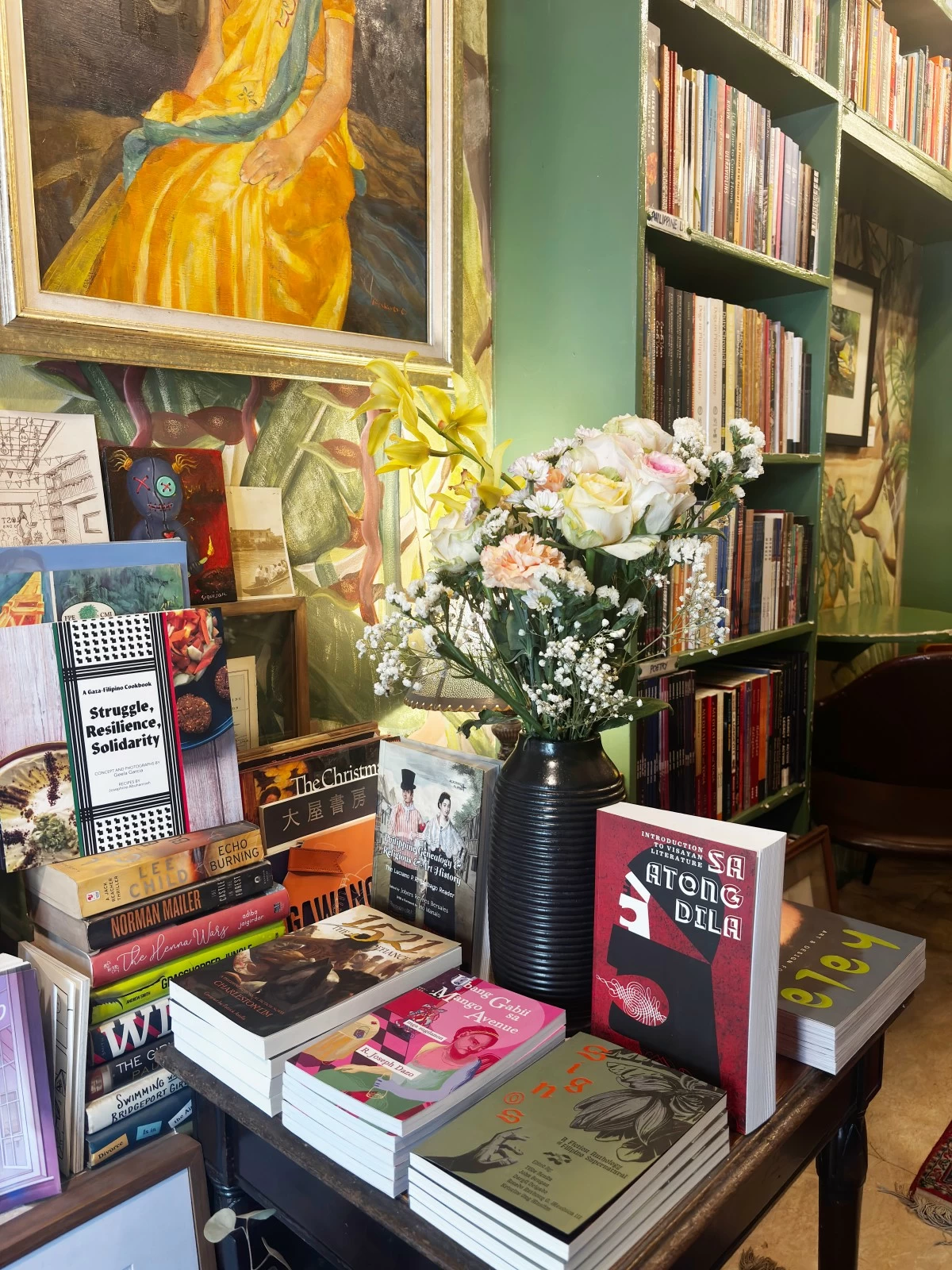
A GOOD PLACE TO READ — Fresh flowers give the bookshop
an elegant touch.
Villamero, a former editor in an international publishing house, said that the bookshop was born out of the frustration of visiting big bookstores and encountering international titles before Filipino ones. “It’s worse for regional voices. You can hardly find them,” he said. “We wanted a space that smells good, and when you first enter, it’s all Cebuano authors, all Visayan authors, and then when you go in, all Filipino authors from different parts of the Philippines.”
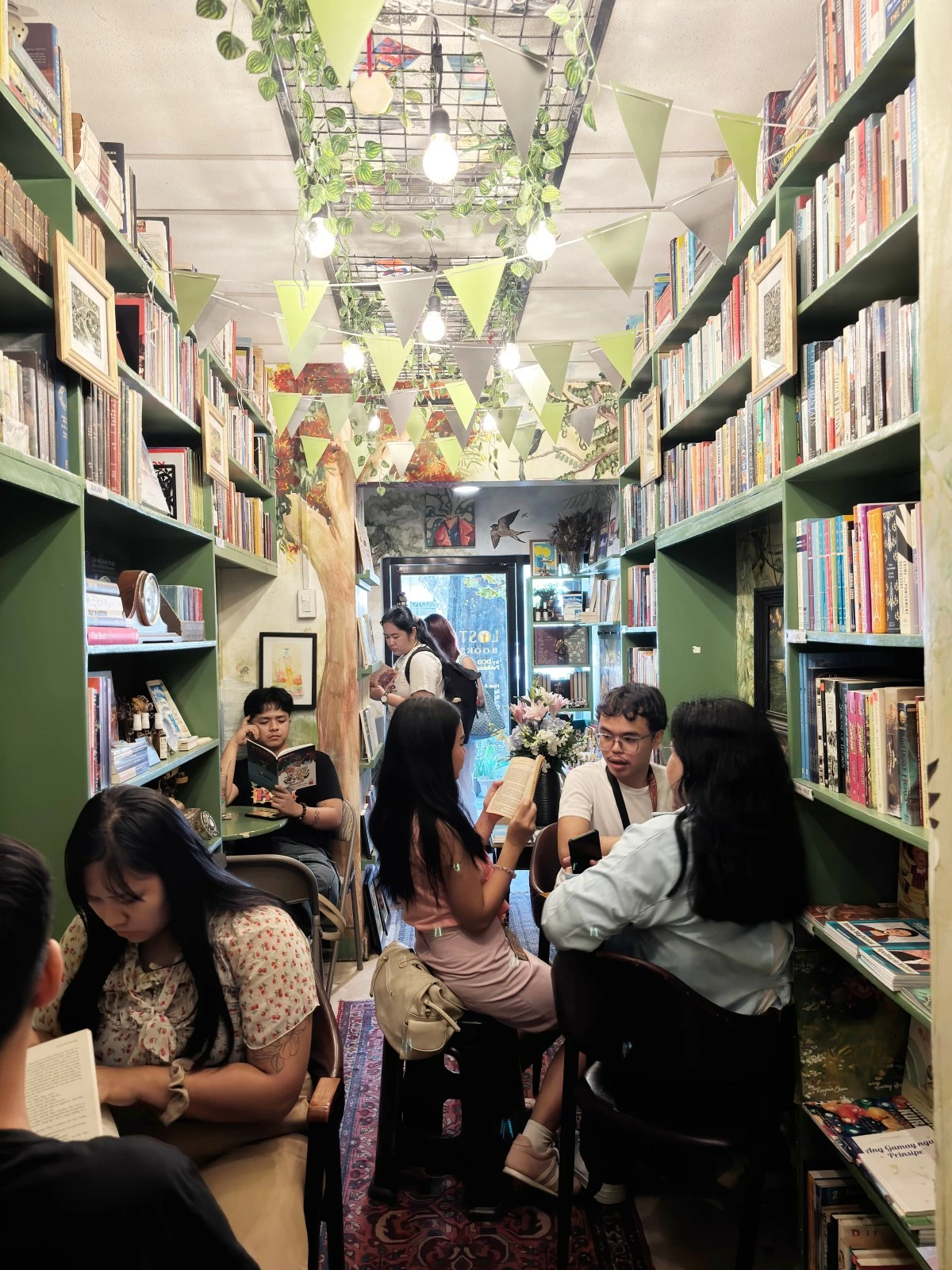
BUSTLING THIRD SPACE — Lost Books Cebu has a growing community of mostly young people who are discovering the joy of reading.
A beautiful space
Part of the bookshop’s lure is its ambiance, which has begun to draw attention even from overseas. “There are fresh flowers every week. We just really wanted to romanticize [the reading experience] because I believe people respond to beauty, and they think that what is beautiful [and] well taken care of equals quality,” Villamero said. “We take care of our space so that when [guests] come in, they bring in a sense of pride because it’s an elegant space.”
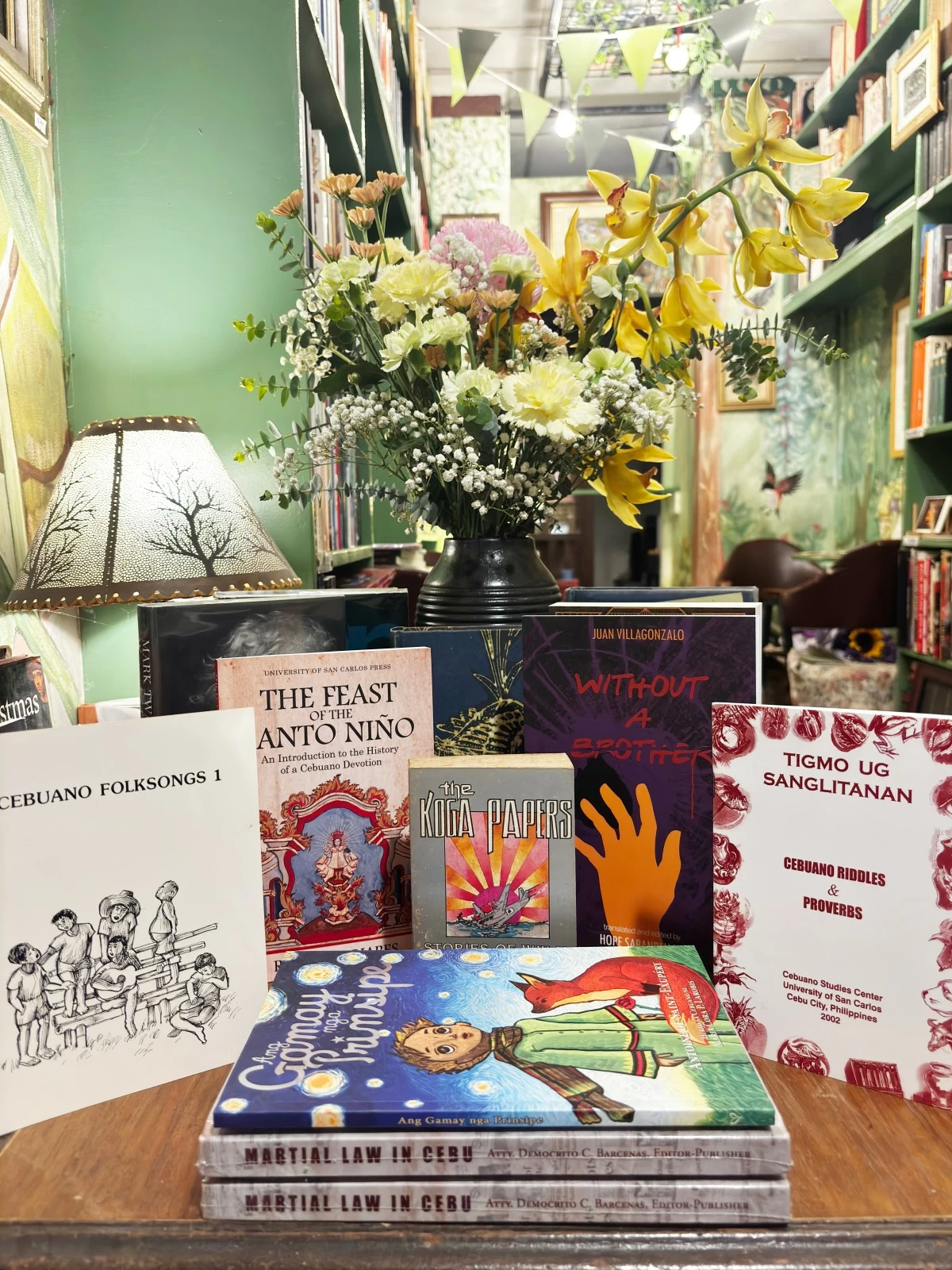
PRIDE OF SUGBU — A table showcasing books that promotes
Cebuano language, culture, and history.
Vibes are just part of the equation. What keeps people coming back is the books. “We have a very young crowd, and it always puts a smile on our faces. They have no idea that we have all these fabulous authors, [and] now that they can see them in focus, they are always so amazed,” Villamero said. “They ask us for recommendations, and that always puts a smile on our faces because we must be doing something right if they become interested.”
Lost Books Cebu has also become a popular third space, a physical place that’s neither home nor work where people can gather alone, or as a community.
Third space
“With the rise of AI, people are using actual life experiences to escape from the internet, [and] books are coming back in a big way. Although books have never really gone, right? They’ve just become niche. But now, people love reading again, and we’re so happy,” Villamero said.
“There are so many book people going around, and they’re romanticizing this kind of life where we just take it slow, not to be bothered by anyone, just reading [and] going to see nature, and I think that’s really good. Hopefully, it’s something that is a renaissance for… literature in the Philippines, because I feel like—and it’s just my personal opinion—literature is the art form that’s so not well funded.”
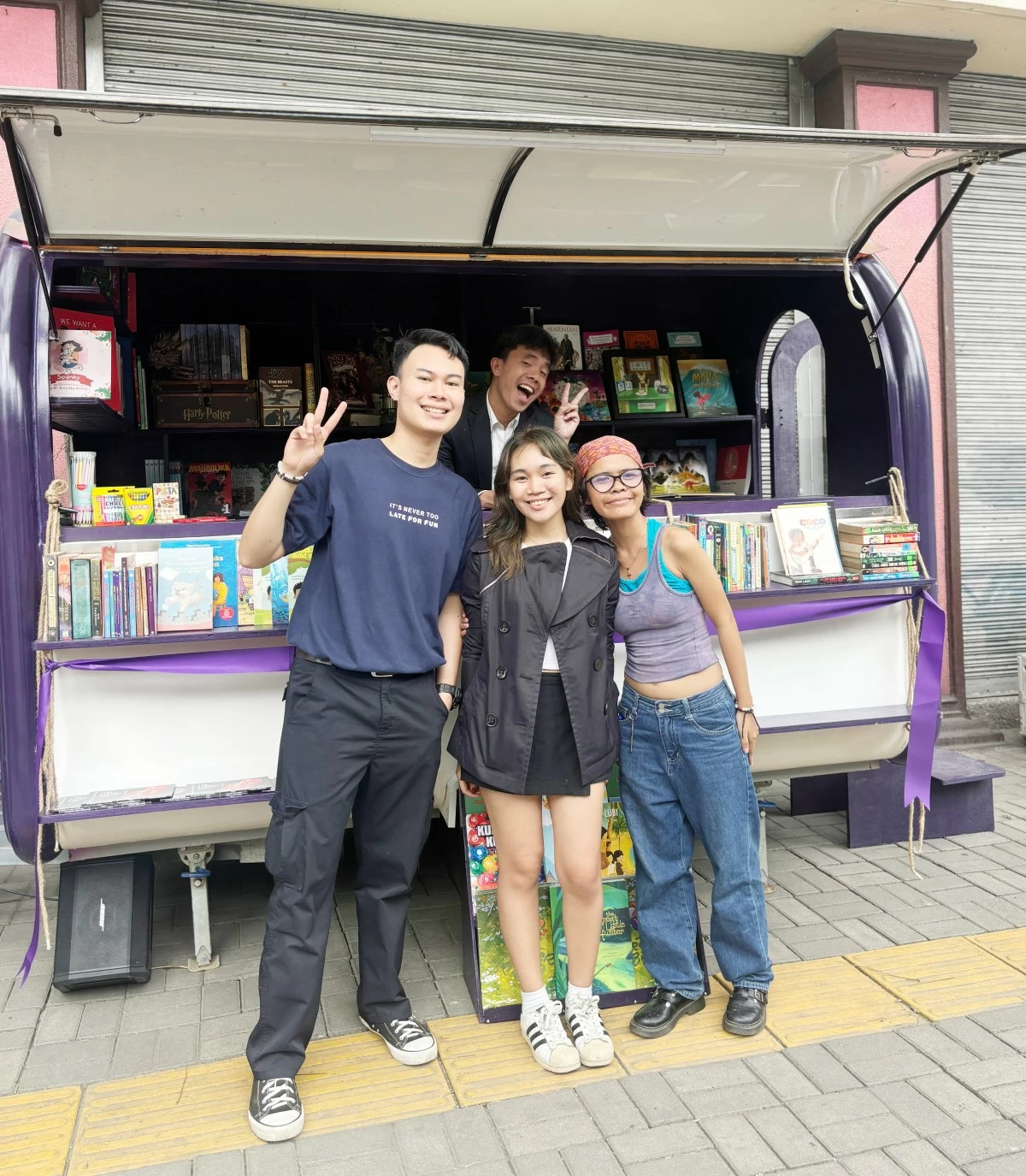
LITERACY FOR ALL — Lost Books Cebu team posing during the launch of Stories and Wheels,
a mobile library that goes around Cebu Island to promote literacy.
This philosophy extends outside the bookshop. Lost Books champions literacy endeavors such as Stories on Wheels, a mobile library launched in cooperation with Junior Chamber International (JCI) Womandaue that brings books and activities to communities around Cebu, particularly those hit by disaster.
Villamero is grateful for Lost Books Cebu’s steadily rising popularity, but for now, his plan is simply to stay afloat.
Valuing our own
“Our concept is not unique. A lot of people have tried it before, but they always end up closing. Now our plan is how to sustain it. How can we be… Shakespeare and Co, that has survived [for so long]? Because we need that for Filipino readers,” he said.
“I want to build a foundation around it so that we can pass on the mantle. Even though I birthed the idea, along with my investors, I never really thought I was an owner. I feel like a custodian… It’s really for the City, it’s really for the Philippines. And eventually, I have to pass it on to another custodian who will love [it the same way].”
Lost Books Cebu transports visitors to three magical places. The first is when one steps inside, the second is when one is engrossed in a book they enjoy, and the third is the pride of knowing that its author is Filipino.
“It’s our thoughts, our stories. If we cannot be proud of our stories, if we cannot present them in a respectable, beautiful way, I think that speaks of [how we think of] ourselves as well,” Villamero said.
“I hope… that all islands in the Philippines will have their own independent bookstores run by locals, promoting their own literature. I think we learn so much about the Philippines that way.” (Photos courtesy of Donald Villamero)