ADVERTISEMENT

Therme Group breaks ground on Therme Singapore

Asia's first large-scale integrated wellbeing destination will soon rise in Singapore

Published Jun 23, 2026 04:13 pm
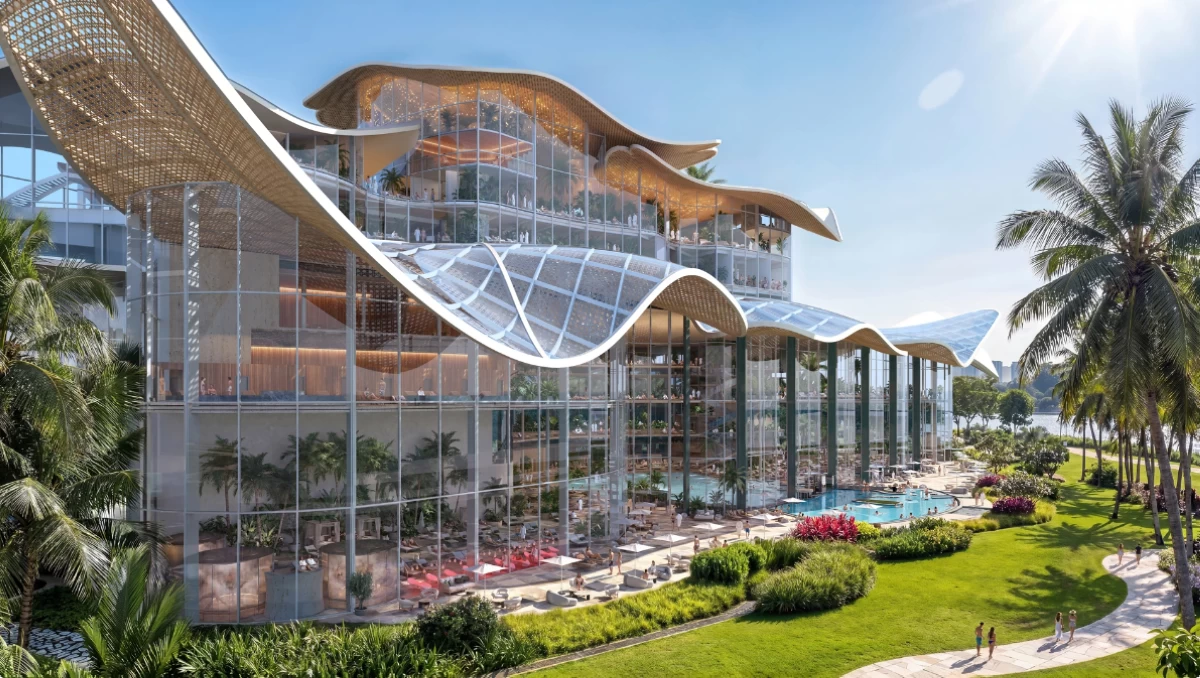
Therme Singapore integrated wellbeing destination (Artist's perspective: Therme Singapore)
On June 19, 2026, Therme Group, the leading global developer and operator of large-scale wellbeing destinations, headed the groundbreaking ceremony of Therme Singapore, a state-of-the-art development that will introduce innovative social infrastructure to the region.
“Therme Group’s vision is to create a new form of social infrastructure, where wellbeing is accessible, joyful, and integrated into everyday city life. Singapore’s commitment to long-term urban planning, innovation, and world-class public spaces makes it a natural home for this vision. As our first destination in Asia, Therme Singapore will serve as a gateway for regional growth to develop partnerships, capabilities, and models that can be scaled across Asia and beyond,” said Robert Hanea, founder and CEO of Therme Group.
Scheduled to open in 2030, Therme Singapore will be Asia’s first large-scale integrated urban wellbeing destination. Located at Marina South, the development spans more than 720,000 sq ft of gross floor area, equivalent to over nine football fields.
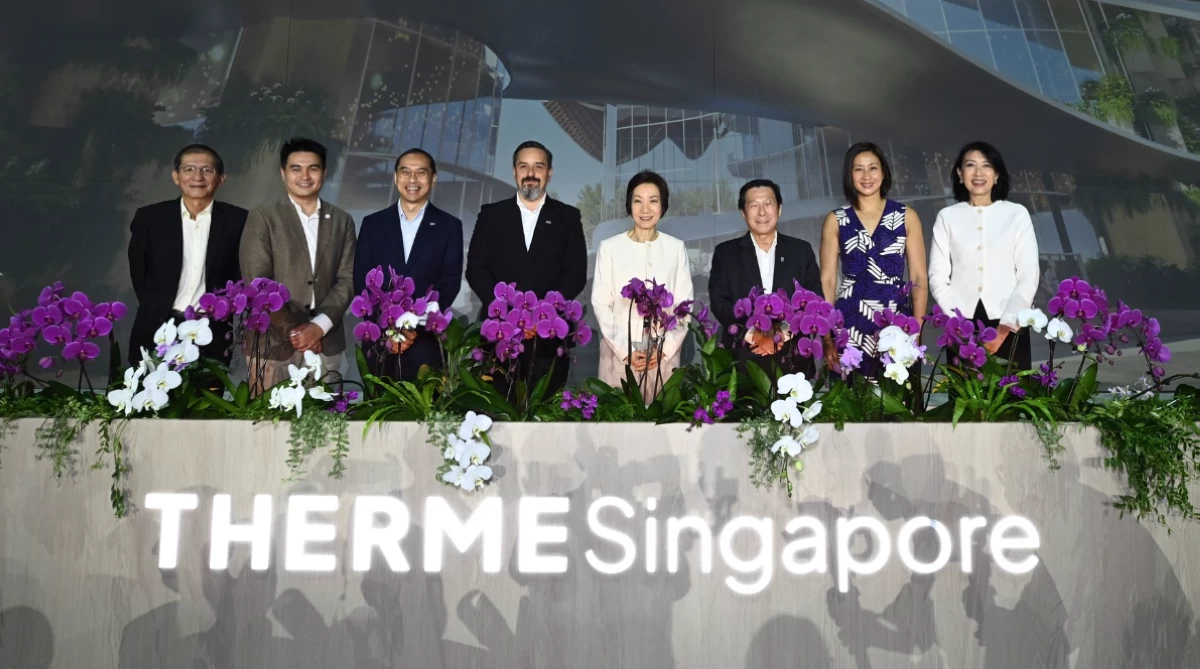
Lim Chong Lai, managing Director of Kajima Overseas Asia Singapore; Marcus Dass, senior vice president, and head of Global Enterprises at the Singapore Economic Development Board; Tan Boon Khai, chief executive officer of Therme Singapore; Robert Hanea, founder and chief executive officer of Therme Group; Grace Fu; minister for Sustainability and the Environment and minister-in-charge of Trade Relations; Mah Bow Tan, chairman of Therme Group Asia and Therme Singapore, Jean Ng, assistant chief executive, Singapore Tourism Board; and Angelene Chan, executive chairman of DP Architects (Photo: Therme Singapore)
Therme Singapore’s design integrates leisure, nature, and wellbeing into a single immersive destination for visitors. The seven-story development will be fitted with more than 20 indoor and outdoor pools and water attractions as well as over 70 wellness treatment rooms.
The development offers three distinct zones with their own unique visitor experience: the Play zone features active, family-oriented water attractions, including children's pools, 18 water slides spanning more than 1.8 kilometers in total length, and interactive play areas designed for movement, exploration, and shared enjoyment; the Relax zone has thermal pools, therapeutic mineral baths, quiet water spaces, and amenities such as hydromassage beds and infrared therapy; and the Restore zone includes saunas, steam rooms, and massage treatment spaces focused on physical and mental rejuvenation.
Complemented by sea views, there will be an 86,000 sq ft food-and-beverage strip available for dining, relaxation, and social gatherings.
Its green landscaped spaces will feature more than 200,000 plants across over 200 species, including orchids and native Southeast Asian varieties, fostering local biodiversity in creative indoor and outdoor green environments.
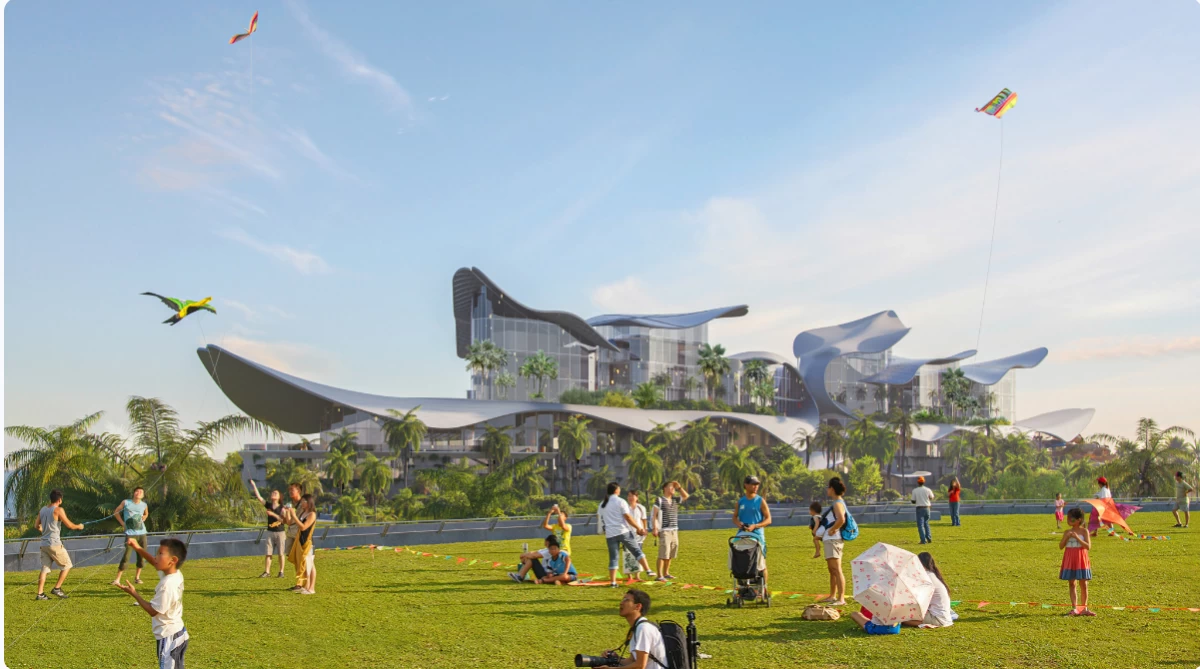
Therme Singapore located at Marina South (Artist's perspective: Therme Singapore)
The development will include various eco-friendly features, such as energy-saving building systems, solar panels, smart watering systems, and landscaping that adapts to the climate, all aimed at lowering carbon emissions and helping local wildlife.
Beyond the development, a coastal public park spanning almost four hectares will be created to connect Therme Singapore with Marina Barrage, enhancing public access to green spaces while raising the ecological and recreational value of the waterfront district.
Therme Singapore is developed by Therme Group in partnership with Kajima Overseas Asia (Singapore) and designed by multinational architecture firm DP Architects in collaboration with Therme Group’s in-house architects, Therme ARC.

Related Tags

Therme Group Therme Singapore
ADVERTISEMENT
.most-popular .layout-ratio{ padding-bottom: 79.13%; } @media (min-width: 768px) and (max-width: 1024px) { .widget-title { font-size: 15px !important; } }

{{ articles_filter_1561_widget.title }}

.most-popular .layout-ratio{ padding-bottom: 79.13%; } @media (min-width: 768px) and (max-width: 1024px) { .widget-title { font-size: 15px !important; } }

{{ static_articles_1562_widget.title }}

.most-popular .layout-ratio{ padding-bottom: 79.13%; } @media (min-width: 768px) and (max-width: 1024px) { .widget-title { font-size: 15px !important; } }

{{ articles_filter_1563_widget.title }}

{{ articles_filter_1564_widget.title }}

.mb-article-details { position: relative; } .mb-article-details .article-body-preview, .mb-article-details .article-body-summary{ font-size: 17px; line-height: 30px; font-family: "Libre Caslon Text", serif; color: #000; } .mb-article-details .article-body-preview iframe , .mb-article-details .article-body-summary iframe{ width: 100%; margin: auto; } .read-more-background { background: linear-gradient(180deg, color(display-p3 1.000 1.000 1.000 / 0) 13.75%, color(display-p3 1.000 1.000 1.000 / 0.8) 30.79%, color(display-p3 1.000 1.000 1.000) 72.5%); position: absolute; height: 200px; width: 100%; bottom: 0; display: flex; justify-content: center; align-items: center; padding: 0; } .read-more-background a{ color: #000; } .read-more-btn { padding: 17px 45px; font-family: Inter; font-weight: 700; font-size: 18px; line-height: 16px; text-align: center; vertical-align: middle; border: 1px solid black; background-color: white; } .hidden { display: none; }
function initializeAllSwipers() { // Get all hidden inputs with cms_article_id document.querySelectorAll('[id^="cms_article_id_"]').forEach(function (input) { const cmsArticleId = input.value; const articleSelector = '#article-' + cmsArticleId + ' .body_images'; const swiperElement = document.querySelector(articleSelector); if (swiperElement && !swiperElement.classList.contains('swiper-initialized')) { new Swiper(articleSelector, { loop: true, pagination: false, navigation: { nextEl: '#article-' + cmsArticleId + ' .swiper-button-next', prevEl: '#article-' + cmsArticleId + ' .swiper-button-prev', }, }); } }); } setTimeout(initializeAllSwipers, 3000); const intersectionObserver = new IntersectionObserver( (entries) => { entries.forEach((entry) => { if (entry.isIntersecting) { const newUrl = entry.target.getAttribute("data-url"); if (newUrl) { history.pushState(null, null, newUrl); let article = entry.target; // Extract metadata const author = article.querySelector('.author-section').textContent.replace('By', '').trim(); const section = article.querySelector('.section-info ').textContent.replace(' ', ' '); const title = article.querySelector('.article-title h1').textContent; // Parse URL for Chartbeat path format const parsedUrl = new URL(newUrl, window.location.origin); const cleanUrl = parsedUrl.host + parsedUrl.pathname; // Update Chartbeat configuration if (typeof window._sf_async_config !== 'undefined') { window._sf_async_config.path = cleanUrl; window._sf_async_config.sections = section; window._sf_async_config.authors = author; } // Track virtual page view with Chartbeat if (typeof pSUPERFLY !== 'undefined' && typeof pSUPERFLY.virtualPage === 'function') { try { pSUPERFLY.virtualPage({ path: cleanUrl, title: title, sections: section, authors: author }); } catch (error) { console.error('ping error', error); } } // Optional: Update document title if (title && title !== document.title) { document.title = title; } } } }); }, { threshold: 0.1 } ); function showArticleBody(button) { const article = button.closest("article"); const summary = article.querySelector(".article-body-summary"); const body = article.querySelector(".article-body-preview"); const readMoreSection = article.querySelector(".read-more-background"); // Hide summary and read-more section summary.style.display = "none"; readMoreSection.style.display = "none"; // Show the full article body body.classList.remove("hidden"); } document.addEventListener("DOMContentLoaded", () => { let loadCount = 0; // Track how many times articles are loaded const offset = [1, 2, 3, 4, 5, 6, 7, 8, 9, 10]; // Offset values const currentUrl = window.location.pathname.substring(1); let isLoading = false; // Prevent multiple calls if (!currentUrl) { console.log("Current URL is invalid."); return; } const sentinel = document.getElementById("load-more-sentinel"); if (!sentinel) { console.log("Sentinel element not found."); return; } function isSentinelVisible() { const rect = sentinel.getBoundingClientRect(); return ( rect.top < window.innerHeight && rect.bottom >= 0 ); } function onScroll() { if (isLoading) return; if (isSentinelVisible()) { if (loadCount >= offset.length) { console.log("Maximum load attempts reached."); window.removeEventListener("scroll", onScroll); return; } isLoading = true; const currentOffset = offset[loadCount]; window.loadMoreItems().then(() => { let article = document.querySelector('#widget_1690 > div:nth-last-of-type(2) article'); intersectionObserver.observe(article) loadCount++; }).catch(error => { console.error("Error loading more items:", error); }).finally(() => { isLoading = false; }); } } window.addEventListener("scroll", onScroll); });

Sign up by email to receive news.