






Manila Bulletin
 Philippines
National
'Thank you, Uncle Sam!' PH Navy beefs up maritime domain awareness with new US-donated underwater drones
Philippines
National
'Thank you, Uncle Sam!' PH Navy beefs up maritime domain awareness with new US-donated underwater drones
Philippines
National
'Thank you, Uncle Sam!' PH Navy beefs up maritime domain awareness with new US-donated underwater drones
'Thank you, Uncle Sam!' PH Navy beefs up maritime domain awareness with new US-donated underwater drones
Published Jun 23, 2026 01:27 pm


At A Glance
- The United States donated four Ocean Aero Triton autonomous underwater and surface vehicles (AUSVs) worth P754 million ($13 million) to the Armed Forces of the Philippines to boost maritime surveillance capabilities.
- The solar-powered drones can collect data above and below the ocean's surface for up to 30 days, helping the Philippine Navy and AFP improve maritime domain awareness in critical waterways.
- Philippine and US officials said the new systems will support the AFP's territorial defense efforts and strengthen monitoring of threats such as illegal fishing, gray zone activities, and other maritime security challenges.
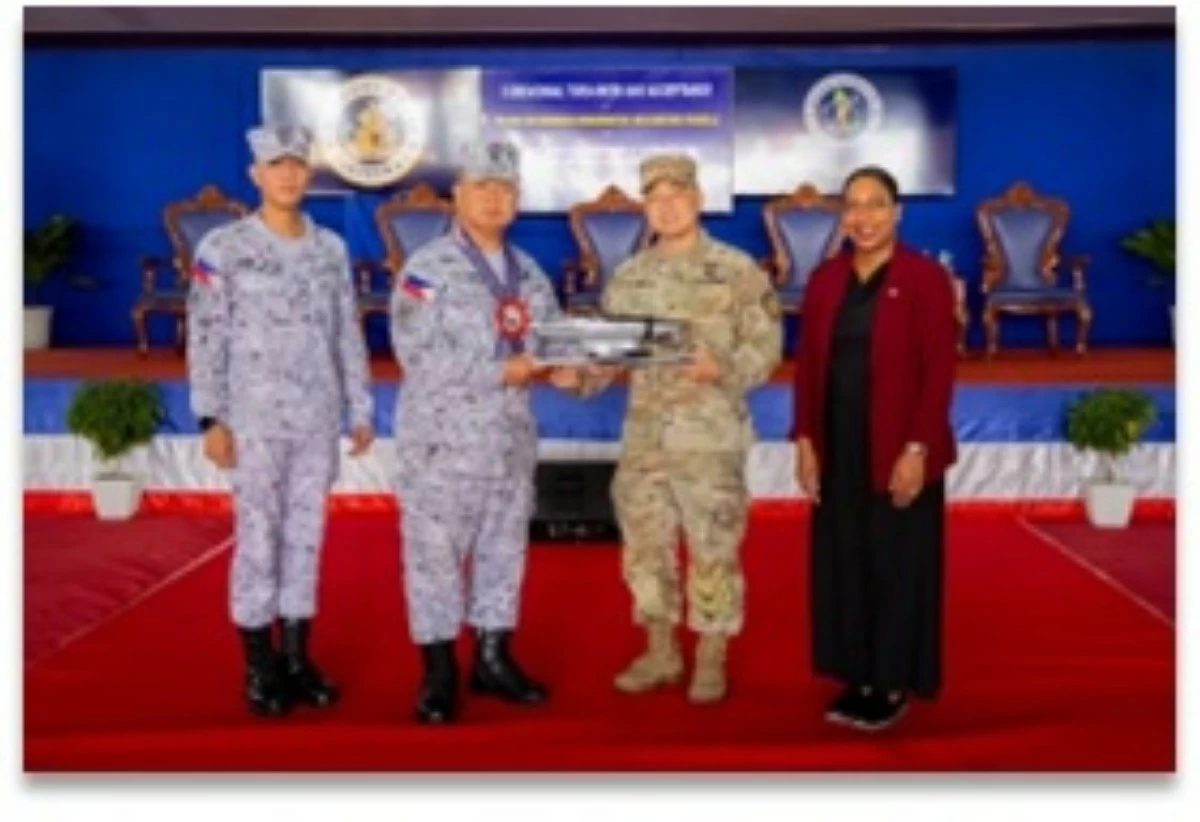
United States Embassy Senior Defense Official and Chief of the Joint US Military Assistance Group (JUSMAG)-Philippines Colonel Daniel Oh (second from right) presents Philippine Fleet Commander Rear Admiral Joe Anthony Cabahug-Orbe (second from left) with a scale model of the Ocean Aero Triton autonomous underwater and surface vehicle(AUSV) during the turnover ceremony at the Philippine Navy’s Naval Operating Base in Subic on June 22, 2026. They are joined by US Embassy Chargé d’Affaires Bridgette Walker (rightmost) and Philippine Navy Unmanned Surface Vessel Unit Acting Commander Lt. Cmdr. Aldwin Pasicolan (leftmost). (Photo: US Embassy)
The Philippine Navy (PN) said Tuesday, June 23, that it has bolstered its maritime monitoring capabilities with the acquisition of four advanced autonomous underwater and surface vehicles (AUSVs) from the United States.
The US government formally transferred four Ocean Aero Triton AUSVs to the Armed Forces of the Philippines (AFP) on Monday, June 22, during a turnover ceremony at the PN’s Naval Operating Base in Subic.
The transfer was led by US Embassy Chargé d'Affaires ad interim Bridgette Walker, US Embassy Senior Defense Official and Chief of the Joint US Military Assistance Group (JUSMAG)-Philippines Col. Daniel Oh, Philippine Fleet Commander Rear Adm. Joe Anthony Cabahug-Orbe, and Philippine Navy Unmanned Surface Vessel Unit acting commander Lt. Cmdr. Aldwin Pasicolan.
Valued at about P754 million or $13 million, the systems are capable of collecting data above and below the ocean's surface through a resilient mesh network. Each unit is solar-powered and can operate for up to 30 days.
“The unmanned systems are not only surface unmanned systems but also underwater unmanned systems. These will contribute to maritime domain awareness not only of the Philippine Navy but also of the Armed Forces of the Philippines, so it is part of our modernization efforts,” said PN spokesperson Captain Marissa Martinez.
The AFP continues to build its territorial defense capability amid growing security challenges in the country's maritime areas, particularly in the West Philippine Sea (WPS).
For years, the military has sought to improve its ability to monitor vast sea lanes and critical waterways. Maritime domain awareness refers to the effective understanding of activities at sea that could affect security, safety, the economy, or the environment.
Martinez said the Triton AUSVs are designed to help fill that requirement by gathering information above and below the waterline for extended periods without the need for onboard crews.
Meanwhile, Walker said the systems would help the AFP address maritime challenges that cannot be monitored continuously by conventional assets alone.
“The future of maritime security is not just about platforms. It is about capability, speed, and reach,” Walker said.
She underscored the importance of strengthening the Philippines’ maritime domain awareness capabilities, noting that Manila occupies a strategic position in the Indo-Pacific region and faces a range of maritime concerns.
“The Indo-Pacific's maritime domain is vast, contested, and critical, and the Philippines sits at the heart of it. The ability to monitor and respond to maritime challenges, illegal fishing, gray zone activities, and threats to freedom of navigation requires persistent, long-endurance awareness that no single ship or aircraft can provide alone. The Triton fills that gap by expanding the capabilities of the Philippine Navy into critical waterways,” she added.
On the other hand, Oh said the systems support the AFP's shift toward territorial defense and maritime monitoring.
“These unmanned capabilities support the AFP's transition to territorial defense and improve awareness in critical waterways. The next step is to assist the Philippines integrate these new capabilities in their employment and sustainment concepts,” he added.
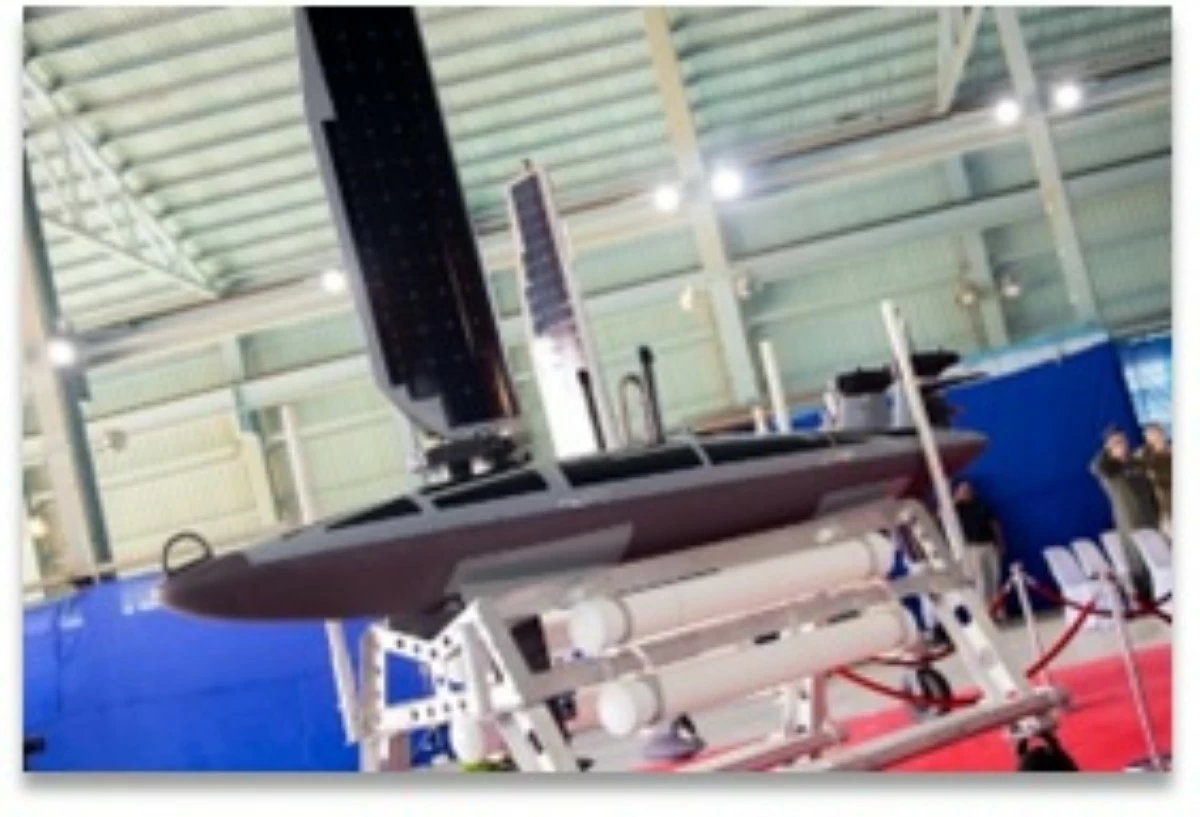
One of four Ocean Aero Triton autonomous underwater and surface vehicles (AUSVs) displayed at the Philippine Navy’s Naval Operating Base Subic. (Photo: US Embassy)