






Manila Bulletin
 Business
The Economy
Gov't unveils record ₱1.12 trillion domestic borrowing plan for Q3
Business
The Economy
Gov't unveils record ₱1.12 trillion domestic borrowing plan for Q3
Business
The Economy
Gov't unveils record ₱1.12 trillion domestic borrowing plan for Q3
Gov't unveils record ₱1.12 trillion domestic borrowing plan for Q3
BTr confident borrowing won't overshoot ceiling
By Derco Rosal
Published Jun 23, 2026 04:26 pm


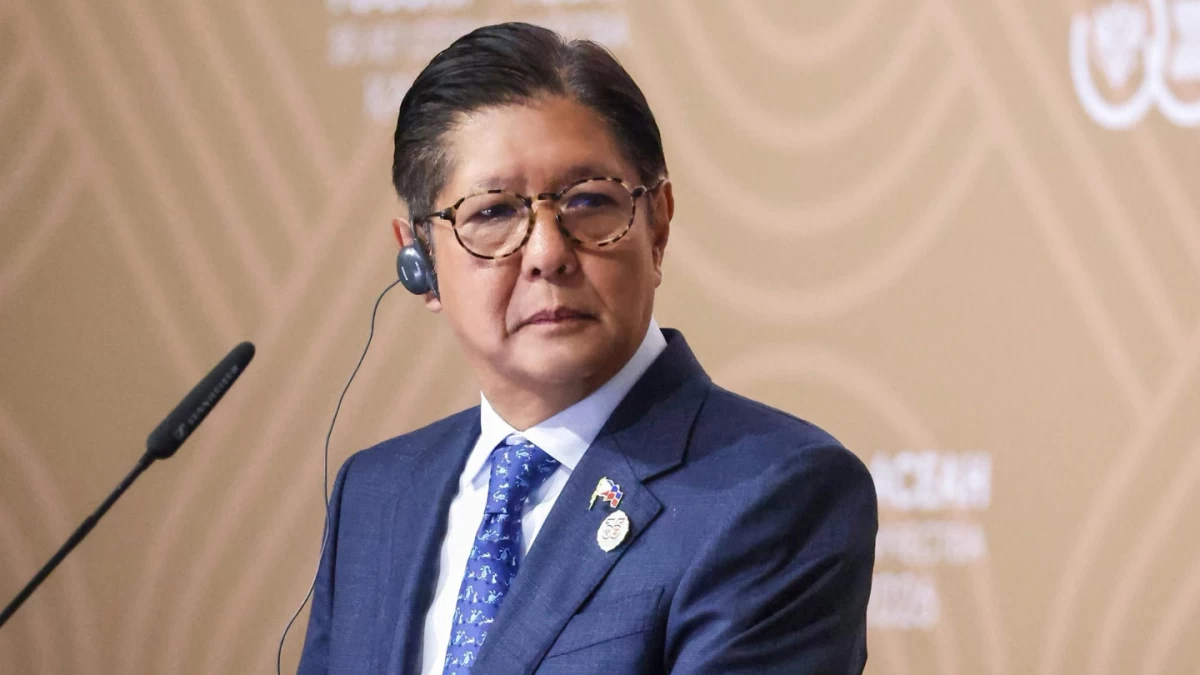
President Ferdinand R. Marcos Jr.
The Marcos administration plans to aggressively ramp up domestic borrowing in the third quarter of the year, tapping local capital markets for a record volume as the government pivots toward short-term debt instruments amid volatile global borrowing conditions.
The Bureau of the Treasury (BTr) announced that the national government aims to raise ₱1.12 trillion from the domestic market during the July-to-September period, a 43 percent surge—equivalent to an absolute increase of ₱336 billion—from the ₱784 billion borrowing target set for the second quarter.
The upcoming issuance program is the largest quarterly domestic funding drive of the year so far, surpassing the ₱824 billion sought in the first three months of 2026.
According to the quarterly calendar released by the treasury bureau, short-term debt will dominate the administration’s fundraising strategy. The government intends to sell ₱700 billion in Treasury bills (T-bills), nearly doubling the ₱364 billion targeted in the previous quarter. This pivot means T-bills will comprise 62.5 percent of total local debt offerings for the period.
Meanwhile, long-term debt issuance will remain steady, with the Treasury maintaining its target for Treasury bonds at ₱420 billion to match the volume offered in the second quarter.
The third-quarter domestic program accounts for 41.8 percent of the country’s full-year total gross borrowing objective of ₱2.68 trillion. While cumulative planned borrowings across the first three quarters point to a total of ₱2.73 trillion, National Treasurer Sharon P. Almanza clarified on Tuesday, June 23, that the administration will not breach its full-year legislative ceiling.
Almanza noted that short-term bills are calculated on a net basis, with several outstanding tenors expected to mature before the end of the year.
Market analysts view the heavy reliance on localized, shorter-duration debt as a protective play.
John Paolo Rivera, a senior research fellow at the Philippine Institute for Development Studies (PIDS), said the scaled-up borrowing plan reflects a “preference to rely more on domestic financing amid global uncertainty, peso volatility, and higher external borrowing costs.”
Rivera added that this shift could also signal expectations of “stronger spending” through the remainder of the year, particularly as the government ramps up expenditures amid a deepening flood control probe.
He asserted that the upcoming volume is “not necessarily concerning as long as borrowings are matched by efficient budget execution and productive spending.”
For Michael Ricafort, chief economist at Rizal Commercial Banking Corp. (RCBC), the higher borrowing requirement stems from a wider budget deficit driven by rising inflation, elevated interest rates, and a weaker peso against the US dollar—all of which have driven up government costs.
Ricafort noted that the government is also waiting for long-term borrowing costs to decline before issuing retail treasury bonds (RTBs) in the second half of 2026.
Elevated long-term interest rates, partly exacerbated by ongoing conflict in the Middle East, have made long-term borrowing expensive. He added that the government is expected to accelerate infrastructure and public spending later this year, requiring additional borrowings to bridge the financing gap.