ADVERTISEMENT

Bangsamoro Science ministry steps up efforts vs El Niño

Published Jun 23, 2026 09:52 pm
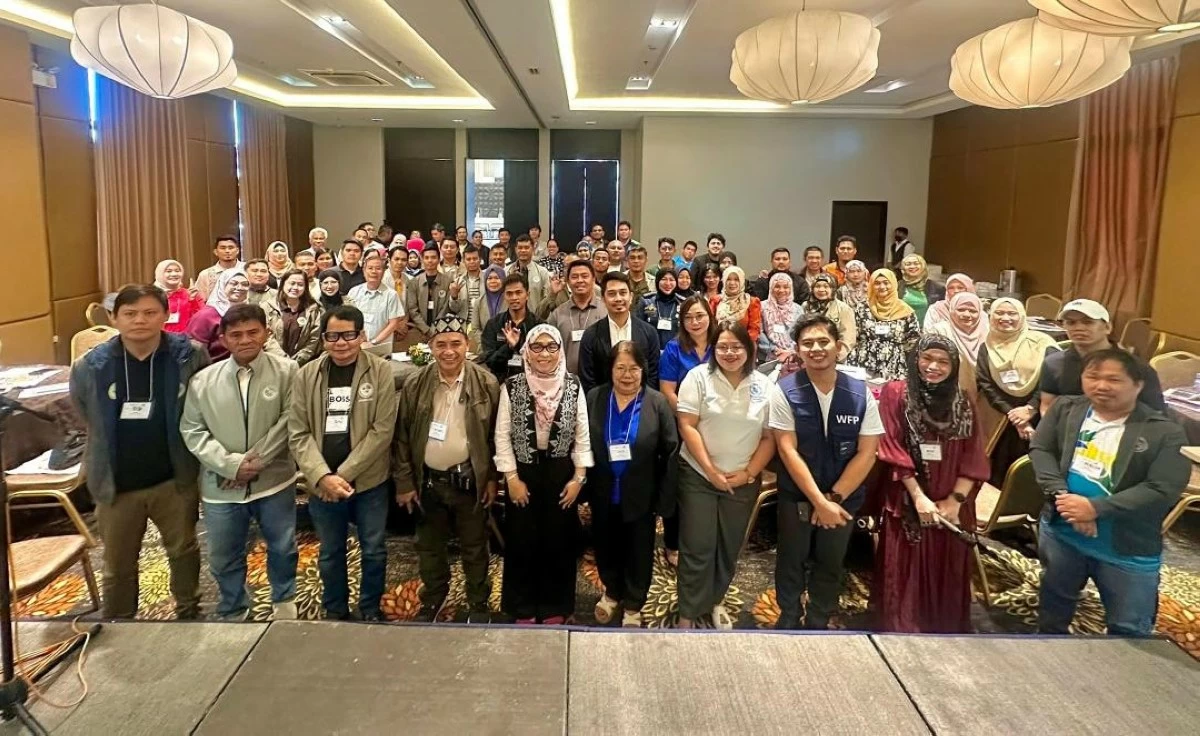
BARMM Climate Forum participants with MOST Minister Baileng S. Mantawil (center). (MOST-BARMM)
DAVAO CITY – The Ministry of Science and Technology (MOST) of the Bangsamoro Autonomous Region in Muslim Mindanao (BARMM) is strengthening preparations against the possible impact of the El Niño phenomenon in the region.
As part of preparations, representatives from different concerned agencies from the region are now in the city for the three-day BARMM Climate Forum to discuss climate conditions, forecasts, and preparedness measures in anticipation of the impact of El Niño.
MOST Minister Baileng S. Mantawil emphasized the importance of science-based decision-making and climate information dissemination activities.
With adequate climate information, Mantawil said that it could guide concerned government agencies to make concrete actions to help communities prepare and respond to climate-related hazards.
“Information becomes truly valuable when it leads to timely and appropriate action. The purpose of this forum is to translate science into decisions, forecasts into preparedness, and warnings into coordinated action,” said the minister, vice chairperson for disaster prevention and mitigation of the Bangsamoro Disaster Risk Reduction and Management Council (BDRRMC).
The event, which kicked off Tuesday, June 23, was organized by the Bangsamoro Rapid Emergency Action on Disaster Incidence (Bangsamoro READi) under the Ministry of the Interior and Local Government (MILG) in partnership with the United Nations World Food Programme (WFP).
Among the participants are representatives from local government units, Ministry of Agriculture, Fisheries, and Agrarian Reform (MAFAR), the Ministry of Social Services and Development (MSSD), and other Bangsamoro agencies.
With the prolonged dry spell, Mantawil said that communities should be prepared for the impact on agriculture, fisheries, water resources, and food security.
She assured that the forum will serve as a platform to strengthen coordination and ensure that government interventions are guided by accurate and timely climate information.
The Philippine Atmospheric, Geophysical, and Astronomical Services Administration (PAGASA) announced that there is an 80 percent probability that current conditions will develop into a full-blown El Niño.
PAGASA added that the event may persist until early 2027, warning that El Niño could become a “strong” to “very strong” event by the end of the year.
El Niño is the warm phase of the El Niño Southern Oscillation and is characterized by warmer-than-average sea surface temperatures (SSTs) in the Central and Eastern Equatorial Pacific and generally, cooler-than-average sea surface temperature over the Philippine Sea, according to the State weather bureau’s briefer.
Mantawil reminded participants that reduced rainfall may affect water sources of every household as well as irrigation systems.
“It may reduce agricultural and fisheries production, threaten the incomes of farmers and fisherfolk, place pressure on food prices, increase health risks, affect energy generation, and heighten the danger of fires and resource-related conflicts.”
Mantawil underscored the need for stronger collaboration among government agencies and stakeholders to ensure that climate forecasts are translated into effective preparedness and mitigation measures.
The forum aims to strengthen climate information services across the Bangsamoro government and enhance awareness of El Niño forecasts and advisories, the MOST minister said.
The forum also seeks to boost risk-informed decision-making in disaster risk reduction and climate adaptation efforts of the concerned agencies in the region.
“This forum comes at a critical moment. The anticipated El Niño conditions, prolonged dry spells, and possible droughts are not merely matters for meteorologists or technical experts. Their consequences can reach every aspect of Bangsamoro life,” she said.
CAPTION: BARMM Climate Forum

Related Tags

BARMM El Niño
ADVERTISEMENT
.most-popular .layout-ratio{ padding-bottom: 79.13%; } @media (min-width: 768px) and (max-width: 1024px) { .widget-title { font-size: 15px !important; } }

{{ articles_filter_1561_widget.title }}

.most-popular .layout-ratio{ padding-bottom: 79.13%; } @media (min-width: 768px) and (max-width: 1024px) { .widget-title { font-size: 15px !important; } }

{{ static_articles_1562_widget.title }}

.most-popular .layout-ratio{ padding-bottom: 79.13%; } @media (min-width: 768px) and (max-width: 1024px) { .widget-title { font-size: 15px !important; } }

{{ articles_filter_1563_widget.title }}

{{ articles_filter_1564_widget.title }}

.mb-article-details { position: relative; } .mb-article-details .article-body-preview, .mb-article-details .article-body-summary{ font-size: 17px; line-height: 30px; font-family: "Libre Caslon Text", serif; color: #000; } .mb-article-details .article-body-preview iframe , .mb-article-details .article-body-summary iframe{ width: 100%; margin: auto; } .read-more-background { background: linear-gradient(180deg, color(display-p3 1.000 1.000 1.000 / 0) 13.75%, color(display-p3 1.000 1.000 1.000 / 0.8) 30.79%, color(display-p3 1.000 1.000 1.000) 72.5%); position: absolute; height: 200px; width: 100%; bottom: 0; display: flex; justify-content: center; align-items: center; padding: 0; } .read-more-background a{ color: #000; } .read-more-btn { padding: 17px 45px; font-family: Inter; font-weight: 700; font-size: 18px; line-height: 16px; text-align: center; vertical-align: middle; border: 1px solid black; background-color: white; } .hidden { display: none; }
function initializeAllSwipers() { // Get all hidden inputs with cms_article_id document.querySelectorAll('[id^="cms_article_id_"]').forEach(function (input) { const cmsArticleId = input.value; const articleSelector = '#article-' + cmsArticleId + ' .body_images'; const swiperElement = document.querySelector(articleSelector); if (swiperElement && !swiperElement.classList.contains('swiper-initialized')) { new Swiper(articleSelector, { loop: true, pagination: false, navigation: { nextEl: '#article-' + cmsArticleId + ' .swiper-button-next', prevEl: '#article-' + cmsArticleId + ' .swiper-button-prev', }, }); } }); } setTimeout(initializeAllSwipers, 3000); const intersectionObserver = new IntersectionObserver( (entries) => { entries.forEach((entry) => { if (entry.isIntersecting) { const newUrl = entry.target.getAttribute("data-url"); if (newUrl) { history.pushState(null, null, newUrl); let article = entry.target; // Extract metadata const author = article.querySelector('.author-section').textContent.replace('By', '').trim(); const section = article.querySelector('.section-info ').textContent.replace(' ', ' '); const title = article.querySelector('.article-title h1').textContent; // Parse URL for Chartbeat path format const parsedUrl = new URL(newUrl, window.location.origin); const cleanUrl = parsedUrl.host + parsedUrl.pathname; // Update Chartbeat configuration if (typeof window._sf_async_config !== 'undefined') { window._sf_async_config.path = cleanUrl; window._sf_async_config.sections = section; window._sf_async_config.authors = author; } // Track virtual page view with Chartbeat if (typeof pSUPERFLY !== 'undefined' && typeof pSUPERFLY.virtualPage === 'function') { try { pSUPERFLY.virtualPage({ path: cleanUrl, title: title, sections: section, authors: author }); } catch (error) { console.error('ping error', error); } } // Optional: Update document title if (title && title !== document.title) { document.title = title; } } } }); }, { threshold: 0.1 } ); function showArticleBody(button) { const article = button.closest("article"); const summary = article.querySelector(".article-body-summary"); const body = article.querySelector(".article-body-preview"); const readMoreSection = article.querySelector(".read-more-background"); // Hide summary and read-more section summary.style.display = "none"; readMoreSection.style.display = "none"; // Show the full article body body.classList.remove("hidden"); } document.addEventListener("DOMContentLoaded", () => { let loadCount = 0; // Track how many times articles are loaded const offset = [1, 2, 3, 4, 5, 6, 7, 8, 9, 10]; // Offset values const currentUrl = window.location.pathname.substring(1); let isLoading = false; // Prevent multiple calls if (!currentUrl) { console.log("Current URL is invalid."); return; } const sentinel = document.getElementById("load-more-sentinel"); if (!sentinel) { console.log("Sentinel element not found."); return; } function isSentinelVisible() { const rect = sentinel.getBoundingClientRect(); return ( rect.top < window.innerHeight && rect.bottom >= 0 ); } function onScroll() { if (isLoading) return; if (isSentinelVisible()) { if (loadCount >= offset.length) { console.log("Maximum load attempts reached."); window.removeEventListener("scroll", onScroll); return; } isLoading = true; const currentOffset = offset[loadCount]; window.loadMoreItems().then(() => { let article = document.querySelector('#widget_1690 > div:nth-last-of-type(2) article'); intersectionObserver.observe(article) loadCount++; }).catch(error => { console.error("Error loading more items:", error); }).finally(() => { isLoading = false; }); } } window.addEventListener("scroll", onScroll); });

Sign up by email to receive news.