







The Philippines faces growing land degradation risks
Published Jun 22, 2026 03:13 pm


“If not prevented, desertification of the world can one day make camels the best and sole cars of our civilization,” said Mehmet Murat Ildan, a modern Turkish playwright, novelist, and philosopher recognized for his insightful writings, plays, and novels.
Every year on June 17, the international community observes World Day to Combat Desertification and Drought, aiming to raise public awareness of land degradation, desertification, and drought. Instituted by the United Nations General Assembly in 1994, the observance underscores the critical need to achieve land degradation neutrality on a global scale.
This year’s theme, "Rangelands: Recognize. Respect. Restore.," emphasizes the vital importance of the world's rangelands in fostering climate resilience, ensuring food security, and preserving biodiversity.
Nearly 40 percent of the planet’s land area is currently degraded, posing a significant threat to global food and water resources. With El Niño persisting, the problem becomes even more alarming.
Desertification refers to the degradation of drylands, including arid, semi-arid, and dry sub-humid areas, resulting in a decline in biological productivity, vegetation cover, and water resources.
The United Nations Environment Program (UNEP) said desertification does not mean the physical expansion of existing deserts. Rather, it signifies a decline in land quality that threatens ecosystems and human livelihoods in drylands worldwide, which account for roughly 40 to 52 percent of the Earth’s land surface.
Drought, on the other hand, is a prolonged period of significantly reduced rainfall that results in water shortages affecting people, agriculture, and ecosystems. Unlike sudden events such as floods or hurricanes, drought develops gradually, often leading people to underestimate its consequences.
On the occasion of World Day to Combat Desertification and Drought, the Philippines must remain vigilant. Otherwise, it may eventually confront challenges now faced by desertified regions.
Most Filipinos understand drought, especially as the country experiences another El Niño episode. Although the Philippines does not experience desertification in the conventional sense, it faces considerable land degradation that threatens soil health and agricultural productivity.
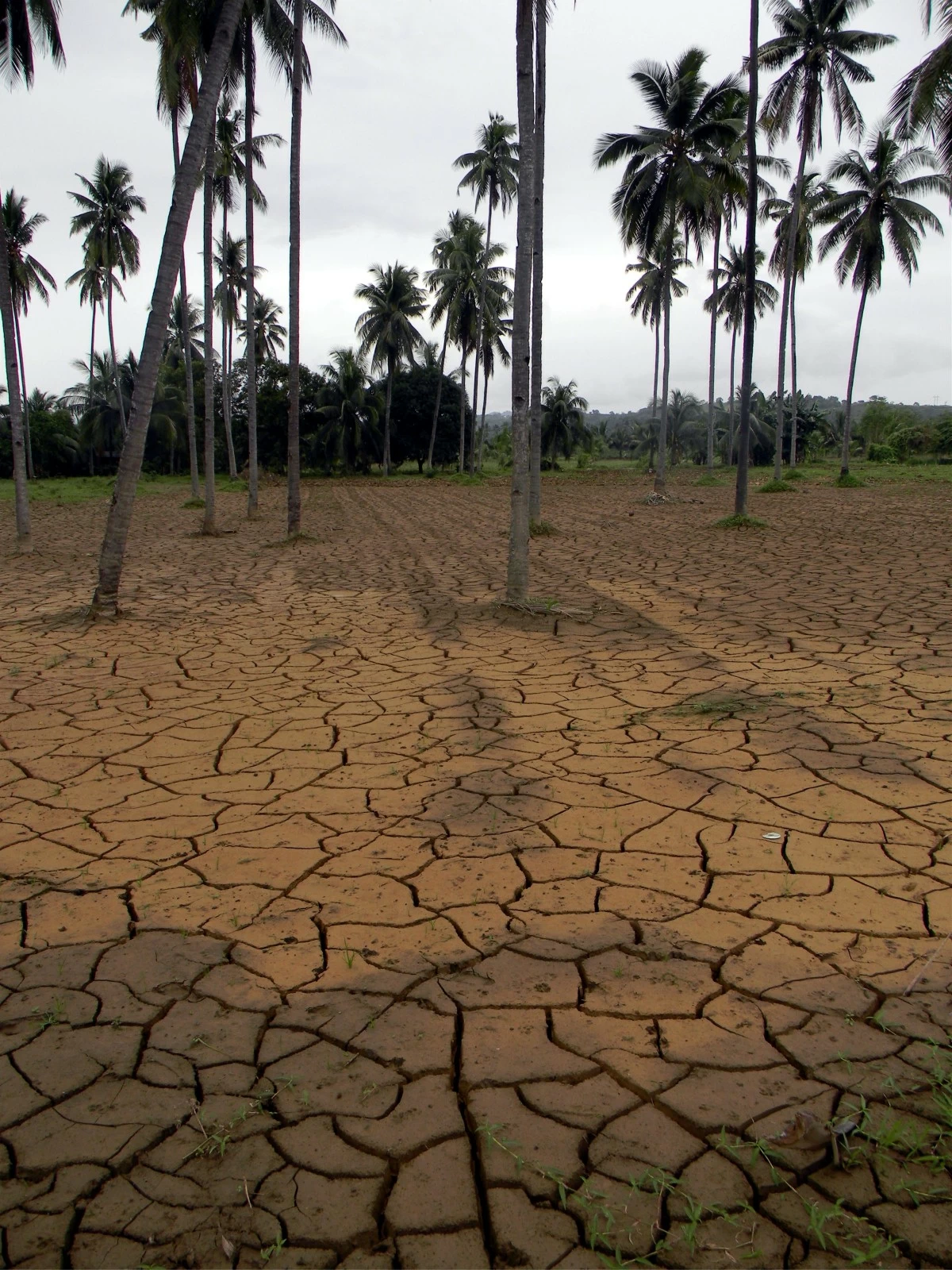
The current El Nino is bringing drought conditions that could affect food production in the country.
UNEP identified climate variability and drought as major natural drivers of desertification. Prolonged periods of inadequate rainfall diminish soil moisture, weaken vegetation, and increase the land’s susceptibility to wind and water erosion. Changes in temperature and rainfall patterns further intensify these impacts, particularly in already fragile ecosystems.
The immediate trigger for desertification is the loss of vegetation. When plants are removed or destroyed, soil loses its protective cover, resulting in erosion and declining fertility.
In the Philippines, however, land degradation is largely linked to human activities. The country’s growing population– estimated at about 117 million – has led to the overexploitation of land resources.
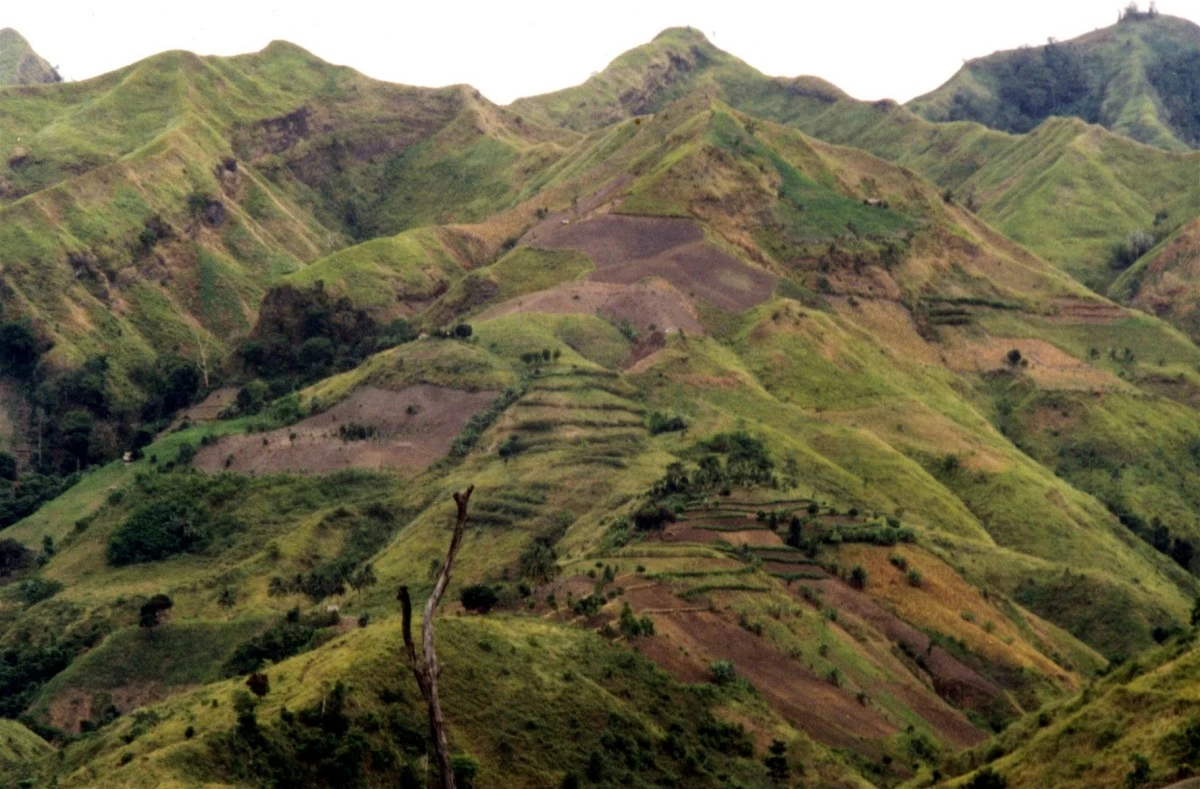
Without tree cover, uplands are susceptible to soil erosion.
As rural populations increase, many lowland farmers are forced to cultivate fragile upland areas characterized by slopes of 18 percent or greater. These areas comprise roughly 60 percent of the country's 30 million hectares of land. Limited knowledge of sustainable upland farming practices contributes to ecological degradation.
Traditional farming practices such as slash-and-burn or swidden agriculture, along with the cultivation of marginal lands, exacerbate soil erosion and the loss of soil fertility.
Extreme weather events, including prolonged droughts and intense rainfall, further degrade land quality. Recent elevated temperatures and El Niño conditions have already inflicted significant damage on agriculture, affecting thousands of farmers.
“Land is the foundation of all life-sustaining processes on the planet,” the Global Environment Facility (GEF) said. Established on the eve of the 1992 Rio Earth Summit, the GEF helps address some of the world’s most pressing environmental problems. “It provides us with food and water.”
In the Philippines, the Global Assessment of Land Degradation and Improvement found that some 33,064,628 Filipinos have been affected by land degradation.
“The total degraded land is estimated at 132,275 square kilometers,” the study said, noting that one square kilometer is equivalent to 100 hectares. Thus, approximately 13.2 million hectares of the country’s 30 million hectares of land have already been degraded.
Gary Gardner of the Washington-based Worldwatch Institute observed that while earlier civilizations could abandon exhausted land and move elsewhere, humanity today no longer has that option.
Soil formation takes time. According to Penelope ReVelle and Charles ReVelle, authors of The Environment: Issues and Choices for Society,” it takes 100 to 1,000 years to form just one inch of topsoil. Modern agriculture typically cultivates about six inches of topsoil.
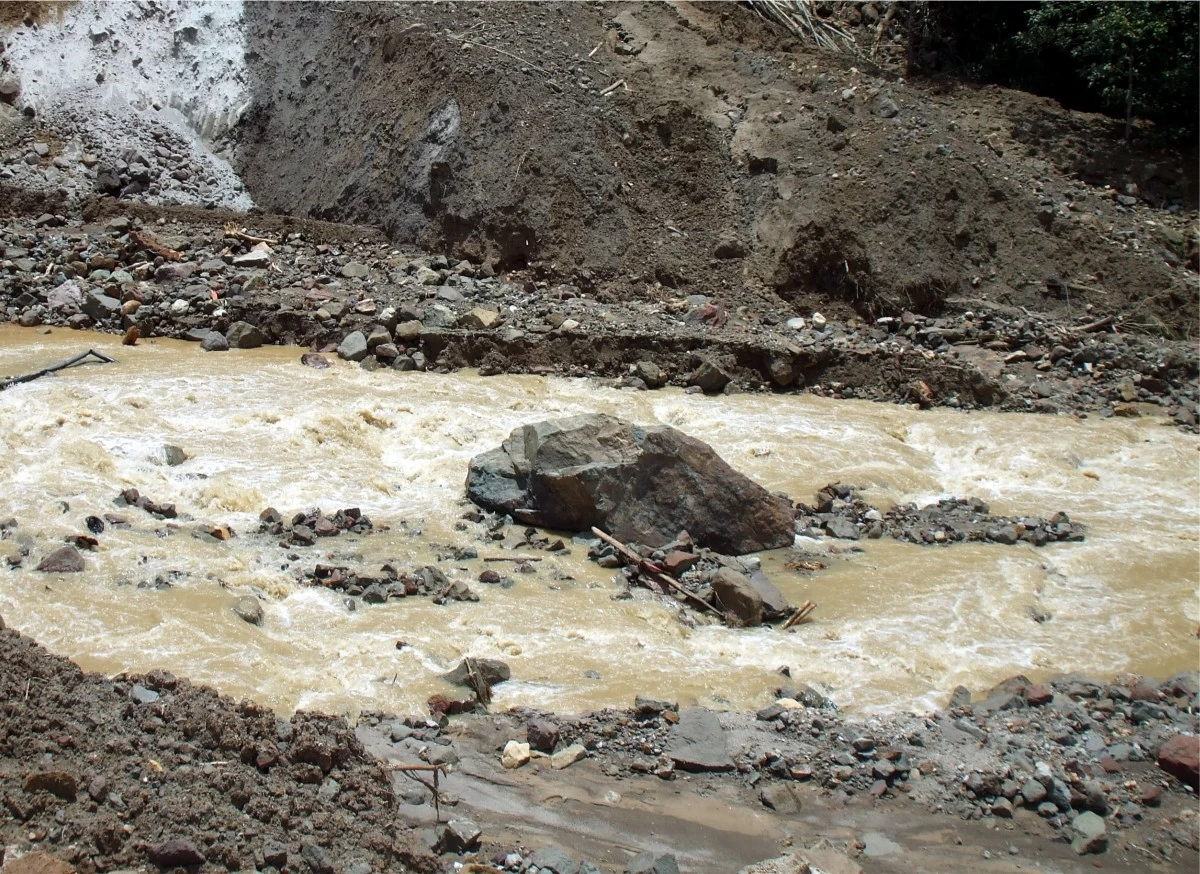
Eroded soil eventually finds its way into the seas, where it becomes both a nuisance and an environmental hazard.
“Soil erosion is an enemy to any nation – far worse than any outside enemy coming into a country and conquering it because it is an enemy you cannot see vividly,” said Rev. Harold R. Watson, recipient of the 1985 Ramon Magsaysay Award for peace and international understanding. “It’s a slow, creeping enemy that soon possesses the land. We must consider ourselves in a state of emergency; our topsoil is all going…”
Without topsoil, farming suffers.
Lester R. Brown and Edward C. Wolf, authors of a Worldwatch paper “Soil Erosion: Quiet Crisis in the World Economy,” said soil erosion affects crop production in two ways.
Brown and Wolf noted that soil erosion reduces productivity and forces farmers to spend more on inputs, eventually making some land uneconomical to cultivate.
"Land degradation is a global phenomenon,” said Luc Gnacadja, former executive secretary of the United Nations Convention to Combat Desertification. “Our future depends on how we manage it.”