






Manila Bulletin
 Business
Trade & Industry
Philippines races to impose new fishery rules after US ban over dolphin deaths
Business
Trade & Industry
Philippines races to impose new fishery rules after US ban over dolphin deaths
Business
Trade & Industry
Philippines races to impose new fishery rules after US ban over dolphin deaths
Philippines races to impose new fishery rules after US ban over dolphin deaths
Published Jun 22, 2026 02:20 pm


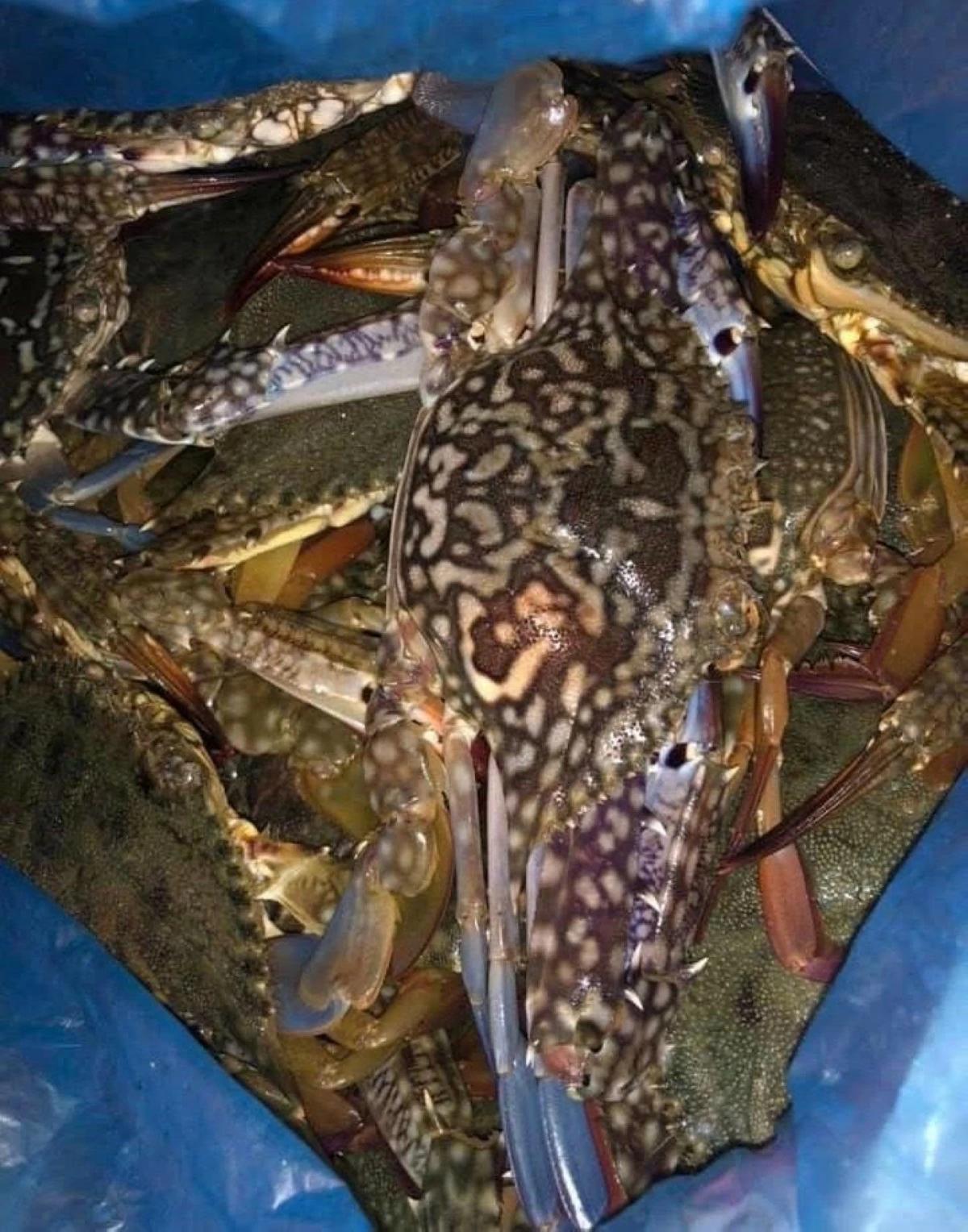
BLUE crabs from Negros Occidental. (Glazyl Masculino)
The government is exploring regulatory measures to encourage the United States (US) to reconsider its ban on blue swimming crab (BSC) imports, a restriction that threatens up to $60 million in annual export revenues.
In a public notice, the Bureau of Fisheries and Aquatic Resources (BFAR) announced it will hold a nationwide stakeholders’ consultation on July 3 to assess its proposed regulations for the BSC fishery.
BFAR is proposing limitations on the length and, potentially, the depth of crab gillnets—the vertical nets used to catch BSC—to comply with US marine requirements and regain access to its import market.
The National Marine Fisheries Service (NMFS) earlier announced that BSC imports from the Philippines would no longer be allowed into the US. The decision followed comparability findings which determined that the country was non-compliant with the US Marine Mammal Protection Act (MMPA).
The NMFS ruling stems from a report by the National Oceanic and Atmospheric Administration (NOAA), which noted that the local BSC fishery uses gillnets that do not meet MMPA standards. The MMPA’s import provisions prohibit commercial fish or fish products caught with gear that results in the bycatch of marine mammals in excess of US limits.
According to NOAA’s findings, BSC fisheries overlap with the habitat of Irrawaddy dolphins, and local gillnet operations have been linked to their deaths. Because these marine mammals are at high risk of extinction, protecting them from incidental capture in fishing nets is a conservation priority.
Currently, NOAA states there are deficiencies in proving that Irrawaddy dolphins are not dying or suffering injuries during local commercial BSC fishing operations. The agency added that without sufficient documentation of marine mammal protection efforts, it cannot determine whether bycatch levels remain within acceptable limits.
BFAR emphasized that these gaps make it necessary for the government to implement science-based, responsive regulations that support both marine mammal conservation and the sustainability of the BSC sector.
“These findings will have significant socioeconomic impacts, particularly on the livelihoods of thousands of fishers, crab pickers, traders, and exporters who depend on the industry,” BFAR said.
Earlier, the Confederation of Philippine Exporters (Cebu) Foundation Inc. (Philexport Cebu) urged BFAR to address NOAA's findings to protect the US market, which accounts for about 90 percent of total Philippine BSC exports. The group estimates that the country stands to lose between $50 million and $60 million annually in export revenues due to the import restriction.
“Competing supplier countries have already secured favorable comparability findings following successful corrective actions. The Philippines must move decisively to avoid prolonged exclusion from a critical export market,” Philexport Cebu said in a statement.
Among its recommendations to BFAR are the establishment of a national marine mammal bycatch monitoring program for BSC fisheries and a mandatory reporting program for all marine mammal mortalities, injuries, or interactions during commercial fishing operations.
“Compliance with NOAA requirements will enhance the credibility and long-term viability of Philippine seafood exports,” the group added.