






Manila Bulletin
 Business
Trade & Industry
Global tobacco giant wants Philippines to fight smugglers with AI
Business
Trade & Industry
Global tobacco giant wants Philippines to fight smugglers with AI
Business
Trade & Industry
Global tobacco giant wants Philippines to fight smugglers with AI
Global tobacco giant wants Philippines to fight smugglers with AI
Published Jun 22, 2026 06:17 pm


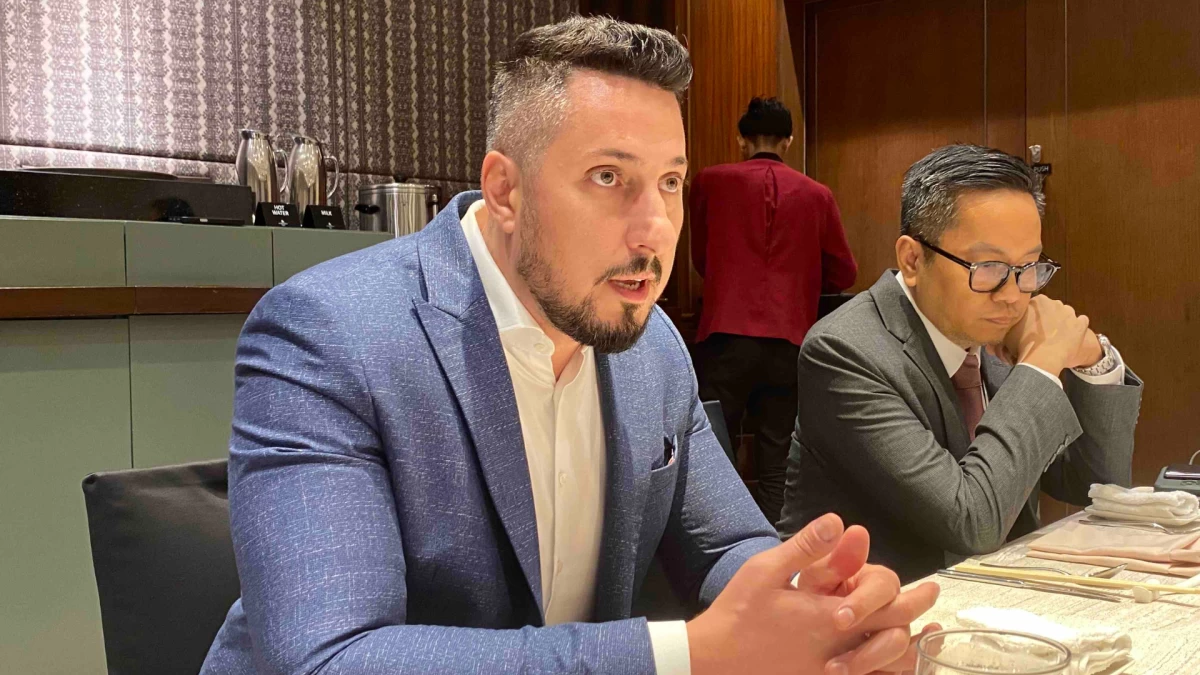
JTI regional director Valentin Dinca (Dexter Barro II/MANILA BULLETIN)
Japan Tobacco International (JTI) expects the Philippines to remain one of the world’s best when it comes to cracking down on illegal tobacco trade, but new technologies such as artificial intelligence (AI) must be deployed to make its efforts sustainable in the coming years.
On the sidelines of last week’s International Tobacco Summit, JTI regional director Valentin Dinca said the country is one of only two markets in the world that have consistently yielded positive results through their anti-illicit trade campaigns.
He said the Philippines is similar to Greece in being responsive and proactive in restricting the spread of unsafe tobacco products in its domestic market.
“They listen to us, the industry, as a whole. And they are there to take on any support that we have to offer. Be it intelligence or any kind of pre- or post-enforcement support,” said Dinca.
The government’s campaign to intensify efforts against illicit tobacco is important for JTI, especially since the country is one of its key markets worldwide. According to a 2024 briefer, the company holds a 49.7 percent market share in the Philippines.
Against this backdrop, Dinca said there is still room for improvement in the country’s measures against illegal tobacco trade through the adoption of technological advancements.
For one, he said law enforcement agencies may consider integrating AI tools into their operations to get ahead of smugglers who are becoming more sophisticated by the day.
The Bureau of Customs (BOC) said it has confiscated around ₱7.2 billion worth of illicit cigarettes and vape products so far this year, while data from the Philippine National Police (PNP) showed that it has seized ₱8.63 billion worth of smuggled cigarettes.
“The illegal trade level is still high, but it has improved a lot. And I am very hopeful that we're going to see a lot [more] positive results,” Dinca said.
At the regional level, he said governments in Southeast Asia still have a lot of work to do to reduce the level of illicit tobacco trade in their respective countries.
In particular, Dinca said JTI is pushing for the implementation of export control policies for imported products in other countries, similar to those in the Philippines.
“This is a best practice for the Philippines in that sense because you have the packaging compliance for the destination market. And that's something that should be replicated in all the other countries in order to ensure that the issue is addressed at the same level playing field,” he said.