







'Francisco' likely to intensify into super typhoon — PAGASA
Published Jun 22, 2026 05:58 pm


At A Glance
- As of 4 p.m., Monday, the center of the eye of Francisco was located 625 kilometers east of Tuguegarao City, Cagayan, packing maximum sustained winds of 175 kilometers per hour (kph) near the center and gustiness of up to 215 kph.
- A tropical cyclone is classified as a super typhoon once its maximum sustained winds reach at least 185 kph.
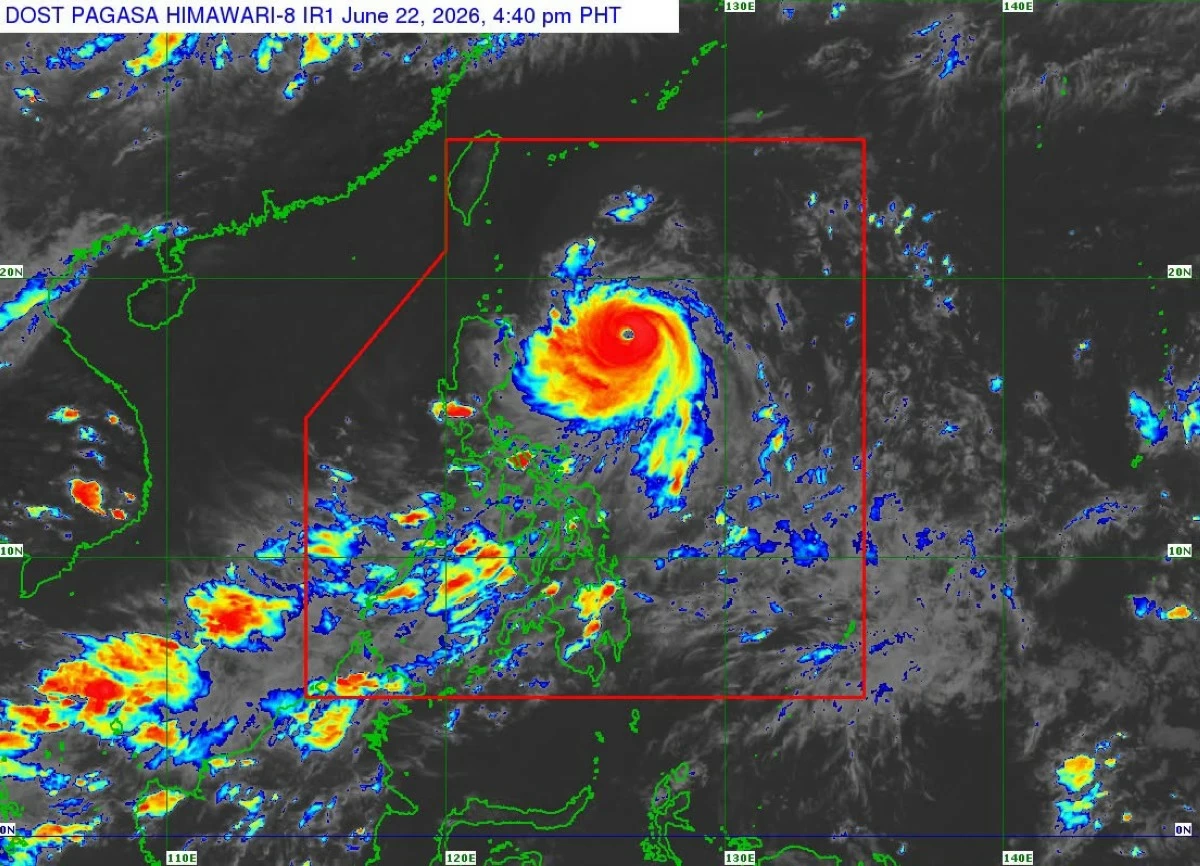
Satellite image of Typhoon Francisco (Mekkhala) (Courtesy of PAGASA)
Typhoon Francisco (international name “Mekkhala”) is on the verge of becoming a super typhoon as it rapidly intensifies over the Philippine Sea, the Philippine Atmospheric, Geophysical and Astronomical Services Administration (PAGASA) said on Monday afternoon, June 22.
As of 4 p.m., the center of the eye of Francisco was located 625 kilometers east of Tuguegarao City, Cagayan, packing maximum sustained winds of 175 kilometers per hour (kph) near the center and gustiness of up to 215 kph.
A tropical cyclone is classified as a super typhoon once its maximum sustained winds reach 185 kph.
In its 5 p.m. bulletin, PAGASA said Francisco is forecast to reach super typhoon category within the next 12 hours.
Tropical Cyclone Wind Signal No. 1 remains hoisted over Batanes, northeastern portion of Cagayan (Gonzaga and Santa Ana), and eastern portion of the Babuyan Islands (Babuyan Island, Didicas Island, and Camiguin Island).
“Minimal to minor impacts from strong winds are possible within any of the areas under Wind Signal No. 1,” PAGASA said.
The agency added that the highest wind signal likely to be hoisted during Francisco’s passage is Signal No. 2.
As of Monday afternoon, the typhoon was moving west-northwestward at 20 kph.
PAGASA said Francisco will continue moving generally northwestward until Tuesday, June 23, before slowing down and recurving north-northeastward toward the Ryukyu Islands in southern Japan.
Based on the latest track forecast, the typhoon is expected to exit the PAR on Friday, June 26.
The weather disturbance is forecast to remain far from the Philippine landmass, although PAGASA noted that a slight westward shift in its track remains possible.
A weakening trend is expected beginning Wednesday, June 24, due to increasingly unfavorable environmental conditions before Francisco exits the PAR.