

ADVERTISEMENT

24 Filipinos freed from Russian detention arrive home

Published Jun 21, 2026 08:03 am  |  Updated Jun 21, 2026 02:02 pm

At A Glance

  • The 24 Filipinos freed from nine months of detention in Russia have returned to the Philippines.
  • The first batch of six arrived shortly after midnight Saturday, while the remaining 18 landed in Manila at around 3:50 a.m.
  • Foreign Affairs Secretary Ma. Theresa Lazaro personally welcomed the returning Filipinos, whose release was secured following President Marcos' appeal to Russian President Vladimir Putin.
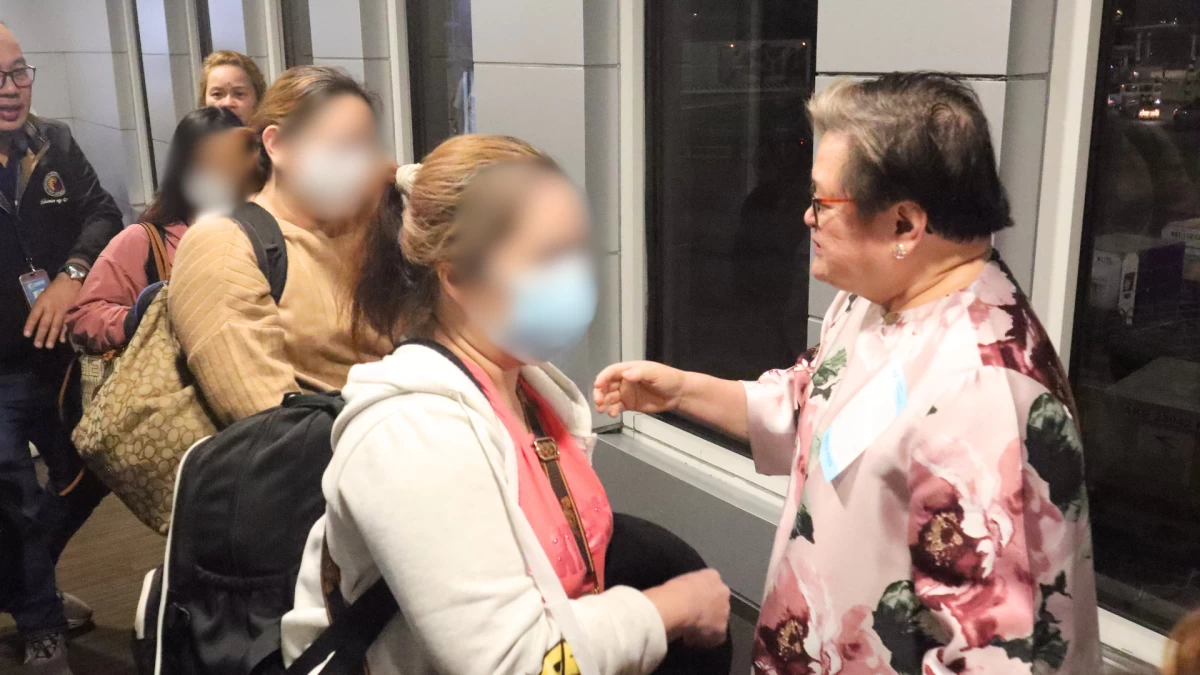
The first batch of Filipinos detained in Russia returns to the Philippines on June 21, 2026. The first six of the 24 Filipinos freed from Russian detention were greeted by Department of Foreign Affairs (DFA) Secretary Ma. Theresa Lazaro at the Ninoy Aquino International Airport (NAIA) Terminal 1 at around 12 a.m. The remaining 18 arrived in Manila around 3:50 a.m. (DFA)

The 24 Filipinos who were freed after spending nine months in detention in Russia have finally returned home and reunited with their families following the intervention of President Marcos.

According to the Department of Foreign Affairs (DFA), the first batch of six Filipinos arrived at the Ninoy Aquino International Airport (NAIA) shortly after 12 a.m. Saturday, while the remaining 18 landed at around 3:50 a.m.

Foreign Affairs Secretary Ma. Theresa Lazaro and a delegation from the DFA welcomed the returning Filipinos upon their arrival in Manila.

In a statement, the DFA said the 24 Filipino workers had been detained for nine months in the Russian Federation before being released following President Marcos’ request to Russian President Vladimir Putin.

The workers' return came just days after the President personally raised their case with Putin during their bilateral meeting on the sidelines of the ASEAN-Russia Commemorative Summit in Kazan on June 17.

According to the DFA, President Marcos was "deeply concerned" about the plight of the Filipinos and directly appealed to the Russian leader for assistance.

Following the President's request, Russian authorities immediately facilitated the workers' release by June 19, ending months of uncertainty for the Filipinos and their families.

Earlier, Marcos disclosed that he raised the case during his bilateral meeting with Putin, who initially said he was unaware of the situation.

The President later revealed that the Russian leader informed him that authorities had located the Filipinos, reviewed their case, and found that they had not been charged with any wrongdoing despite being held for nine months.

Putin then assured Marcos that Russia would "find a way to fix this problem."

The Filipinos were reportedly detained over immigration issues after allegedly falling victim to illegal recruiters.

They had been held in the Russian region of Yakutsk for nearly nine months without formal charges.

The DFA coordinated the repatriation with Russian authorities, while the Department of Migrant Workers (DMW) and the Overseas Workers Welfare Administration (OWWA) assisted in the repatriation process.

According to the DFA, President Marcos expressed his appreciation to President Putin for his positive response and thanked Russian authorities for their cooperation in resolving the case.

The release and repatriation of the 24 Filipinos became one of the immediate outcomes of the President's first visit to Russia, which also coincided with the 50th anniversary of diplomatic relations between Manila and Moscow.

Related Tags

President Marcos Bongbong Marcos DFA Department of Foreign Affairs Ma. Theresa Lazaro PH-Russia repatriates
ADVERTISEMENT
.most-popular .layout-ratio{ padding-bottom: 79.13%; } @media (min-width: 768px) and (max-width: 1024px) { .widget-title { font-size: 15px !important; } }

{{ articles_filter_1561_widget.title }}

.most-popular .layout-ratio{ padding-bottom: 79.13%; } @media (min-width: 768px) and (max-width: 1024px) { .widget-title { font-size: 15px !important; } }

{{ static_articles_1562_widget.title }}

.most-popular .layout-ratio{ padding-bottom: 79.13%; } @media (min-width: 768px) and (max-width: 1024px) { .widget-title { font-size: 15px !important; } }

{{ articles_filter_1563_widget.title }}

{{ articles_filter_1564_widget.title }}

.mb-article-details { position: relative; } .mb-article-details .article-body-preview, .mb-article-details .article-body-summary{ font-size: 17px; line-height: 30px; font-family: "Libre Caslon Text", serif; color: #000; } .mb-article-details .article-body-preview iframe , .mb-article-details .article-body-summary iframe{ width: 100%; margin: auto; } .read-more-background { background: linear-gradient(180deg, color(display-p3 1.000 1.000 1.000 / 0) 13.75%, color(display-p3 1.000 1.000 1.000 / 0.8) 30.79%, color(display-p3 1.000 1.000 1.000) 72.5%); position: absolute; height: 200px; width: 100%; bottom: 0; display: flex; justify-content: center; align-items: center; padding: 0; } .read-more-background a{ color: #000; } .read-more-btn { padding: 17px 45px; font-family: Inter; font-weight: 700; font-size: 18px; line-height: 16px; text-align: center; vertical-align: middle; border: 1px solid black; background-color: white; } .hidden { display: none; }
function initializeAllSwipers() { // Get all hidden inputs with cms_article_id document.querySelectorAll('[id^="cms_article_id_"]').forEach(function (input) { const cmsArticleId = input.value; const articleSelector = '#article-' + cmsArticleId + ' .body_images'; const swiperElement = document.querySelector(articleSelector); if (swiperElement && !swiperElement.classList.contains('swiper-initialized')) { new Swiper(articleSelector, { loop: true, pagination: false, navigation: { nextEl: '#article-' + cmsArticleId + ' .swiper-button-next', prevEl: '#article-' + cmsArticleId + ' .swiper-button-prev', }, }); } }); } setTimeout(initializeAllSwipers, 3000); const intersectionObserver = new IntersectionObserver( (entries) => { entries.forEach((entry) => { if (entry.isIntersecting) { const newUrl = entry.target.getAttribute("data-url"); if (newUrl) { history.pushState(null, null, newUrl); let article = entry.target; // Extract metadata const author = article.querySelector('.author-section').textContent.replace('By', '').trim(); const section = article.querySelector('.section-info ').textContent.replace(' ', ' '); const title = article.querySelector('.article-title h1').textContent; // Parse URL for Chartbeat path format const parsedUrl = new URL(newUrl, window.location.origin); const cleanUrl = parsedUrl.host + parsedUrl.pathname; // Update Chartbeat configuration if (typeof window._sf_async_config !== 'undefined') { window._sf_async_config.path = cleanUrl; window._sf_async_config.sections = section; window._sf_async_config.authors = author; } // Track virtual page view with Chartbeat if (typeof pSUPERFLY !== 'undefined' && typeof pSUPERFLY.virtualPage === 'function') { try { pSUPERFLY.virtualPage({ path: cleanUrl, title: title, sections: section, authors: author }); } catch (error) { console.error('ping error', error); } } // Optional: Update document title if (title && title !== document.title) { document.title = title; } } } }); }, { threshold: 0.1 } ); function showArticleBody(button) { const article = button.closest("article"); const summary = article.querySelector(".article-body-summary"); const body = article.querySelector(".article-body-preview"); const readMoreSection = article.querySelector(".read-more-background"); // Hide summary and read-more section summary.style.display = "none"; readMoreSection.style.display = "none"; // Show the full article body body.classList.remove("hidden"); } document.addEventListener("DOMContentLoaded", () => { let loadCount = 0; // Track how many times articles are loaded const offset = [1, 2, 3, 4, 5, 6, 7, 8, 9, 10]; // Offset values const currentUrl = window.location.pathname.substring(1); let isLoading = false; // Prevent multiple calls if (!currentUrl) { console.log("Current URL is invalid."); return; } const sentinel = document.getElementById("load-more-sentinel"); if (!sentinel) { console.log("Sentinel element not found."); return; } function isSentinelVisible() { const rect = sentinel.getBoundingClientRect(); return ( rect.top < window.innerHeight && rect.bottom >= 0 ); } function onScroll() { if (isLoading) return; if (isSentinelVisible()) { if (loadCount >= offset.length) { console.log("Maximum load attempts reached."); window.removeEventListener("scroll", onScroll); return; } isLoading = true; const currentOffset = offset[loadCount]; window.loadMoreItems().then(() => { let article = document.querySelector('#widget_1690 > div:nth-last-of-type(2) article'); intersectionObserver.observe(article) loadCount++; }).catch(error => { console.error("Error loading more items:", error); }).finally(() => { isLoading = false; }); } } window.addEventListener("scroll", onScroll); });

Sign up by email to receive news.