ADVERTISEMENT

The fathers behind the stories

Published Jun 20, 2026 01:47 pm
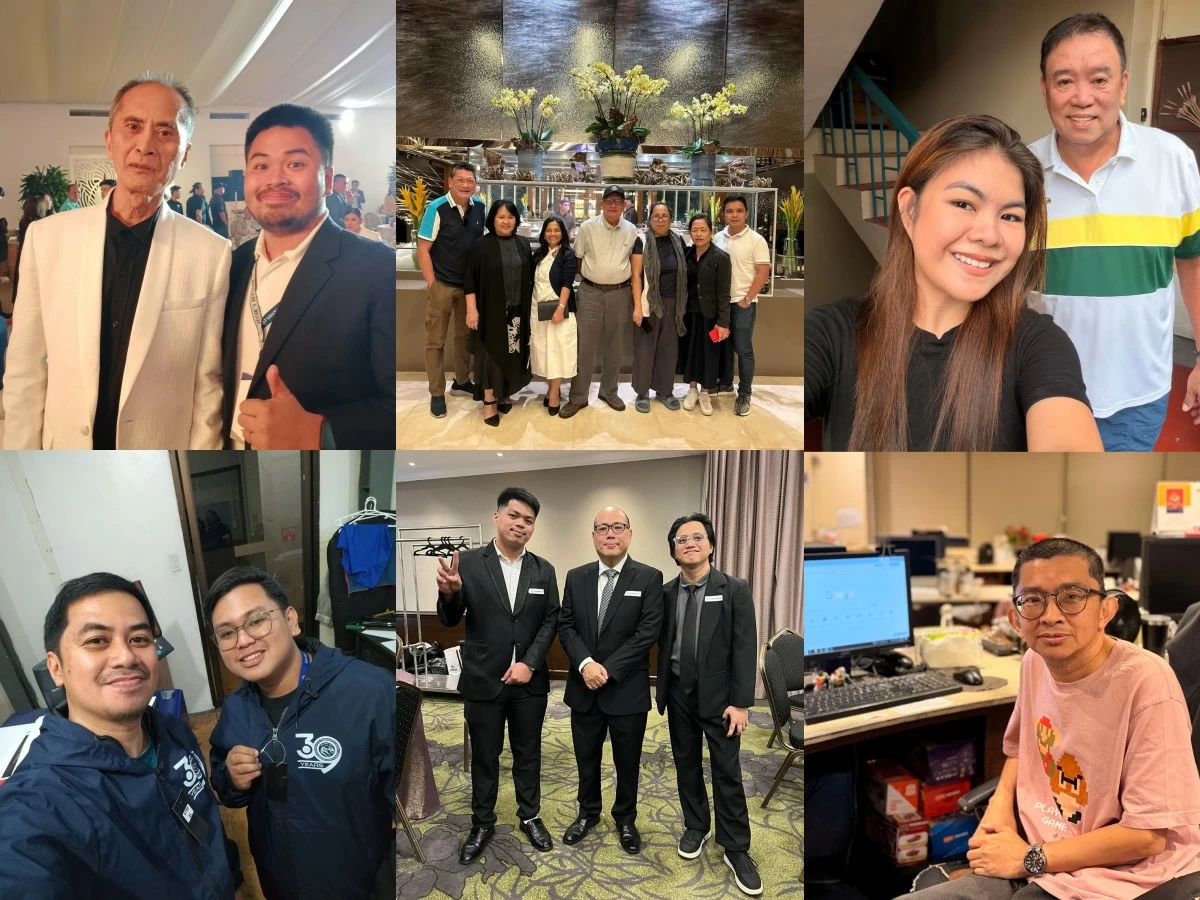
From left: Executive Editor Vicente Edgardo “Ed” Bartilad shares a moment with Tempo Head Patrick Garcia; Business Editor Chino Leyco with Business News Reporter James Loyola and former Business reporters; Metro Reporter Diann Calucin with Print Editor Heraclio  "Rocky" Celestino Nazareno; Senior Head of Graphics Joseph “Oteph” Antipolo with Junior Graphic Artist Naizer Dahuya; Sportswriter Mark Rey Montejo with Sports Editor Rey Virgilio Lachica and Sportswriter Reynald Magallon; and Provincial Editor Tristan Lozano at the newsroom.
From left: Executive Editor Vicente Edgardo “Ed” Bartilad shares a moment with Tempo Head Patrick Garcia; Business Editor Chino Leyco with Business News Reporter James Loyola and former Business reporters; Metro Reporter Diann Calucin with Print Editor Heraclio "Rocky" Celestino Nazareno; Senior Head of Graphics Joseph “Oteph” Antipolo with Junior Graphic Artist Naizer Dahuya; Sportswriter Mark Rey Montejo with Sports Editor Rey Virgilio Lachica and Sportswriter Reynald Magallon; and Provincial Editor Tristan Lozano at the newsroom.

In every newsroom, there are editors known for their sharp headlines, strong opinions, or decades of experience. At the Manila Bulletin, these figures exist in more ways than one.

But for me, this story begins with one.

Editor Heraclio Celestino Nazareno, known to many simply as Sir Rocky, has spent years shaping stories as one of the paper’s editors. But to those whose lives he has touched, he has become far more than a boss.

He is also a father, one who continued raising his child after the loss of his wife, carrying both responsibility and love with quiet grace, while still finding room in his life to care for others.

I experienced this firsthand.

At a time when I had nowhere to stay in Manila, Sir Rocky offered me a unit in one of his apartment buildings. Even though I was not under his section and barely knew him personally, he extended help without hesitation.

But he did not stop there.

At one point, he painted my door pink, making it the only one in the building.

It sounds like such a small thing. But somehow, that pink door captured the kind of person he is, thoughtful in ways people do not always see.

Sometimes, there would simply be a knock.

I would open the door to find him quietly handing me food he had cooked himself, or groceries he thought I might need.

No long conversations. No need for acknowledgment.

Just kindness offered as naturally as breathing.

Across the newsroom, many carry their own quiet stories about the editors who shaped them, not just as journalists, but as people.

For some, that guidance comes at defining moments.

For Executive Editor Vicente Edgardo “Ed” Bartilad, giving second chances is central to how he leads, a quiet principle that has become deeply personal for many in the newsroom.

For Patrick Garcia, Head of Tempo, that principle surfaced at one of the lowest points of his life.

He recalled a time when Sir Ed asked him to step away from work and share a simple dinner. There were no deadlines, no talk of headlines, only a conversation about life.

It was a small gesture. But for Garcia, it meant everything.

“Kung tatanungin mo ako kung bakit seven years na ako nandito (If you ask me why I’ve stayed here for seven years),” he said, “it all goes back to Sir Ed… that conversation didn’t just change how I worked, it changed how I saw life.”
He was later entrusted to lead Tempo under Sir Ed, a break he never saw coming. Yet what remained with him was not the title but the example set before him.
“Bukod sa tatay ko, pag nagkaroon na ako ng sarili kong pamilya, gusto kong maging tatay na kagaya ni Sir Ed (Aside from my own father, when I have a family of my own, I want to be the kind of father that Sir Ed is).”

Miles away from Manila, the same presence is felt even without meeting in person.

Ivy Tejano, a correspondent based in Davao City, said her connection with Provincial Editor Tristan Lozano has been built entirely through screens over the years.

And yet, the distance never felt real.

“Even without meeting in person, it already feels like we have,” she said.

In what she describes as an online newsroom, that steady presence matters. The guidance feels constant, familiar, and deeply human.

For others, that presence comes through discipline.

“I had only been with Manila Bulletin for a few months, and Sir Rey Virgilio Lachica (Tempo Sports Editor) barely spoke to me,” sportswriter Mark Rey Montejo shared.

“I honestly thought he didn’t like me, that he was strict, maybe even a bit of a terror, especially when it came to our copies.”

But over time, that perception changed.

“I started to notice that he would call, not just about work, but to ask how I was, how my family was. That’s when I realized he wasn’t distant. He just listens first.”

More than being a disciplined editor, Montejo said Sir Rey is someone who quietly looks out for his people.

“Parang tatay, pinapaalala sa’yo kung kailan ka dapat magpakatatag (Like a father, he reminds you when you need to be strong).”

In the Business section, that same presence comes through a kind of leadership rooted in quiet example.

Business News Reporter James Loyola shared that Business Editor Chino Leyco is someone people naturally look up to, not just on the beat, but even within his own family.

As an editor, Loyola sees him as both protective and guiding, especially for younger reporters finding their footing in business journalism.

In recent years, that sense of priority has only deepened, with Sir Chino choosing to be more present for his family, often passing on additional work travel to stay closer to home.

For others, guidance begins at the very start.

Junior Graphic Artist Naizer Dahuya described the newsroom as unfamiliar ground when he was just starting.

Still learning the ropes of layout, he found guidance from Senior Head of Graphics Joseph “Oteph” Antipolo, who stepped in when everything felt new.

What began as technical instruction grew into something more. There were jokes, shared stories, and moments that blurred the line between work and family.

On days he rode his motorcycle, especially during heavy rain, Sir Oteph would check in to make sure he got home safely.

Stories like these echo across desks and sections.

Some editors shape stories. Others shape people.

This Father’s Day, we recognize not only the fathers who go home to their families after a long day’s work, but also those who take on that role within the newsroom in quieter ways.

Because long after the stories are published and the deadlines fade, what truly endures is the way you made others feel.

Related Tags

Father\'s Day METRONEWS EDITORS DESK Editorial Manila Bulletin
ADVERTISEMENT
.most-popular .layout-ratio{ padding-bottom: 79.13%; } @media (min-width: 768px) and (max-width: 1024px) { .widget-title { font-size: 15px !important; } }

{{ articles_filter_1561_widget.title }}

.most-popular .layout-ratio{ padding-bottom: 79.13%; } @media (min-width: 768px) and (max-width: 1024px) { .widget-title { font-size: 15px !important; } }

{{ static_articles_1562_widget.title }}

.most-popular .layout-ratio{ padding-bottom: 79.13%; } @media (min-width: 768px) and (max-width: 1024px) { .widget-title { font-size: 15px !important; } }

{{ articles_filter_1563_widget.title }}

{{ articles_filter_1564_widget.title }}

.mb-article-details { position: relative; } .mb-article-details .article-body-preview, .mb-article-details .article-body-summary{ font-size: 17px; line-height: 30px; font-family: "Libre Caslon Text", serif; color: #000; } .mb-article-details .article-body-preview iframe , .mb-article-details .article-body-summary iframe{ width: 100%; margin: auto; } .read-more-background { background: linear-gradient(180deg, color(display-p3 1.000 1.000 1.000 / 0) 13.75%, color(display-p3 1.000 1.000 1.000 / 0.8) 30.79%, color(display-p3 1.000 1.000 1.000) 72.5%); position: absolute; height: 200px; width: 100%; bottom: 0; display: flex; justify-content: center; align-items: center; padding: 0; } .read-more-background a{ color: #000; } .read-more-btn { padding: 17px 45px; font-family: Inter; font-weight: 700; font-size: 18px; line-height: 16px; text-align: center; vertical-align: middle; border: 1px solid black; background-color: white; } .hidden { display: none; }
function initializeAllSwipers() { // Get all hidden inputs with cms_article_id document.querySelectorAll('[id^="cms_article_id_"]').forEach(function (input) { const cmsArticleId = input.value; const articleSelector = '#article-' + cmsArticleId + ' .body_images'; const swiperElement = document.querySelector(articleSelector); if (swiperElement && !swiperElement.classList.contains('swiper-initialized')) { new Swiper(articleSelector, { loop: true, pagination: false, navigation: { nextEl: '#article-' + cmsArticleId + ' .swiper-button-next', prevEl: '#article-' + cmsArticleId + ' .swiper-button-prev', }, }); } }); } setTimeout(initializeAllSwipers, 3000); const intersectionObserver = new IntersectionObserver( (entries) => { entries.forEach((entry) => { if (entry.isIntersecting) { const newUrl = entry.target.getAttribute("data-url"); if (newUrl) { history.pushState(null, null, newUrl); let article = entry.target; // Extract metadata const author = article.querySelector('.author-section').textContent.replace('By', '').trim(); const section = article.querySelector('.section-info ').textContent.replace(' ', ' '); const title = article.querySelector('.article-title h1').textContent; // Parse URL for Chartbeat path format const parsedUrl = new URL(newUrl, window.location.origin); const cleanUrl = parsedUrl.host + parsedUrl.pathname; // Update Chartbeat configuration if (typeof window._sf_async_config !== 'undefined') { window._sf_async_config.path = cleanUrl; window._sf_async_config.sections = section; window._sf_async_config.authors = author; } // Track virtual page view with Chartbeat if (typeof pSUPERFLY !== 'undefined' && typeof pSUPERFLY.virtualPage === 'function') { try { pSUPERFLY.virtualPage({ path: cleanUrl, title: title, sections: section, authors: author }); } catch (error) { console.error('ping error', error); } } // Optional: Update document title if (title && title !== document.title) { document.title = title; } } } }); }, { threshold: 0.1 } ); function showArticleBody(button) { const article = button.closest("article"); const summary = article.querySelector(".article-body-summary"); const body = article.querySelector(".article-body-preview"); const readMoreSection = article.querySelector(".read-more-background"); // Hide summary and read-more section summary.style.display = "none"; readMoreSection.style.display = "none"; // Show the full article body body.classList.remove("hidden"); } document.addEventListener("DOMContentLoaded", () => { let loadCount = 0; // Track how many times articles are loaded const offset = [1, 2, 3, 4, 5, 6, 7, 8, 9, 10]; // Offset values const currentUrl = window.location.pathname.substring(1); let isLoading = false; // Prevent multiple calls if (!currentUrl) { console.log("Current URL is invalid."); return; } const sentinel = document.getElementById("load-more-sentinel"); if (!sentinel) { console.log("Sentinel element not found."); return; } function isSentinelVisible() { const rect = sentinel.getBoundingClientRect(); return ( rect.top < window.innerHeight && rect.bottom >= 0 ); } function onScroll() { if (isLoading) return; if (isSentinelVisible()) { if (loadCount >= offset.length) { console.log("Maximum load attempts reached."); window.removeEventListener("scroll", onScroll); return; } isLoading = true; const currentOffset = offset[loadCount]; window.loadMoreItems().then(() => { let article = document.querySelector('#widget_1690 > div:nth-last-of-type(2) article'); intersectionObserver.observe(article) loadCount++; }).catch(error => { console.error("Error loading more items:", error); }).finally(() => { isLoading = false; }); } } window.addEventListener("scroll", onScroll); });

Sign up by email to receive news.