

ADVERTISEMENT

Scottie Scheffler fires classic round to surge into US Open contention

Published Jun 20, 2026 12:54 pm  |  Updated Jun 20, 2026 01:01 pm

At A Glance

  • SOUTHAMPTON, New York (AP) — Scottie Scheffler gritted and grinned his way into contention at the U.S. Open on Friday, June 19, bouncing back from a 2-over start at Shinnecock Hills with a classic Scheffler round: calm, patient and close to perfect.
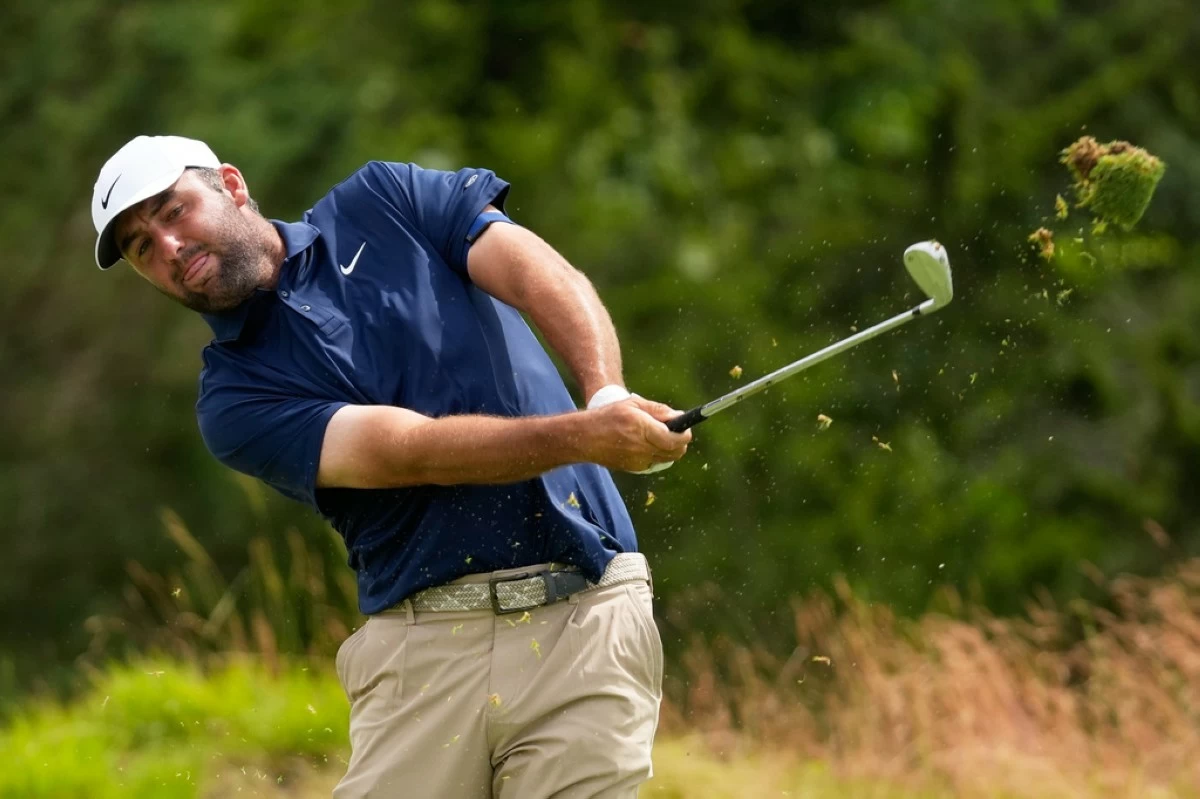
Scottie Scheffler hits his tee shot on the 11th hole during the second round of the U.S. Open golf tournament at Shinnecock Hills Golf Club in Southampton, N.Y., Friday, June 19, 2026.(AP Photo/Seth Wenig)
SOUTHAMPTON, New York (AP) — Scottie Scheffler gritted and grinned his way into contention at the U.S. Open on Friday, June 19, bouncing back from a 2-over start at Shinnecock Hills with a classic Scheffler round: calm, patient and close to perfect.
Scheffler's 2-under 68 put him at even par for the tournament, tied for 11th place and seven strokes behind leader Wyndham Clark, with two more rounds to go. If Scheffler wins Sunday, his 30th birthday, he'll become the seventh player to complete the career Grand Slam.
The four-time major champion accomplished a different feat Friday, snapping his streak of 10 U.S. Open rounds without breaking par. Last year at Oakmont, he tied for seventh at 4 over.
Scheffler was better and more relaxed from the start on Friday after an animated conversation on the driving range with coach Randy Smith following play Thursday.
He birdied the 10th hole, his first of the day in the U.S. Open's split-tee format, after shooting par there on Thursday while playing in a morning wave of players that got the brunt of strong winds and tough conditions.
Asked how he'd prefer the course be set up for the weekend, Scheffler said: "Doesn’t really matter to me. I just play."
In all, Scheffler had three birdies and just one bogey in the second round, compared with four birdies, four bogeys and a double bogey on Thursday.
“I did a good job of keeping a pretty clean card today,” Scheffler said. “I had the bogey there on my fourth hole, which was 13, but outside of that, no bogeys.”
“That’s always nice when you’re coming around a U.S. Open golf course," he added, "especially one as challenging as this."
Scheffler, who followed an over-par opening round with a under-par round three other times this season, showed flashes in Friday's round of his steady, methodical style in winning two Masters and last year's the PGA Championship and British Open.
Overall on Friday, he hit 12 of 14 fairways off the tee and reached 15 greens in regulation. On Thursday, he hit 12 fairways on Thursday, but just nine greens in regulation.
He came away wanting more. Scheffler buckled his knees and stared at the grandstand on Friday as his 17-foot birdie putt on No. 2 stayed just to the left of the cup. He slung his shoulders in disbelief as a 15-footer on No. 7 curled short.
“I wish I could have made a few more birdies coming in, but I did a lot of good stuff out there,” Scheffler said. “Hit some nice shots. Hit a lot of good putts as well. They were just kind of right around the edge.”
Scheffler, in prime position for a birdie on No. 4, swiped his putter at the green as his putt bobbled to a stop about a foot short of the hole. But in a moment of levity, he broke out into a smile when his caddie, Ted Scott, stated the obvious about what had happened.
The golf ball bounced, Scott said, mimicking the movement with his arm.
“Oh, it did?” Scheffler said, turning to him with a tinge of sarcasm in his voice.
Scheffler’s bogey on No. 13, the shortest par 4 on the course, came after he bunkered his approach shot and missed a 10-foot par putt. After a par-saving up and down from the sand on the par-3 17th, Scheffler didn’t come close to trouble again.
“I think the tournament is halfway done,” Scheffler said. “Yesterday was a day in which you could kind of shoot yourself out of the tournament. The conditions were really, really tough yesterday. Did a good job of hanging in there.”
“I had a tough front nine yesterday, but battled back nicely on the back nine," he added. "Then had another solid day today to kind of back that up. You know, hopefully do more of the same over the next couple of days.”
Throughout Friday's round, Scheffler and his playing partners — defending U.S. Open champion J.J. Spaun and last year's U.S. Amateur champion Mason Howell — were forced to wait while groups up ahead played their shots.
Standing on the tee box at No. 2, Scheffler pulled out a peanut butter and jelly sandwich and ate half, ignoring a fan's pressing query: “What's that? PB&J? Grape jelly kind of guy?”

Related Tags

Scottie Scheffler US Open
ADVERTISEMENT
.most-popular .layout-ratio{ padding-bottom: 79.13%; } @media (min-width: 768px) and (max-width: 1024px) { .widget-title { font-size: 15px !important; } }

{{ articles_filter_1561_widget.title }}

.most-popular .layout-ratio{ padding-bottom: 79.13%; } @media (min-width: 768px) and (max-width: 1024px) { .widget-title { font-size: 15px !important; } }

{{ static_articles_1562_widget.title }}

.most-popular .layout-ratio{ padding-bottom: 79.13%; } @media (min-width: 768px) and (max-width: 1024px) { .widget-title { font-size: 15px !important; } }

{{ articles_filter_1563_widget.title }}

{{ articles_filter_1564_widget.title }}

.mb-article-details { position: relative; } .mb-article-details .article-body-preview, .mb-article-details .article-body-summary{ font-size: 17px; line-height: 30px; font-family: "Libre Caslon Text", serif; color: #000; } .mb-article-details .article-body-preview iframe , .mb-article-details .article-body-summary iframe{ width: 100%; margin: auto; } .read-more-background { background: linear-gradient(180deg, color(display-p3 1.000 1.000 1.000 / 0) 13.75%, color(display-p3 1.000 1.000 1.000 / 0.8) 30.79%, color(display-p3 1.000 1.000 1.000) 72.5%); position: absolute; height: 200px; width: 100%; bottom: 0; display: flex; justify-content: center; align-items: center; padding: 0; } .read-more-background a{ color: #000; } .read-more-btn { padding: 17px 45px; font-family: Inter; font-weight: 700; font-size: 18px; line-height: 16px; text-align: center; vertical-align: middle; border: 1px solid black; background-color: white; } .hidden { display: none; }
function initializeAllSwipers() { // Get all hidden inputs with cms_article_id document.querySelectorAll('[id^="cms_article_id_"]').forEach(function (input) { const cmsArticleId = input.value; const articleSelector = '#article-' + cmsArticleId + ' .body_images'; const swiperElement = document.querySelector(articleSelector); if (swiperElement && !swiperElement.classList.contains('swiper-initialized')) { new Swiper(articleSelector, { loop: true, pagination: false, navigation: { nextEl: '#article-' + cmsArticleId + ' .swiper-button-next', prevEl: '#article-' + cmsArticleId + ' .swiper-button-prev', }, }); } }); } setTimeout(initializeAllSwipers, 3000); const intersectionObserver = new IntersectionObserver( (entries) => { entries.forEach((entry) => { if (entry.isIntersecting) { const newUrl = entry.target.getAttribute("data-url"); if (newUrl) { history.pushState(null, null, newUrl); let article = entry.target; // Extract metadata const author = article.querySelector('.author-section').textContent.replace('By', '').trim(); const section = article.querySelector('.section-info ').textContent.replace(' ', ' '); const title = article.querySelector('.article-title h1').textContent; // Parse URL for Chartbeat path format const parsedUrl = new URL(newUrl, window.location.origin); const cleanUrl = parsedUrl.host + parsedUrl.pathname; // Update Chartbeat configuration if (typeof window._sf_async_config !== 'undefined') { window._sf_async_config.path = cleanUrl; window._sf_async_config.sections = section; window._sf_async_config.authors = author; } // Track virtual page view with Chartbeat if (typeof pSUPERFLY !== 'undefined' && typeof pSUPERFLY.virtualPage === 'function') { try { pSUPERFLY.virtualPage({ path: cleanUrl, title: title, sections: section, authors: author }); } catch (error) { console.error('ping error', error); } } // Optional: Update document title if (title && title !== document.title) { document.title = title; } } } }); }, { threshold: 0.1 } ); function showArticleBody(button) { const article = button.closest("article"); const summary = article.querySelector(".article-body-summary"); const body = article.querySelector(".article-body-preview"); const readMoreSection = article.querySelector(".read-more-background"); // Hide summary and read-more section summary.style.display = "none"; readMoreSection.style.display = "none"; // Show the full article body body.classList.remove("hidden"); } document.addEventListener("DOMContentLoaded", () => { let loadCount = 0; // Track how many times articles are loaded const offset = [1, 2, 3, 4, 5, 6, 7, 8, 9, 10]; // Offset values const currentUrl = window.location.pathname.substring(1); let isLoading = false; // Prevent multiple calls if (!currentUrl) { console.log("Current URL is invalid."); return; } const sentinel = document.getElementById("load-more-sentinel"); if (!sentinel) { console.log("Sentinel element not found."); return; } function isSentinelVisible() { const rect = sentinel.getBoundingClientRect(); return ( rect.top < window.innerHeight && rect.bottom >= 0 ); } function onScroll() { if (isLoading) return; if (isSentinelVisible()) { if (loadCount >= offset.length) { console.log("Maximum load attempts reached."); window.removeEventListener("scroll", onScroll); return; } isLoading = true; const currentOffset = offset[loadCount]; window.loadMoreItems().then(() => { let article = document.querySelector('#widget_1690 > div:nth-last-of-type(2) article'); intersectionObserver.observe(article) loadCount++; }).catch(error => { console.error("Error loading more items:", error); }).finally(() => { isLoading = false; }); } } window.addEventListener("scroll", onScroll); });

Sign up by email to receive news.