ADVERTISEMENT

Is it time for the military to intervene?

Published Jun 20, 2026 12:05 am  |  Updated Jun 19, 2026 05:25 pm
INCITING INSIGHTS
“What the hell is going on at the Senate?” exclaims one political analyst in exasperation. We have reached the point when two warring factions have declared two Senates; each with its own Senate President; each claiming to be the legitimate Senate. One prior trigger of that absurdity is when — some days before — one fugitive Senator in hiding for almost six months suddenly appeared full of bravado to join allies in ousting an incumbent Senate President only to disappear a few hours later in the dead of night amid gunshots and panic. Drama after drama unfolded in the next days until Senator Sherwin Gatchalian was finally elected as the new Senate President last June 17. With a reconstituted Senate in place, the multi billion-peso flood control corruption inquiry is expected to resume in which at least four sitting Senators are implicated. Several other high officials in the
Executive Department, particularly those from the Department of Public Works and Highways (DPWH), are accused of connivance with many Local Government Unit officials and private contractors in alleged irregularities in those flood control projects. There are insinuations too that many members of the House of Representatives, the former House Speaker, and even the President himself might be involved in some way in this large-scale scandal.
Meanwhile, there is also the looming impeachment trial of Vice President Sara Duterte who is charged with misusing confidential funds, submitting questionable liquidation documents, committing corruption during her tenure as Department of Education Secretary, and threatening to assassinate President Ferdinand Marcos Jr., First Lady Liza Araneta Marcos and former Speaker Ferdinand Martin Romualdez.
Have our civilian political leaders failed us? Is it time for the military to take over? After all, Article 2, Section 3 of 1987 Philippine Constitution declares that “the Armed Forces of the Philippines is the protector of the people and the State.” If the politicians can no longer be trusted, if our supposedly public servants are instead robbing taxpayers money to enrich themselves at the expense of Filipinos suffering in poverty and disillusionment, who else can save the Republic but a highly-disciplined, vision-united institution like the military?
Military rule is not alien to us. On Sept. 21, 1972, President Ferdinand Marcos Sr. invited the military to govern the country with him when he declared Martial Law. For almost 20 years, military leaders took charge of various civilian functions and exercised political power. Even afterwards, we have relied on military officers in government, appointing them to high government positions in the bureaucracy and the Cabinet, as well as electing them to become mayors, governors, congressmen, senators, and even a president.
However, basic textbooks on politics identify the military’s primary role as the instrument of the State to maintain security and to defend the country against external aggressors. Logically, its personnel are particularly trained for this purpose, not for politics. Furthermore, our 1987 Constitution clearly states that civilian authority is, at all times, supreme over the military (Article 2, Section 3).
It is encouraging to note that the Armed Forced of the Philippines (AFP) has taken substantial and deep-rooted measures to professionalize the institution and to ensure its apolitical character. During the 35th anniversary of AFP Code of Conduct last Oct. 5, 2025, AFP Chief General, Romeo Brawner Jr. declared, “I would like to express my gratitude to the entire AFP for remaining solid, united and professional despite the political noise, the political chaos that is happening in our country.” For several years now, the AFP has partnered with the Institute for Solidarity in Asia (ISA) in “promoting good governance and institutional transformation through the implementation of the AFP Transformation Roadmap (AFPTR) and the AFPTR Institutionalization Pathway (AFPTRIP) as blueprints for reform, modernization, and sustained transparency within the military organization.”
As regards the ongoing political crisis, AFP Chief of General Brawner gave assurance that “political intervention is far from our mandate … and we will continue to be a disciplined and professional armed forces.”
In 1986, the world rejoiced with the Philippines when President Ferdinand Marcos Sr. was ousted, and democracy was restored through a peaceful people power revolution which has also served as an inspiration to other democracy movements across the globe. Since then, our democracy has progressed despite threats and challenges … with ups and downs. Giving the military another shot at politics does not seem to be a good idea. It’s a backward step toward our democratization process.
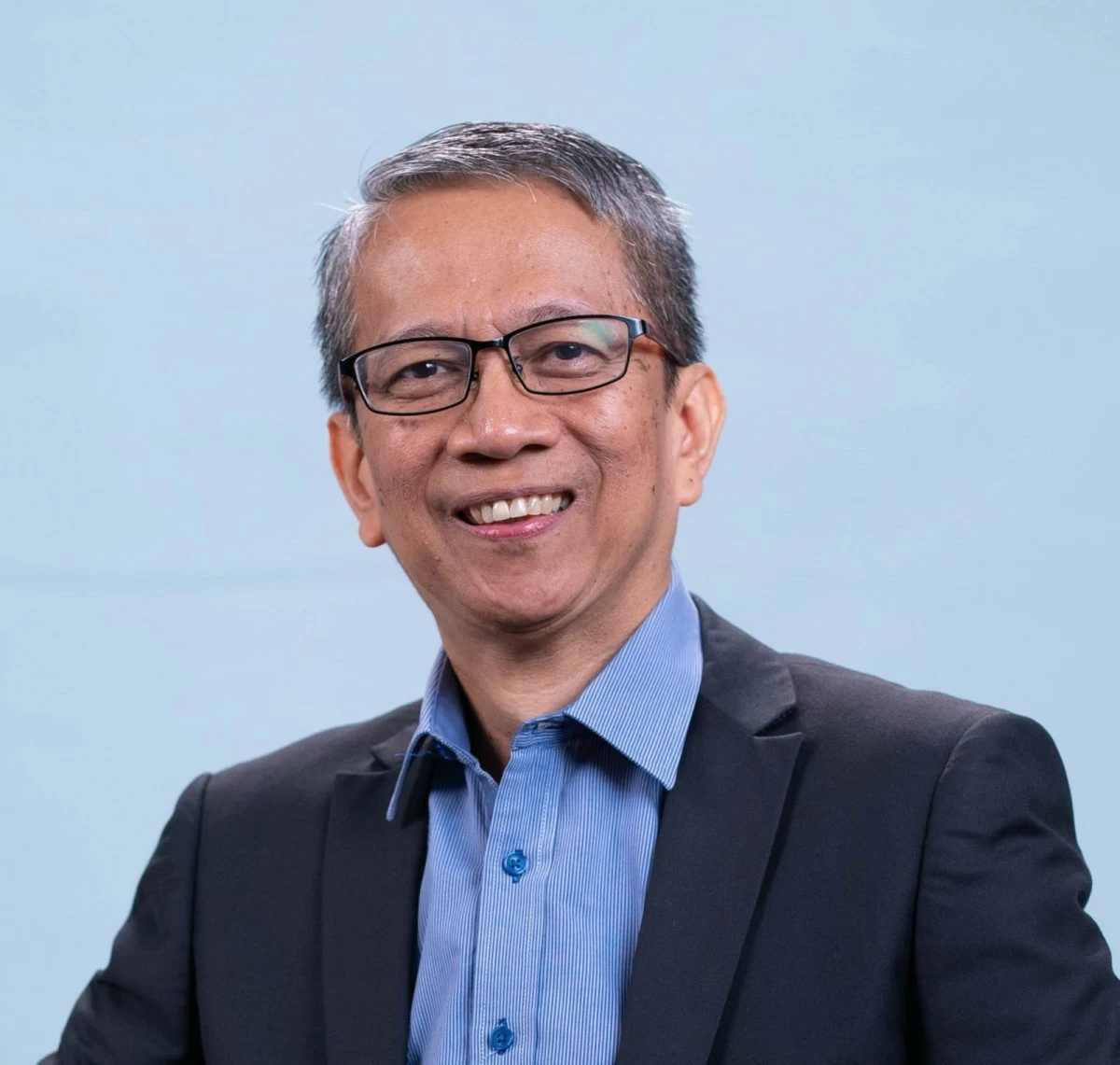
Nicomedes “Nick” Alviar, PhD is with the School of Politics and Governance, University of Asia and the Pacific (UA&P).
ADVERTISEMENT
.most-popular .layout-ratio{ padding-bottom: 79.13%; } @media (min-width: 768px) and (max-width: 1024px) { .widget-title { font-size: 15px !important; } }

{{ articles_filter_1561_widget.title }}

.most-popular .layout-ratio{ padding-bottom: 79.13%; } @media (min-width: 768px) and (max-width: 1024px) { .widget-title { font-size: 15px !important; } }

{{ static_articles_1562_widget.title }}

.most-popular .layout-ratio{ padding-bottom: 79.13%; } @media (min-width: 768px) and (max-width: 1024px) { .widget-title { font-size: 15px !important; } }

{{ articles_filter_1563_widget.title }}

{{ articles_filter_1564_widget.title }}

.mb-article-details { position: relative; } .mb-article-details .article-body-preview, .mb-article-details .article-body-summary{ font-size: 17px; line-height: 30px; font-family: "Libre Caslon Text", serif; color: #000; } .mb-article-details .article-body-preview iframe , .mb-article-details .article-body-summary iframe{ width: 100%; margin: auto; } .read-more-background { background: linear-gradient(180deg, color(display-p3 1.000 1.000 1.000 / 0) 13.75%, color(display-p3 1.000 1.000 1.000 / 0.8) 30.79%, color(display-p3 1.000 1.000 1.000) 72.5%); position: absolute; height: 200px; width: 100%; bottom: 0; display: flex; justify-content: center; align-items: center; padding: 0; } .read-more-background a{ color: #000; } .read-more-btn { padding: 17px 45px; font-family: Inter; font-weight: 700; font-size: 18px; line-height: 16px; text-align: center; vertical-align: middle; border: 1px solid black; background-color: white; } .hidden { display: none; }
function initializeAllSwipers() { // Get all hidden inputs with cms_article_id document.querySelectorAll('[id^="cms_article_id_"]').forEach(function (input) { const cmsArticleId = input.value; const articleSelector = '#article-' + cmsArticleId + ' .body_images'; const swiperElement = document.querySelector(articleSelector); if (swiperElement && !swiperElement.classList.contains('swiper-initialized')) { new Swiper(articleSelector, { loop: true, pagination: false, navigation: { nextEl: '#article-' + cmsArticleId + ' .swiper-button-next', prevEl: '#article-' + cmsArticleId + ' .swiper-button-prev', }, }); } }); } setTimeout(initializeAllSwipers, 3000); const intersectionObserver = new IntersectionObserver( (entries) => { entries.forEach((entry) => { if (entry.isIntersecting) { const newUrl = entry.target.getAttribute("data-url"); if (newUrl) { history.pushState(null, null, newUrl); let article = entry.target; // Extract metadata const author = article.querySelector('.author-section').textContent.replace('By', '').trim(); const section = article.querySelector('.section-info ').textContent.replace(' ', ' '); const title = article.querySelector('.article-title h1').textContent; // Parse URL for Chartbeat path format const parsedUrl = new URL(newUrl, window.location.origin); const cleanUrl = parsedUrl.host + parsedUrl.pathname; // Update Chartbeat configuration if (typeof window._sf_async_config !== 'undefined') { window._sf_async_config.path = cleanUrl; window._sf_async_config.sections = section; window._sf_async_config.authors = author; } // Track virtual page view with Chartbeat if (typeof pSUPERFLY !== 'undefined' && typeof pSUPERFLY.virtualPage === 'function') { try { pSUPERFLY.virtualPage({ path: cleanUrl, title: title, sections: section, authors: author }); } catch (error) { console.error('ping error', error); } } // Optional: Update document title if (title && title !== document.title) { document.title = title; } } } }); }, { threshold: 0.1 } ); function showArticleBody(button) { const article = button.closest("article"); const summary = article.querySelector(".article-body-summary"); const body = article.querySelector(".article-body-preview"); const readMoreSection = article.querySelector(".read-more-background"); // Hide summary and read-more section summary.style.display = "none"; readMoreSection.style.display = "none"; // Show the full article body body.classList.remove("hidden"); } document.addEventListener("DOMContentLoaded", () => { let loadCount = 0; // Track how many times articles are loaded const offset = [1, 2, 3, 4, 5, 6, 7, 8, 9, 10]; // Offset values const currentUrl = window.location.pathname.substring(1); let isLoading = false; // Prevent multiple calls if (!currentUrl) { console.log("Current URL is invalid."); return; } const sentinel = document.getElementById("load-more-sentinel"); if (!sentinel) { console.log("Sentinel element not found."); return; } function isSentinelVisible() { const rect = sentinel.getBoundingClientRect(); return ( rect.top < window.innerHeight && rect.bottom >= 0 ); } function onScroll() { if (isLoading) return; if (isSentinelVisible()) { if (loadCount >= offset.length) { console.log("Maximum load attempts reached."); window.removeEventListener("scroll", onScroll); return; } isLoading = true; const currentOffset = offset[loadCount]; window.loadMoreItems().then(() => { let article = document.querySelector('#widget_1690 > div:nth-last-of-type(2) article'); intersectionObserver.observe(article) loadCount++; }).catch(error => { console.error("Error loading more items:", error); }).finally(() => { isLoading = false; }); } } window.addEventListener("scroll", onScroll); });

Sign up by email to receive news.