







Building partnerships in a changing world
Germany's ambassador reflects on a relationship in motion
Published Jun 20, 2026 02:31 pm


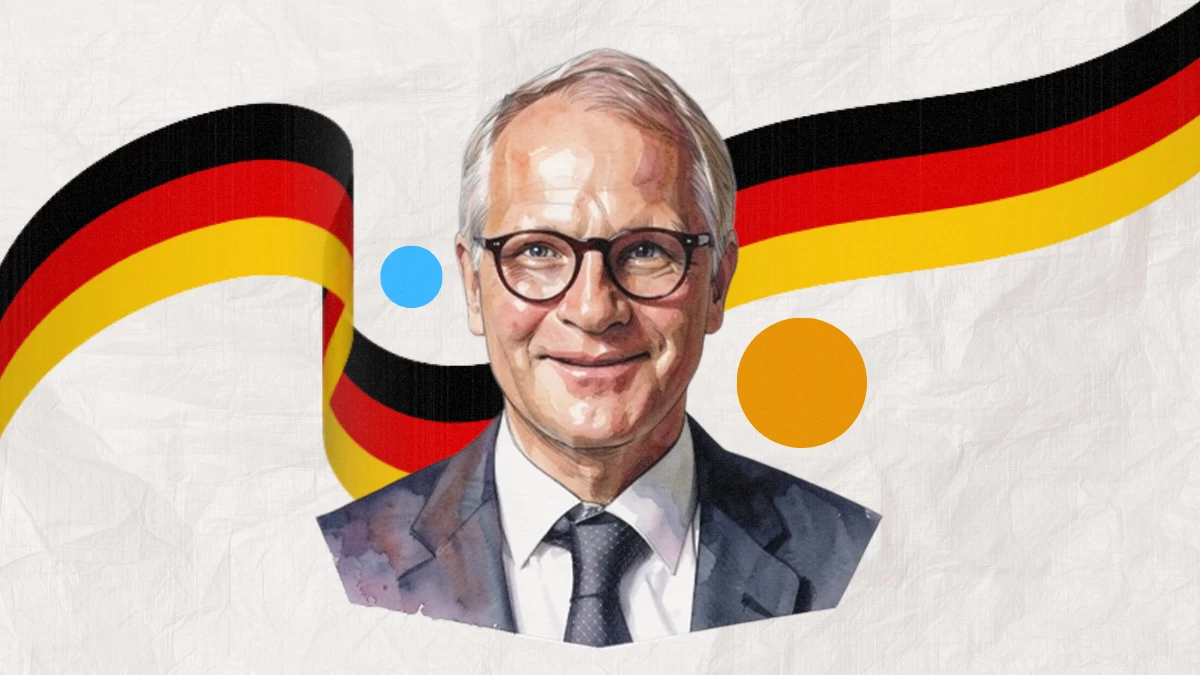
As this profile goes to print, those themes have taken on renewed relevance following the visit of German President Frank-Walter Steinmeier to the Philippines, the first visit by a German head of state in 60 years. The visit underscored Germany’s growing interest in the Philippines as a partner on issues ranging from regional security and climate action to trade and skilled labor mobility.
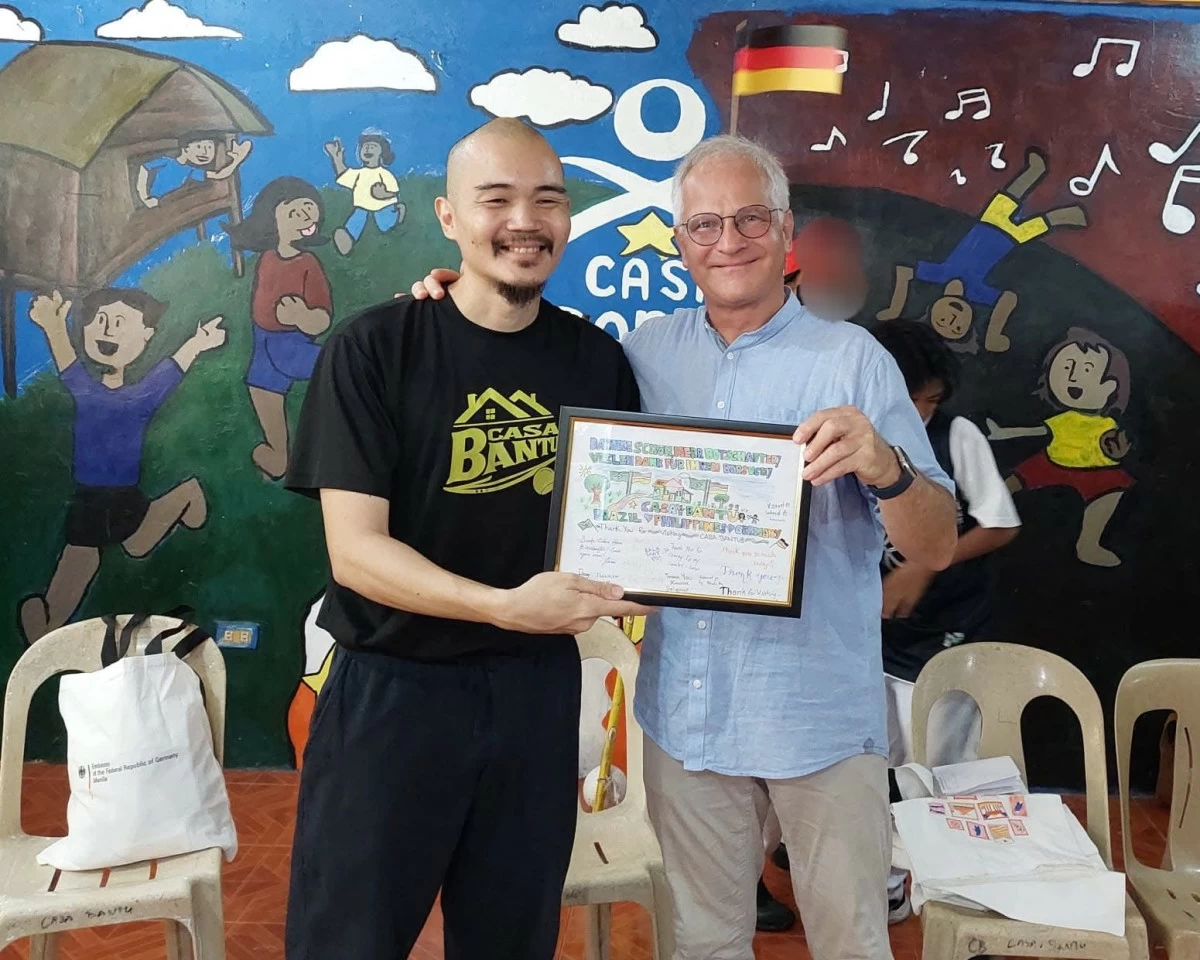
German Ambassador Andreas Pfaffernoschke visits Bantu Philippines, whose programs in education, nutrition, music, dance, and the arts help empower children and youth from underserved communities. (Photos: German Embassy)
“We have so much in common,” Pfaffernoschke said during a recent conversation at the German Embassy in Makati. “The Philippines is looking for new partners, and so are we.”
That sentiment runs through much of Germany’s engagement with the Philippines today.
A career diplomat with postings spanning Moscow, Paris, Geneva, New York, and West Africa, Pfaffernoschke has spent much of his professional life navigating global affairs. But when asked what struck him most about the Philippines, his answer was surprisingly simple: the warmth of the people. Well into his current posting, that remains one of his strongest impressions of the country.
He speaks fondly of travels beyond Metro Manila, from the rice terraces of Ifugao to smaller islands that rarely appear on tourist itineraries. While he appreciates destinations such as Palawan and Boracay, he admits to preferring quieter islands such as Tablas and Biliran, places that allow visitors to better understand the diversity of the archipelago.
For diplomats, travel often serves a purpose beyond leisure.
“You have to see other parts of the Philippines outside of so-called ‘Imperial Manila’,” he said. “To better understand what the country is all about and how the country is running.”
That broader understanding has become increasingly important as Germany deepens its engagement with the Philippines across multiple fronts. In recent years, the relationship has expanded beyond traditional trade and development cooperation into areas such as maritime security, climate action, labor mobility, and defense cooperation. The frequency of high-level visits has also increased significantly, reflecting growing political interest on both sides.
According to Pfaffernoschke, both countries are responding to the same global reality.
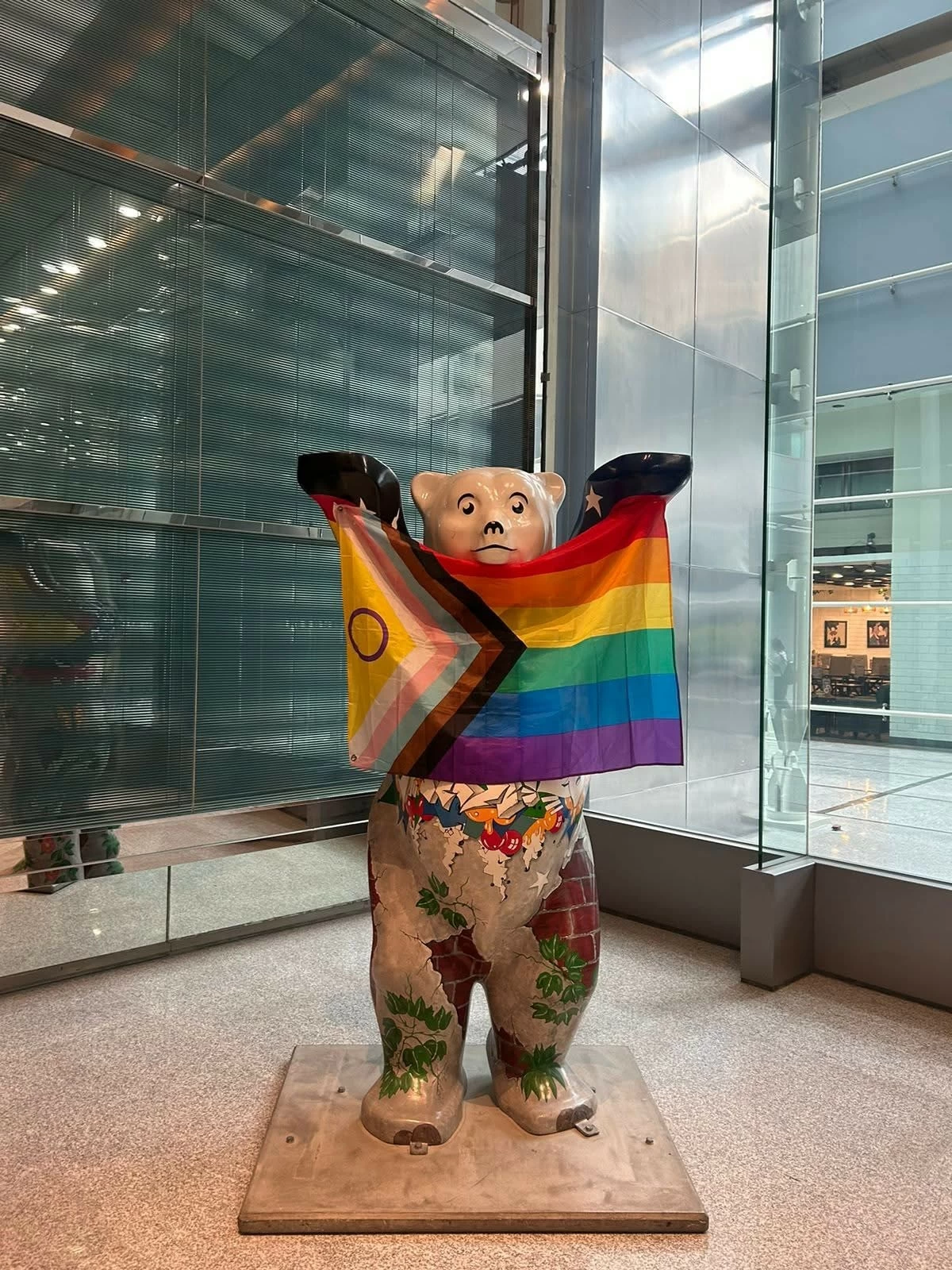
The German Embassy’s iconic Buddy Bear joins Pride Month celebrations, reflecting Germany’s commitment to equality, inclusion, and respect for the rights of LGBTQIA+ communities.
“We have to adapt to a world which is full of geopolitical tensions,” he said. “We have to look for partners who share the same values and objectives.”
That convergence has become particularly visible in discussions surrounding maritime security and the rules-based international order. As one of the world’s largest trading nations, Germany has a strong interest in maintaining open sea lanes and regional stability. The ambassador noted that Southeast Asia occupies a position of strategic importance for Germany, not only because of trade flows through the South China Sea and the Strait of Malacca, but also because Germany continues to see international law and multilateral cooperation as essential foundations of global stability.
Last year, Germany and the Philippines signed a security arrangement that has since opened new opportunities for cooperation, including military exchanges, staff talks, and training activities. The embassy is also exploring the possibility of establishing a resident military attaché in Manila.
Economic relations continue to expand as well.
Germany remains one of the Philippines’ most important partners within the European Union, and Pfaffernoschke is optimistic about the ongoing negotiations for an EU-Philippines Free Trade Agreement. While ratification will take time even after negotiations conclude, he believes an agreement would create significant opportunities for both sides.
Beyond trade, however, the ambassador sees human capital as one of the most promising areas of cooperation. Germany’s demand for skilled workers continues to grow, particularly in healthcare. Filipino nurses and professionals remain highly regarded in Germany, but Pfaffernoschke is careful to frame labor mobility as a partnership rather than a one-way flow of talent.
“It has to be a two-way street,” he said. Germany may benefit from Filipino talent, but the partnership, he noted, should also strengthen education, training, and skills development in the Philippines. That belief is reflected in Germany’s long-standing interest in vocational education, an area where cooperation with Technical Education and Skills Development Authority (TESDA) and the German-Philippine Chamber of Commerce continues to expand. Germany’s dual-track training model, which combines classroom learning with practical industry experience, has attracted growing attention from Philippine policymakers seeking to strengthen workforce development.
Another priority is language and academic exchange.
The ambassador would like to see greater opportunities for Filipinos to learn German, noting that the language remains significantly underrepresented in Philippine schools and universities despite increasing demand for skilled Filipino workers in Germany.
Climate action also remains an important area of cooperation between Germany and the Philippines. As one of the countries most vulnerable to the effects of climate change, the Philippines has become a natural partner for Germany on issues ranging from renewable energy to sustainability and resilience. Yet despite the strategic discussions and policy priorities, Pfaffernoschke often returns to the human dimension of diplomacy.
He believes the role of ambassadors has changed dramatically over the years.
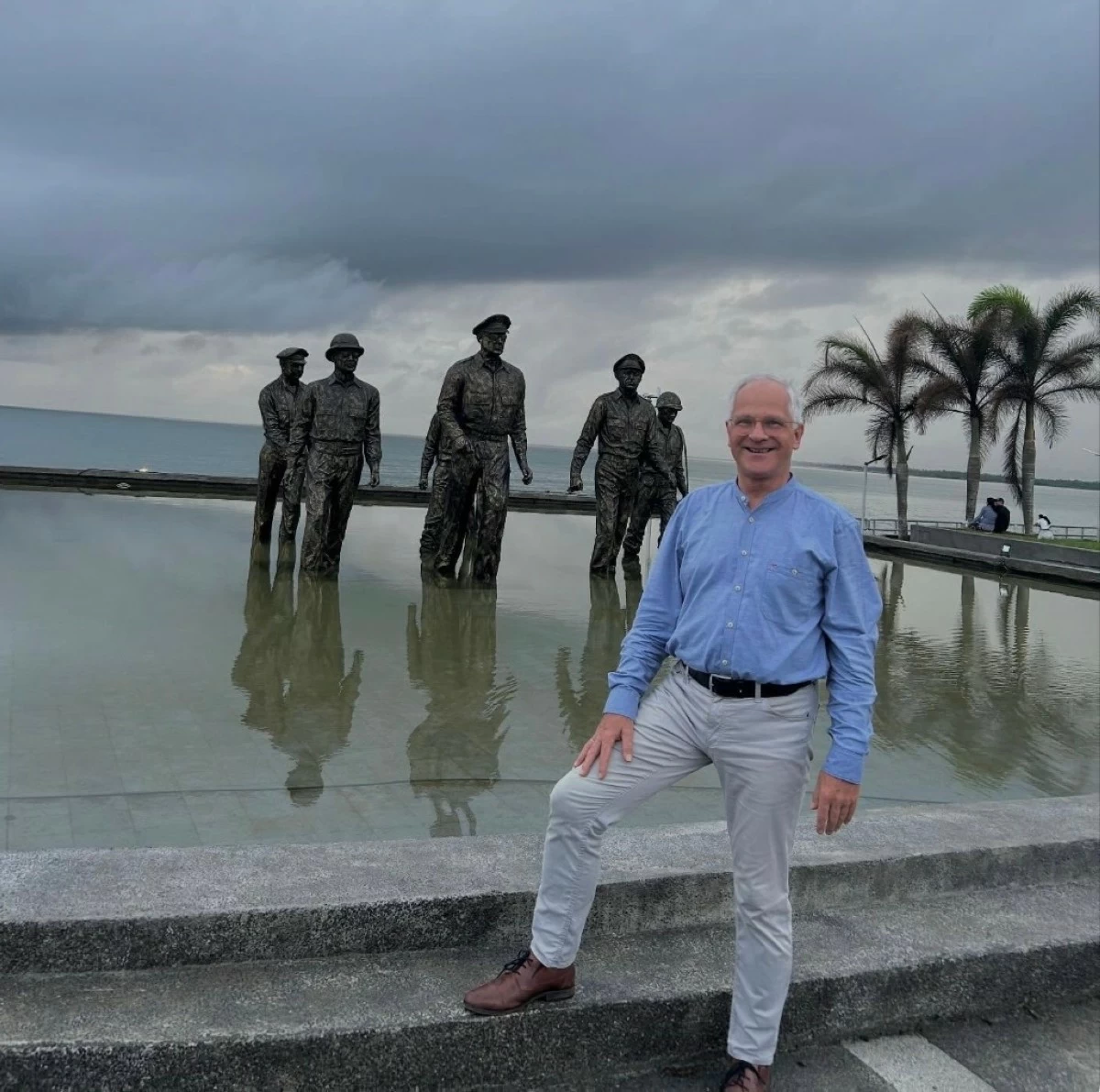
From the MacArthur Landing Memorial to sites remembering the victims of Super Typhoon Yolanda, German Ambassador Andreas Pfaffernoschke’s visit to Leyte highlighted both the province’s place in history and the resilience of its people.
Diplomacy, he says, is no longer confined to meetings behind closed doors. Today’s ambassadors must engage directly with the public, universities, media, business communities, and increasingly through social media. “It is much more about talking to the public,” he said.
Trust, however, remains the foundation. “Trust can be very quickly destroyed, but it’s hard to rebuild.”
As for what success would look like when his posting eventually comes to an end, the ambassador’s answer is straightforward. He hopes to see stronger ties across every aspect of the relationship—from trade and security to culture, education, and people-to-people exchanges.
For now, he still has projects left to advance, places left to visit, and an upcoming Oktoberfest celebration.
And when the time eventually comes to leave?
“The warmth of the people, the warmth of the air, the food, and the wonderful nature of the country,” he said, without hesitation.
As for his favorite Filipino dish, the answer came just as quickly. Lechon.
“I know it’s not good for my health,” he admitted with a laugh, “but I like it very much.”
For a diplomat whose job revolves around building bridges, it seems fitting that one of the strongest connections he has formed with the Philippines begins at the dining table.