

ADVERTISEMENT

At home with Usec. Ian Dato: Sacred weekends, bedtime stories, and fatherhood

The Justice Undersecretary opens up about balancing long government hours with family life and why fatherhood now shapes his ambitions and priorities

Published Jun 20, 2026 09:47 am
It is common to read about about public officials and how they balance the demands of work in government with personal commitments. Far less often, however, do we get a glimpse into the everyday lives of appointed officials. In this piece, we step beyond the office of Department of Justice (DOJ) Undersecretary Ian Norman E. Dato.
As a justice undersecretary, Ian wears many hats—lawyer, public servant, and policymaker. But for him, his most important role begins when he steps away from government work: being a husband to his wife, Giorgia Guidicelli, and a father to their two daughters, Gianna and Vi.
For him, balance is not an abstract ideal but a lived routine anchored by non-negotiables. “The weekends are really sacred for family,” he shared with Manila Bulletin Lifestyle, even as he acknowledged that work rarely stops at the office door. Legal work, he explained, often demands anticipating needs before they are even voiced. “A lawyer’s work and work ethic is really like that. We really have to anticipate clients’ questions.”
That same expectation carries into government service, where days can stretch from early mornings to late evenings. He recalled that upon joining the DOJ in February, the culture of long workdays was immediately clear. Still, amid the intensity, he has held on to one firm rule at home.
“When our first child was born in 2020, Saturdays and Sundays became non-negotiable,” he said. On weekdays, structure defines their routine: by 6 p.m., he makes it a point to be home with his family. Even with this discipline, he admits that work never fully switches off. His phone keeps him connected to the office, making complete separation difficult. Because of this, he has learned to set smaller, deliberate boundaries within the day, choosing not to endlessly carry emails into the night.
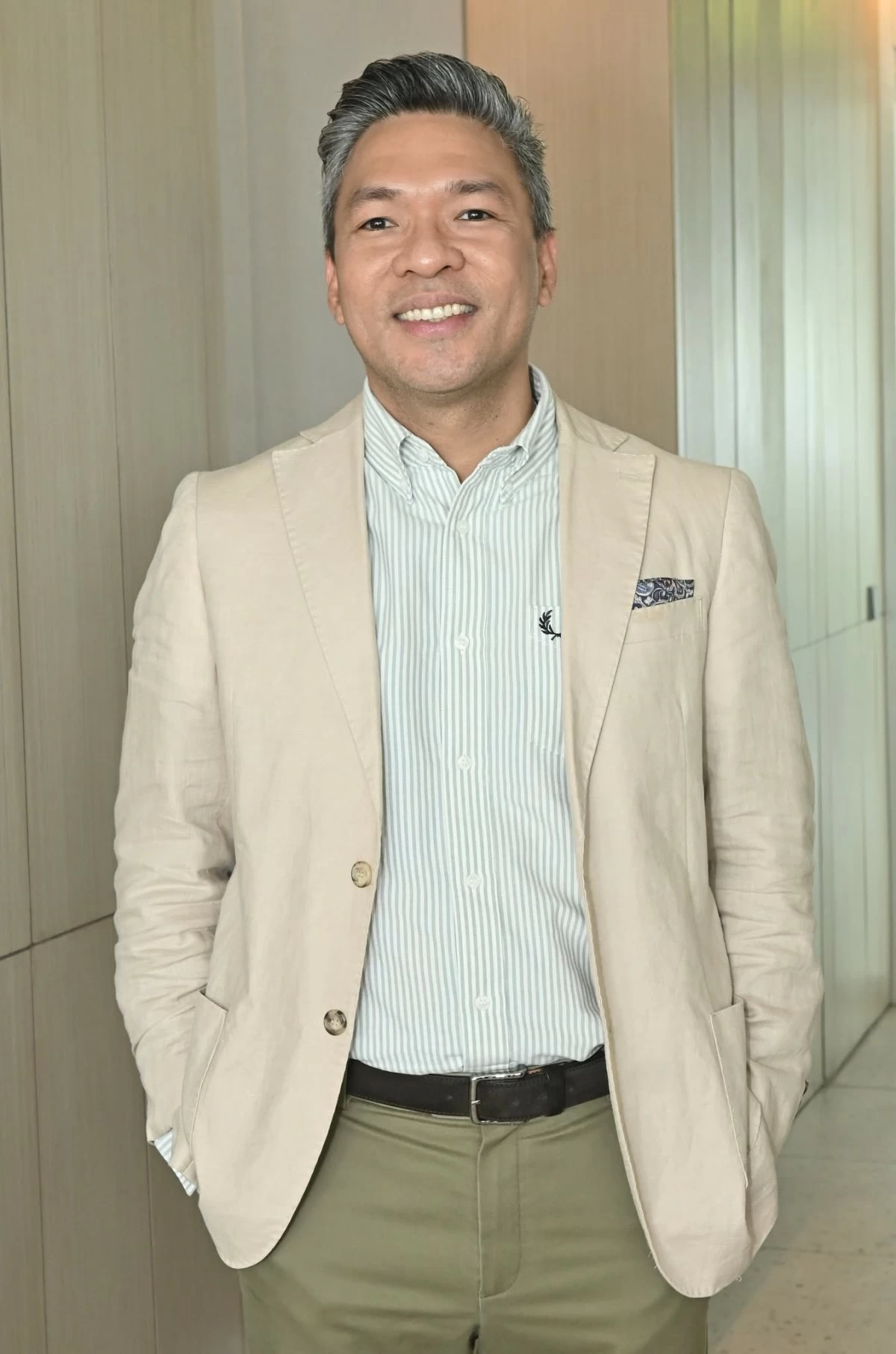
DoJ Usec. Ian Norman Dato
Before joining public service, Ian worked across various private companies and institutions. When asked how fatherhood changed his outlook and work ethic, he answered with quiet certainty, speaking as a devoted father.
“It gives you purpose,” he said. “It feels like everything else falls into place because you’re a father. Even your ambitions, even your career goals have to align with me being a father. There are no other competing interests because my focus now is fatherhood.”
He openly acknowledges that since joining the DOJ, travel time and family schedules have become more limited, but says this has not lessened the quality of time they spend together. Instead, he and Giorgia make a conscious effort to find shared activities as a family. In fact, Giorgia described him as the “good cop” at home, the one who reads bedtime stories and plays with their children, while she takes on the stricter role.
“I really checked the school curriculum before enrolling our eldest. When I found out one of the schools had already introduced the use of gadgets, we had to step back and decided to choose another one,” he shared. “Now I’ve even become the parent coordinator in school.”

HAPPY LIFE Giorgia, Vi, Gianna, and DoJ Usec. Ian Dato
As a hands-on father, he also allows his daughters to catch small glimpses of his work. “Law is very hard and stressful. I don’t want them to experience that kind of hardship. I think that’s a normal thing for parents,” he said. “But I hope they find things that they really want to do. That’s all we ask as their parents.”
With his wife being the sister of actor and singer Matteo Guidicelli, the question naturally arises: Would he be open to his daughters entering show business? He is candid in his hesitation. “I am afraid because I am not familiar with that landscape. If possible, something where I am more familiar,” he said.
Beyond the titles, hearings, and long hours inside government halls, what anchors Usec. Ian is not the weight of public office but the quiet pull of home. In a role defined by urgency and constant decision-making, he chooses to ground himself in the slower, more certain rhythm of family life—one built on bedtime stories, school runs, and sacred weekends. And while his work as a public servant continues to demand much of his time and attention, it is in the everyday moments with his wife and daughters that he finds the clarity to keep going, and the reminder of what all his work ultimately serves.

Related Tags

DoJ Usec. Ian Norman Dato DoJ Family life
ADVERTISEMENT
.most-popular .layout-ratio{ padding-bottom: 79.13%; } @media (min-width: 768px) and (max-width: 1024px) { .widget-title { font-size: 15px !important; } }

{{ articles_filter_1561_widget.title }}

.most-popular .layout-ratio{ padding-bottom: 79.13%; } @media (min-width: 768px) and (max-width: 1024px) { .widget-title { font-size: 15px !important; } }

{{ static_articles_1562_widget.title }}

.most-popular .layout-ratio{ padding-bottom: 79.13%; } @media (min-width: 768px) and (max-width: 1024px) { .widget-title { font-size: 15px !important; } }

{{ articles_filter_1563_widget.title }}

{{ articles_filter_1564_widget.title }}

.mb-article-details { position: relative; } .mb-article-details .article-body-preview, .mb-article-details .article-body-summary{ font-size: 17px; line-height: 30px; font-family: "Libre Caslon Text", serif; color: #000; } .mb-article-details .article-body-preview iframe , .mb-article-details .article-body-summary iframe{ width: 100%; margin: auto; } .read-more-background { background: linear-gradient(180deg, color(display-p3 1.000 1.000 1.000 / 0) 13.75%, color(display-p3 1.000 1.000 1.000 / 0.8) 30.79%, color(display-p3 1.000 1.000 1.000) 72.5%); position: absolute; height: 200px; width: 100%; bottom: 0; display: flex; justify-content: center; align-items: center; padding: 0; } .read-more-background a{ color: #000; } .read-more-btn { padding: 17px 45px; font-family: Inter; font-weight: 700; font-size: 18px; line-height: 16px; text-align: center; vertical-align: middle; border: 1px solid black; background-color: white; } .hidden { display: none; }
function initializeAllSwipers() { // Get all hidden inputs with cms_article_id document.querySelectorAll('[id^="cms_article_id_"]').forEach(function (input) { const cmsArticleId = input.value; const articleSelector = '#article-' + cmsArticleId + ' .body_images'; const swiperElement = document.querySelector(articleSelector); if (swiperElement && !swiperElement.classList.contains('swiper-initialized')) { new Swiper(articleSelector, { loop: true, pagination: false, navigation: { nextEl: '#article-' + cmsArticleId + ' .swiper-button-next', prevEl: '#article-' + cmsArticleId + ' .swiper-button-prev', }, }); } }); } setTimeout(initializeAllSwipers, 3000); const intersectionObserver = new IntersectionObserver( (entries) => { entries.forEach((entry) => { if (entry.isIntersecting) { const newUrl = entry.target.getAttribute("data-url"); if (newUrl) { history.pushState(null, null, newUrl); let article = entry.target; // Extract metadata const author = article.querySelector('.author-section').textContent.replace('By', '').trim(); const section = article.querySelector('.section-info ').textContent.replace(' ', ' '); const title = article.querySelector('.article-title h1').textContent; // Parse URL for Chartbeat path format const parsedUrl = new URL(newUrl, window.location.origin); const cleanUrl = parsedUrl.host + parsedUrl.pathname; // Update Chartbeat configuration if (typeof window._sf_async_config !== 'undefined') { window._sf_async_config.path = cleanUrl; window._sf_async_config.sections = section; window._sf_async_config.authors = author; } // Track virtual page view with Chartbeat if (typeof pSUPERFLY !== 'undefined' && typeof pSUPERFLY.virtualPage === 'function') { try { pSUPERFLY.virtualPage({ path: cleanUrl, title: title, sections: section, authors: author }); } catch (error) { console.error('ping error', error); } } // Optional: Update document title if (title && title !== document.title) { document.title = title; } } } }); }, { threshold: 0.1 } ); function showArticleBody(button) { const article = button.closest("article"); const summary = article.querySelector(".article-body-summary"); const body = article.querySelector(".article-body-preview"); const readMoreSection = article.querySelector(".read-more-background"); // Hide summary and read-more section summary.style.display = "none"; readMoreSection.style.display = "none"; // Show the full article body body.classList.remove("hidden"); } document.addEventListener("DOMContentLoaded", () => { let loadCount = 0; // Track how many times articles are loaded const offset = [1, 2, 3, 4, 5, 6, 7, 8, 9, 10]; // Offset values const currentUrl = window.location.pathname.substring(1); let isLoading = false; // Prevent multiple calls if (!currentUrl) { console.log("Current URL is invalid."); return; } const sentinel = document.getElementById("load-more-sentinel"); if (!sentinel) { console.log("Sentinel element not found."); return; } function isSentinelVisible() { const rect = sentinel.getBoundingClientRect(); return ( rect.top < window.innerHeight && rect.bottom >= 0 ); } function onScroll() { if (isLoading) return; if (isSentinelVisible()) { if (loadCount >= offset.length) { console.log("Maximum load attempts reached."); window.removeEventListener("scroll", onScroll); return; } isLoading = true; const currentOffset = offset[loadCount]; window.loadMoreItems().then(() => { let article = document.querySelector('#widget_1690 > div:nth-last-of-type(2) article'); intersectionObserver.observe(article) loadCount++; }).catch(error => { console.error("Error loading more items:", error); }).finally(() => { isLoading = false; }); } } window.addEventListener("scroll", onScroll); });

Sign up by email to receive news.