






Manila Bulletin
 Business
Trade & Industry
Philippines named among top 3 countries driving global demand for pork
Business
Trade & Industry
Philippines named among top 3 countries driving global demand for pork
Business
Trade & Industry
Philippines named among top 3 countries driving global demand for pork
Philippines named among top 3 countries driving global demand for pork
Published Jun 19, 2026 11:58 am
|
Updated Jun 19, 2026 02:02 pm


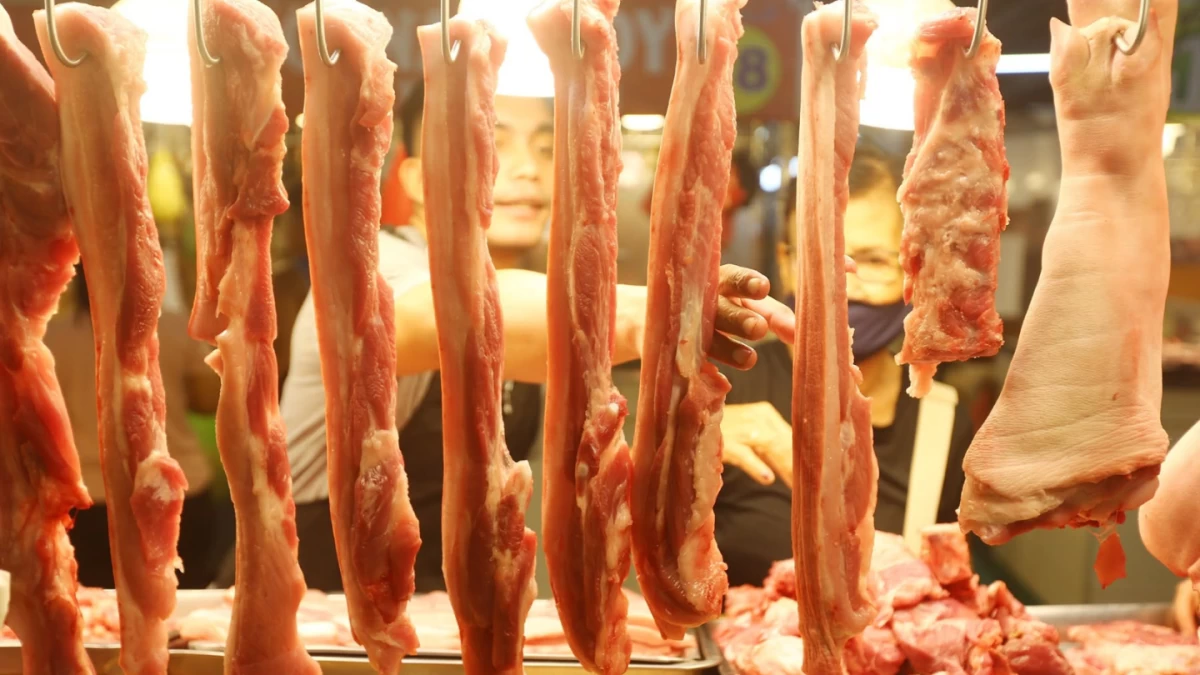
(Manila Bulletin file photo)
The Philippines is expected to expand its meat imports to a record high of more than 1.7 million metric tons in carcass weight equivalent (MT-CWE) this year to supplement domestic production, according to the United Nations’ Food and Agriculture Organization (FAO).
In its latest Food Outlook report, the FAO said the country’s meat imports may reach 1.71 million MT-CWE this year, a 13.3 percent increase from the estimated 1.51 million MT-CWE in 2025.
In comparison, data from the Bureau of Animal Industry (BAI) showed that the country’s meat imports rose to a record 1.64 million MT last year.
The FAO attributed the higher import volume to downside risks in local meat production, such as the persistent threat of animal diseases and the impact of the Middle East conflict on input costs.
Despite these challenges, the FAO projected an optimistic production outlook, noting that the country’s meat output may increase by four percent to 3.53 million MT-CWE this year from 3.38 million MT-CWE in 2025.
Globally, the FAO said total meat trade would likely increase by one percent to 43.9 million MT-CWE from last year's 43.4 million MT-CWE, driven mainly by anticipated increases in pork shipments.
The Philippines, South Korea, and Mexico were identified as the three primary countries driving global demand for pork products, which is projected to grow by two percent to 10 million MT-CWE from 9.8 million MT-CWE.
“Countries facing limited domestic availability, owing to structural constraints, disease pressure or cyclical herd dynamics, are anticipated to sustain import demand,” the FAO said.
Based on the latest BAI data, the country’s meat imports from January to April are already on track to exceed last year’s volumes. Total imports grew 22 percent to 577,689 MT during the four-month period from 473,461 MT in the same window last year. Pork led all imported meat products, increasing by more than 17 percent to 295,718 MT from 250,970 MT a year ago.
According to the FAO Meat Price Index, international meat prices averaged around six percent higher in the first five months of the year compared to 2025, driven by firm global import demand and constrained exportable supplies.
“Ongoing animal disease outbreaks and evolving trade policy measures have contributed to heightened market volatility, reinforcing upward pressure on prices,” the FAO added.
To counter this, the Department of Agriculture (DA) is looking to ease retail meat prices by lowering input costs for local farmers.
Agriculture Secretary Francisco Tiu Laurel Jr. recently stated that the agency is proposing to expand the country’s minimum access volume (MAV) for corn to 500,000 MT to cushion livestock producers from rising feed costs.
Imports within the MAV quota are levied a low tariff rate of five percent, while out-of-quota shipments are subject to a 15 percent tariff.
“Corn is a critical input for poultry and livestock. Stabilizing feed costs helps temper price pressures on essential food items and protect household purchasing power,” Tiu Laurel said.