ADVERTISEMENT

PH connected, but remains vulnerable to cyber attacks

Published Jun 19, 2026 12:05 am  |  Updated Jun 18, 2026 04:43 pm
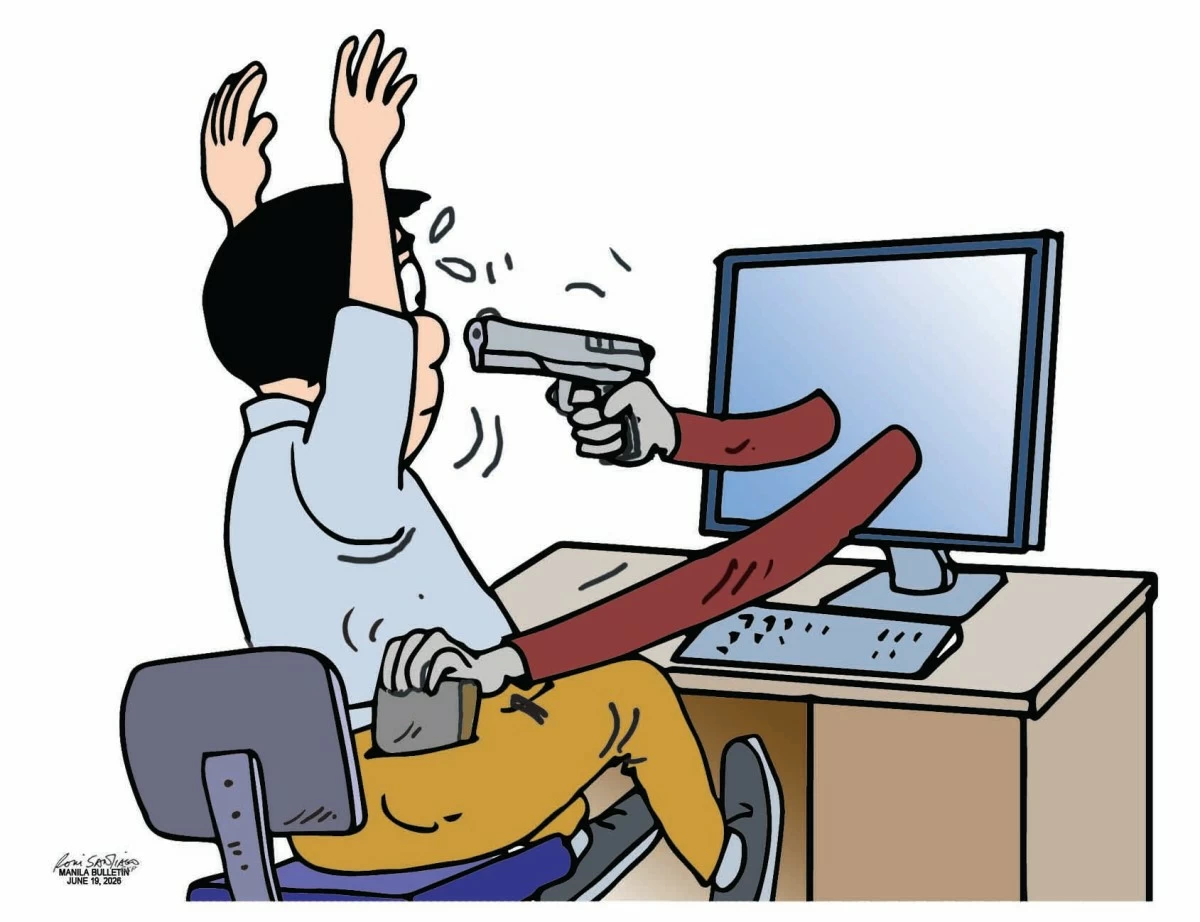
More Filipinos than ever are connected through smartphones, online banking, e-commerce platforms, social media, and digital government services. Yet as the country embraces the opportunities of the digital age, it remains alarmingly vulnerable to cyber threats.
Recent findings from the Philippine Statistics Authority (PSA) paint a troubling picture of the country’s current state in the digital age. While digital technology has become deeply embedded in everyday life, only 33.4 percent of Filipinos aged 10 years and over are aware of cybersecurity and data privacy issues. At the same time, 62.5 percent of ICT device users—equivalent to approximately 24.28 million individuals—experienced at least one cybersecurity incident in 2024.
What these figures reveal is a dangerous imbalance. Digital adoption is accelerating, but cybersecurity awareness and preparedness still lag behind.
Particularly concerning is the prevalence of SMS fraud, which affected 57.1 percent of all cybersecurity victims. Criminal syndicates have become increasingly sophisticated, exploiting mobile phones, social media platforms, and digital payment systems to deceive unsuspecting users. What was once an occasional nuisance has evolved into a widespread threat capable of causing significant financial losses and emotional distress.
Equally alarming is the finding that only 1.9 percent of victims reported cybersecurity incidents to authorities. This suggests that millions of Filipinos either do not know where to seek assistance, lack confidence in reporting mechanisms, or have come to regard cybercrime as an unavoidable reality of modern life. Such a mindset benefits only the perpetrators.
The challenge demands more than piecemeal responses. Cybersecurity must be treated as a national priority, requiring a coordinated and sustained effort across government, industry, educational institutions, and civil society.
The government must move beyond a reactive approach. Too often, public attention intensifies only after a major cyberattack, data breach, or online scam makes headlines. Effective cybersecurity begins long before incidents occur. Prevention and deterrence must become the foundation of national policy.
This requires substantial investments in public awareness campaigns, cybersecurity education, digital infrastructure, and law enforcement capabilities. Cyber hygiene and digital literacy should be integrated into the educational system at all levels. Every Filipino student should understand the fundamentals of protecting personal information, identifying scams, and navigating digital spaces safely.
At the same time, agencies responsible for combating cybercrime must be equipped with advanced investigative tools, highly trained personnel, and stronger mechanisms for interagency coordination. Cybercriminals continuously adapt their methods. Government institutions must demonstrate the same level of agility and innovation.
The private sector must also share the burden of combatting cyber fraud. Banks, telecommunications providers, technology companies, e-commerce platforms, and digital payment operators are on the front lines of the battle against cybercrime. Stronger fraud detection systems, faster incident response mechanisms, and greater information-sharing among stakeholders are essential. Cybersecurity should be viewed not merely as a regulatory obligation but as a commitment to consumer trust and public safety.
However, technology and policy alone will not solve the problem. Every Filipino has a stake in this issue and, therefore, must play a key role in this battle. Simple actions—verifying links before clicking, enabling multi-factor authentication, creating strong passwords, and reporting suspicious activities—can collectively reduce opportunities for cybercriminals to succeed.
The PSA data should serve as a wake-up call. Cyber fraud has already affected millions of Filipinos. Are we all capable of developing the collective resolve to stay ahead of increasingly sophisticated threats?
A secure digital future cannot be built through reaction alone. It requires vigilance, education, accountability, and a shared commitment from government, business, and citizens alike. Until cybersecurity becomes part of the national culture and consciousness, the Philippines will continue to face a growing challenge in protecting both its people and its digital future.
ADVERTISEMENT
.most-popular .layout-ratio{ padding-bottom: 79.13%; } @media (min-width: 768px) and (max-width: 1024px) { .widget-title { font-size: 15px !important; } }

{{ articles_filter_1561_widget.title }}

.most-popular .layout-ratio{ padding-bottom: 79.13%; } @media (min-width: 768px) and (max-width: 1024px) { .widget-title { font-size: 15px !important; } }

{{ static_articles_1562_widget.title }}

.most-popular .layout-ratio{ padding-bottom: 79.13%; } @media (min-width: 768px) and (max-width: 1024px) { .widget-title { font-size: 15px !important; } }

{{ articles_filter_1563_widget.title }}

{{ articles_filter_1564_widget.title }}

.mb-article-details { position: relative; } .mb-article-details .article-body-preview, .mb-article-details .article-body-summary{ font-size: 17px; line-height: 30px; font-family: "Libre Caslon Text", serif; color: #000; } .mb-article-details .article-body-preview iframe , .mb-article-details .article-body-summary iframe{ width: 100%; margin: auto; } .read-more-background { background: linear-gradient(180deg, color(display-p3 1.000 1.000 1.000 / 0) 13.75%, color(display-p3 1.000 1.000 1.000 / 0.8) 30.79%, color(display-p3 1.000 1.000 1.000) 72.5%); position: absolute; height: 200px; width: 100%; bottom: 0; display: flex; justify-content: center; align-items: center; padding: 0; } .read-more-background a{ color: #000; } .read-more-btn { padding: 17px 45px; font-family: Inter; font-weight: 700; font-size: 18px; line-height: 16px; text-align: center; vertical-align: middle; border: 1px solid black; background-color: white; } .hidden { display: none; }
function initializeAllSwipers() { // Get all hidden inputs with cms_article_id document.querySelectorAll('[id^="cms_article_id_"]').forEach(function (input) { const cmsArticleId = input.value; const articleSelector = '#article-' + cmsArticleId + ' .body_images'; const swiperElement = document.querySelector(articleSelector); if (swiperElement && !swiperElement.classList.contains('swiper-initialized')) { new Swiper(articleSelector, { loop: true, pagination: false, navigation: { nextEl: '#article-' + cmsArticleId + ' .swiper-button-next', prevEl: '#article-' + cmsArticleId + ' .swiper-button-prev', }, }); } }); } setTimeout(initializeAllSwipers, 3000); const intersectionObserver = new IntersectionObserver( (entries) => { entries.forEach((entry) => { if (entry.isIntersecting) { const newUrl = entry.target.getAttribute("data-url"); if (newUrl) { history.pushState(null, null, newUrl); let article = entry.target; // Extract metadata const author = article.querySelector('.author-section').textContent.replace('By', '').trim(); const section = article.querySelector('.section-info ').textContent.replace(' ', ' '); const title = article.querySelector('.article-title h1').textContent; // Parse URL for Chartbeat path format const parsedUrl = new URL(newUrl, window.location.origin); const cleanUrl = parsedUrl.host + parsedUrl.pathname; // Update Chartbeat configuration if (typeof window._sf_async_config !== 'undefined') { window._sf_async_config.path = cleanUrl; window._sf_async_config.sections = section; window._sf_async_config.authors = author; } // Track virtual page view with Chartbeat if (typeof pSUPERFLY !== 'undefined' && typeof pSUPERFLY.virtualPage === 'function') { try { pSUPERFLY.virtualPage({ path: cleanUrl, title: title, sections: section, authors: author }); } catch (error) { console.error('ping error', error); } } // Optional: Update document title if (title && title !== document.title) { document.title = title; } } } }); }, { threshold: 0.1 } ); function showArticleBody(button) { const article = button.closest("article"); const summary = article.querySelector(".article-body-summary"); const body = article.querySelector(".article-body-preview"); const readMoreSection = article.querySelector(".read-more-background"); // Hide summary and read-more section summary.style.display = "none"; readMoreSection.style.display = "none"; // Show the full article body body.classList.remove("hidden"); } document.addEventListener("DOMContentLoaded", () => { let loadCount = 0; // Track how many times articles are loaded const offset = [1, 2, 3, 4, 5, 6, 7, 8, 9, 10]; // Offset values const currentUrl = window.location.pathname.substring(1); let isLoading = false; // Prevent multiple calls if (!currentUrl) { console.log("Current URL is invalid."); return; } const sentinel = document.getElementById("load-more-sentinel"); if (!sentinel) { console.log("Sentinel element not found."); return; } function isSentinelVisible() { const rect = sentinel.getBoundingClientRect(); return ( rect.top < window.innerHeight && rect.bottom >= 0 ); } function onScroll() { if (isLoading) return; if (isSentinelVisible()) { if (loadCount >= offset.length) { console.log("Maximum load attempts reached."); window.removeEventListener("scroll", onScroll); return; } isLoading = true; const currentOffset = offset[loadCount]; window.loadMoreItems().then(() => { let article = document.querySelector('#widget_1690 > div:nth-last-of-type(2) article'); intersectionObserver.observe(article) loadCount++; }).catch(error => { console.error("Error loading more items:", error); }).finally(() => { isLoading = false; }); } } window.addEventListener("scroll", onScroll); });

Sign up by email to receive news.