







What I learned from the people behind the helmets
A community of volunteers, creators, and families proving that the true power of the Force lies in friendship and service
Published Jun 18, 2026 08:49 am


By Margaret Siytangco
A few years ago, my husband and I unexpectedly found ourselves spending more time with the local “Star Wars” community.
Actually, that's not entirely true.
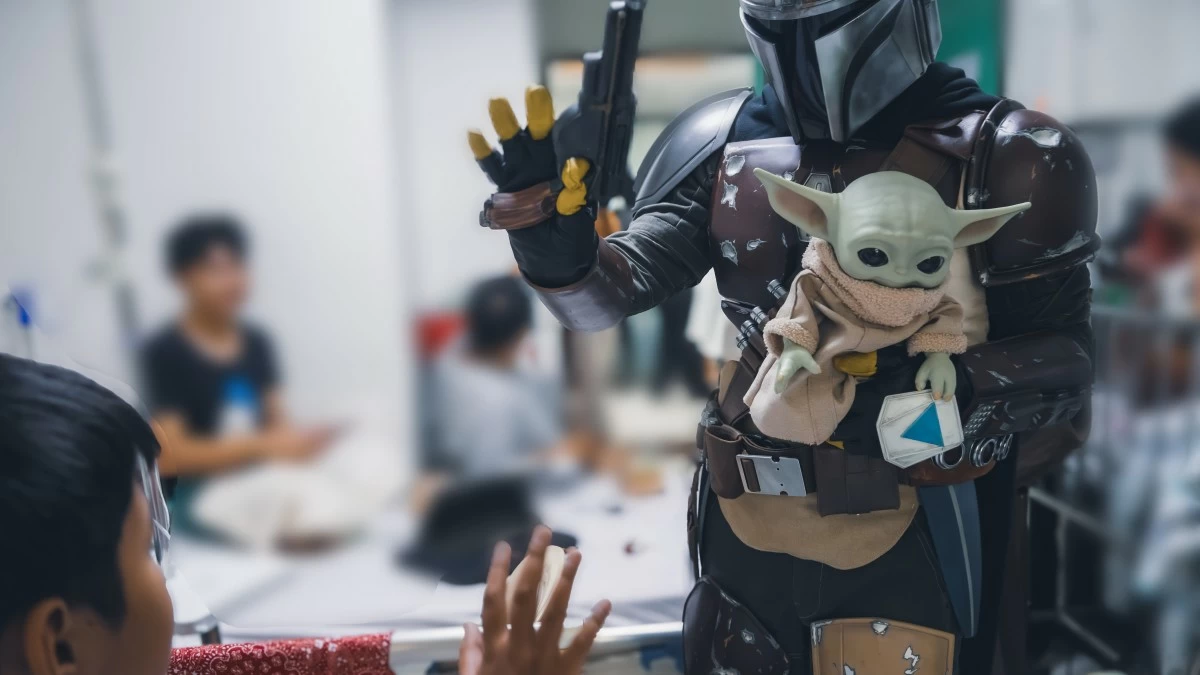
THE FORCE NEVER FADES A Filipino ‘Mandalorian and Grogu’ cosplayer bringing smiles to those who need it. (Photo: Marc Macalua)
What really happened was that we started attending more and more movie premieres because we're both “Star Wars” fans. One premiere led to another, then another after that. Somewhere along the way, we met members of the local “Star Wars” community and ended up becoming friends.
Honestly, before meeting them, I had no idea this world even existed.
At first, I thought they were simply cosplayers.
Then I learned about the 501st Legion, the Rebel Legion, FightSaber Philippines, and the countless hours of craftsmanship required to create screen-accurate costumes. But after a while, you stop noticing the armor first and start noticing the people underneath it.
Over the years, I've watched members spend entire weekends sweating inside helmets and armor, not because they're paid to, but because they genuinely love “Star Wars” and the community they've built around it.
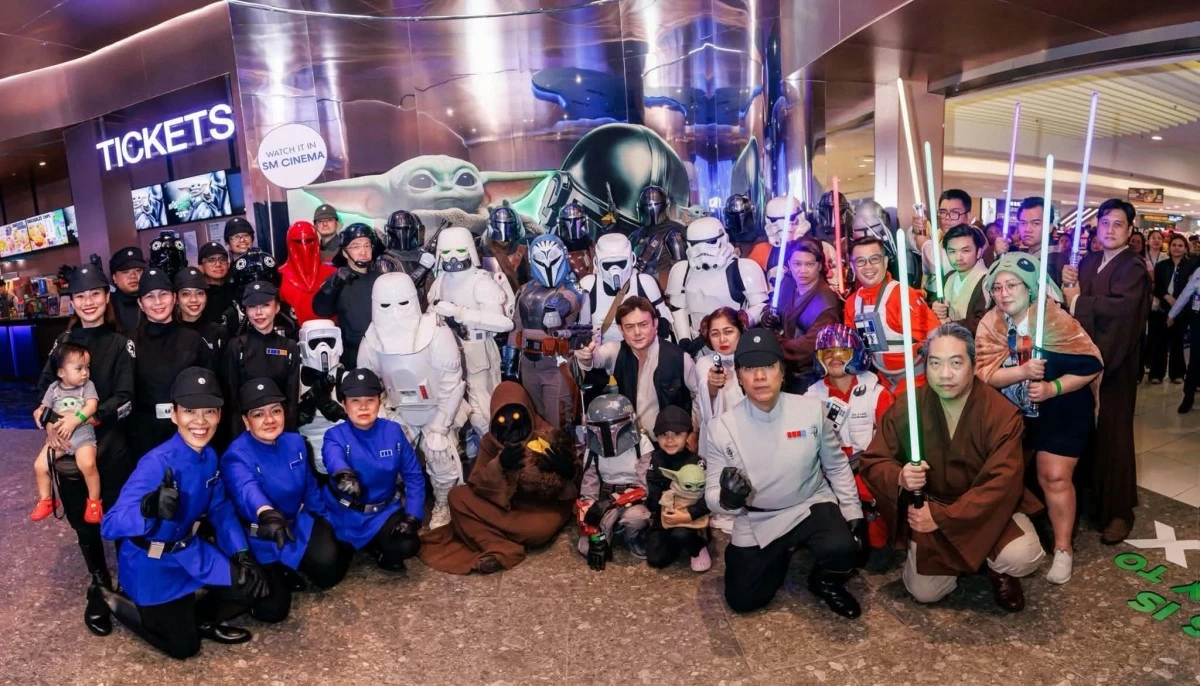
THE SAGA CONTINUES Filipino ‘Star Wars’ fans (Photo: Francis Lumahan)
Most people see them at movie premieres, conventions, and mall appearances. They see the Stormtroopers, Mandalorians, Jedi, Sith, pilots, bounty hunters, and all the cool photo opportunities. What they don't always see are the hospital visits, charity activities, and volunteer hours that happen in between.
Just recently, members completed another hospital visit at the East Avenue Medical Center pediatric ward, continuing a tradition of bringing smiles to children who could probably use a little extra joy. Others may know them from previous partnerships with organizations like Make-A-Wish. The costumes may be what get people's attention, but it's the volunteer work that tends to stay with me.
And honestly, that's the part that continues to surprise me.
It's easy to love a movie. It's much harder to spend your own time, money, effort, and energy using that love to make somebody else's day a little brighter.
Somewhere along the way, “Star Wars” stopped being the thing they had in common and became the reason they all met.
These are students, parents, artists, engineers, business owners, professionals, and creatives. People with full-time jobs, families, deadlines, bills, and responsibilities who still somehow find the time to build armor, repair props, organize events, and help each other out.
They have what they call “armor parties,” and I love that phrase because it's exactly what it sounds like. Somebody might be painting a helmet while somebody else repairs electronics, and in another corner, someone is trying to fix armor that chose the absolute worst moment to fall apart. There is usually food involved, there is definitely “kwentuhan” (storytelling) involved, and somehow by the end of the day, a costume is closer to being finished than it was that morning.
At some point, it stops becoming cosplay and becomes friendship.
One of the things that continually amazes me is the creativity. I've seen props, armor, and even speeder bikes that honestly look like they rolled straight out of a “Star Wars” set.
Then you hear the backstory and realize they weren't built in some giant professional workshop. Most of the time, it's people solving one problem at a time, improvising when something doesn't work, rebuilding pieces when they fail, and refusing to quit until they get the result they want.
That's the part that impresses me.
And maybe that's why local “Star Wars” groups continue to impress people internationally. They're working with the same limitations most Filipinos know well, yet somehow they still manage to build things that look like they belong on screen. There's a creativity and resourcefulness there that feels very Filipino to me.

REBELS NEVER REST Kid playing with lightsabers (Photo: Francis Lumahan)
What impresses me even more is that they rarely do any of it alone. Tools get shared, advice gets shared, techniques get shared, and if somebody is struggling with a build, somebody else usually shows up with a solution—or at the very least, moral support. In a time when many hobbies seem increasingly individual, there is something refreshing about watching people actively help each other succeed.
One of my favorite things to watch now is the kids.
Many members don't troop alone. Their spouses get involved, their children get involved, and some of those kids now have costumes of their own and have practically grown up together inside this community. There is even a Galactic Academy for younger members, which means many of them are growing up surrounded by creativity, friendship, volunteer work, and people helping each other simply because they can.
As somebody standing somewhere around the edges of this community, I can't help but think those are pretty good values to inherit.
As ToyCon 2026 approaches, local “Star Wars” groups are actively recruiting new members and welcoming new fans into the fold. After all, every Stormtrooper, Jedi, pilot, and Mandalorian had a first troop, a first costume, and a first event. The Force has a funny way of spreading. One friend brings another, one premiere leads to another, and before long, a shared hobby becomes a community.
And that's probably the real story. It's easy to focus on the lightsabers, armor, and movie characters.
After a few years around this community, I stopped seeing the armor first. I started seeing the people underneath it.