






Manila Bulletin
 Business
Trade & Industry
Wealthy resorts, vacation homes pocket millions of pesos in electricity subsidies—PIDS
Business
Trade & Industry
Wealthy resorts, vacation homes pocket millions of pesos in electricity subsidies—PIDS
Business
Trade & Industry
Wealthy resorts, vacation homes pocket millions of pesos in electricity subsidies—PIDS
Wealthy resorts, vacation homes pocket millions of pesos in electricity subsidies—PIDS
Published Jun 18, 2026 01:09 pm


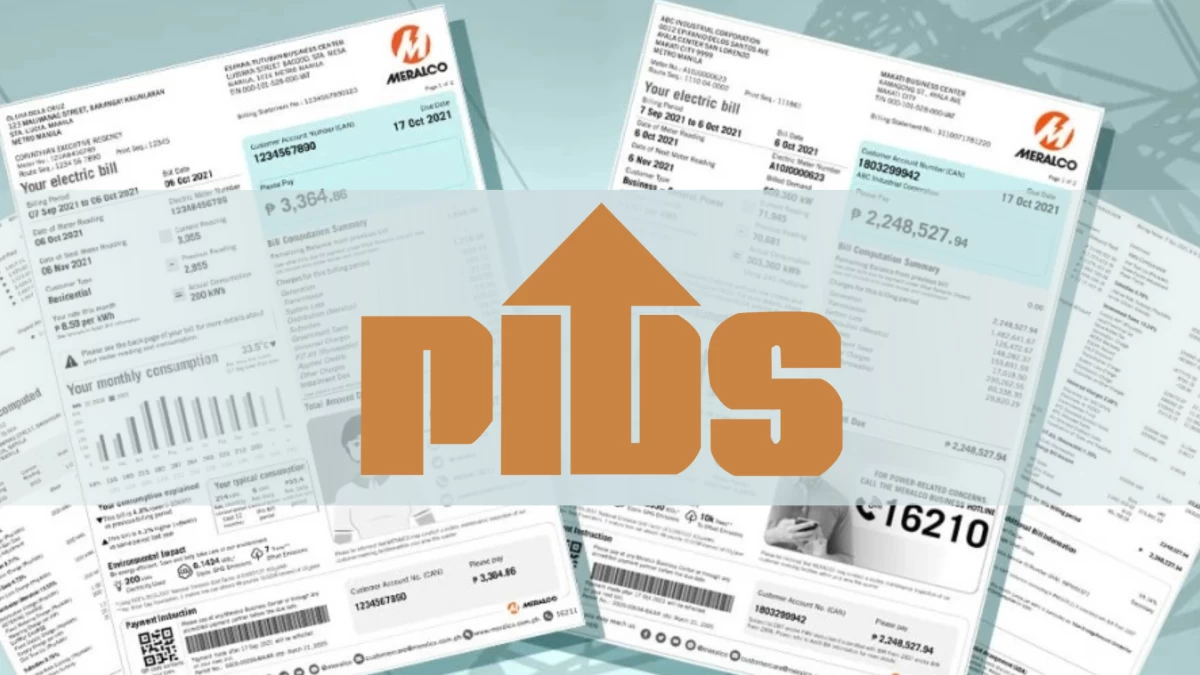
State-run think tank Philippine Institute for Development Studies (PIDS) is urging the government to overhaul its energy subsidy frameworks, warning that design flaws are allowing wealthy households and profitable private resorts to capture millions of pesos intended for marginalized consumers.
In an eight-page policy study, PIDS flagged systemic “inclusion errors” in the country’s three major power relief initiatives: the Universal Charge for Missionary Electrification (UCME), the lifeline rate discount, and the senior citizen power subsidy.
Originally designed to cushion low-income families from some of the highest electricity rates in Southeast Asia, these programs are heavily leaking benefits to non-targeted users, the study found.
The financial impact of these structural gaps is accelerating. The think tank noted that annual spending on the UCME—a clean-energy and off-grid development fund tacked onto consumer electricity bills—is projected to hit ₱28.6 billion this year. That is a fourfold surge from the ₱7.05 billion recorded in 2020, threatening to increase the financial burden on standard rate-paying consumers who ultimately shoulder the subsidies.
According to PIDS researchers, the fundamental weakness in all three programs is a reliance on single-dimensional eligibility criteria rather than comprehensive income assessments.
For instance, the UCME distributes funds based strictly on whether an area is connected to the main transmission grids. Because the mechanism fails to evaluate actual economic conditions, affluent, private resort islands with highly stable, independent power infrastructure are currently drawing from the fund.
Similarly, the country’s lifeline rate framework grants power discounts to any household consuming fewer than 100 kilowatt-hours per month. PIDS argued this ceiling is far too high, noting it dwarfs the international basic subsistence benchmark of approximately 30 kilowatt-hours.
As a result, the threshold inadvertently subsidizes small, vacation properties or wealthy individuals who maintain low-occupancy secondary homes.
Meanwhile, the senior citizen power discount suffers from identical targeting blind spots. Eligibility hinges entirely on the account holder being at least 60 years old, meaning affluent seniors receive the exact same price cuts as low-income elderly residents.
To arrest the spiraling costs and protect vulnerable consumers, PIDS recommended transitioning to multi-dimensional targeting that integrates strict income verification checks.
The think tank also proposed introducing a gradual degression mechanism, which would systematically phase out UCME subsidies for off-grid areas as they become economically self-sustaining and commercially viable.