






Manila Bulletin
 Philippines
National
Infrastructure, flood control investigations should lead to systemic reforms—Ombudsman
Philippines
National
Infrastructure, flood control investigations should lead to systemic reforms—Ombudsman
Philippines
National
Infrastructure, flood control investigations should lead to systemic reforms—Ombudsman
Infrastructure, flood control investigations should lead to systemic reforms—Ombudsman
By Jel Santos
Published Jun 18, 2026 01:01 pm


At A Glance
- According to Remulla, cases involving infrastructure and flood control projects should be used by the government to examine deeper institutional weaknesses.
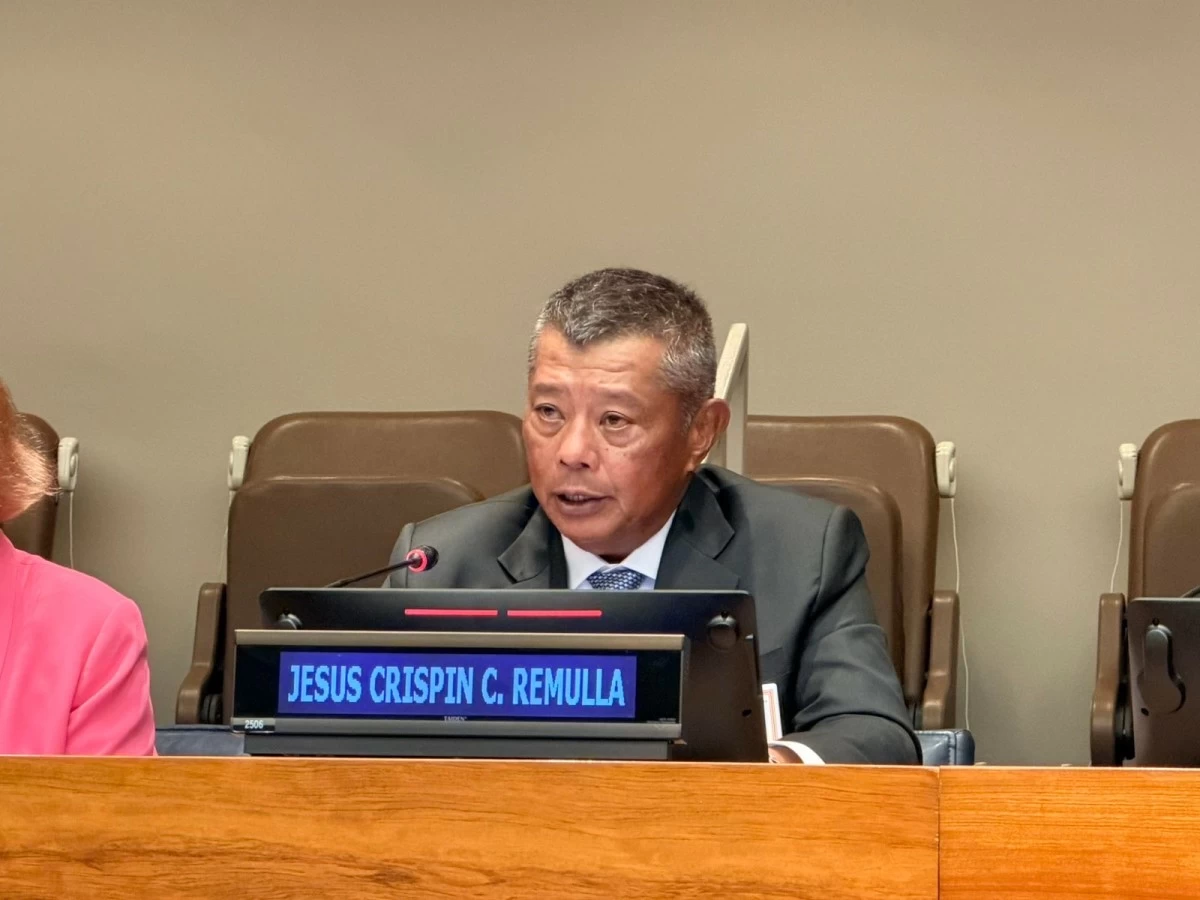
(PHOTO: UN WEB TV)
Investigations into alleged irregularities involving infrastructure and flood control projects must go beyond prosecution and serve as a catalyst for institutional reform, Ombudsman Jesus Crispin “Boying” Remulla said on Thursday, June 18.
Remulla made the remarks before governance leaders and international experts during the 7th Global Conference on Sustainable Development Goal 16 (SDG 16) at the United Nations Headquarters in New York.
“Today, the Philippines is facing significant governance challenges, including complex investigations involving public infrastructure projects. These are difficult moments for any country,” he said.
According to Remulla, cases involving infrastructure and flood control projects should be used by the government to examine deeper institutional weaknesses.
“When weaknesses are exposed, we have an opportunity—and a responsibility—to correct them,” he said.
The Ombudsman stressed that strengthening public accountability requires not only prosecutions and convictions but also systemic reforms that help rebuild public trust.
“The goal is not simply to punish the mistakes of yesterday. The greater responsibility is to build better institutions for tomorrow,” said Remulla.
Remulla said public officials who abuse their authority must answer for their actions, noting that the Ombudsman will continue enforcing its constitutional mandate fairly and independently.
“Those who abuse public office must be held accountable. That is our constitutional duty, and we will continue to perform that duty without fear or favor,” he said.
Remulla said stronger coordination among justice sector institutions is needed to address gaps in efforts to hold government officials accountable.
He noted that before leaving for New York, he formally requested Supreme Court Chief Justice Alexander Gesmundo to include the Office of the Ombudsman in the Justice Sector Coordinating Council.
“Corruption cases move through an entire justice ecosystem—from investigation, prosecution, adjudication, and ultimately, the delivery of justice. If one part of that system is weak, the entire system is affected,” he said.
“The fight against corruption cannot operate in isolation.”
Remulla said the fight against corruption should not be judged solely by the number of prosecutions and convictions, but also by how transparent, responsive, and trustworthy government institutions become.
“The ultimate success of anti-corruption work is not measured only by the number of cases filed or convictions secured. It is measured by whether we helped create a government that works better for its people,” he said.
On June 16, Remulla disclosed that the Ombudsman had intensified its investigation into alleged irregularities involving flood control infrastructure projects, with 209 complaints currently undergoing fact-finding investigation in 2026.
He added that several cases have progressed to formal proceedings, with four already filed before the courts.