ADVERTISEMENT

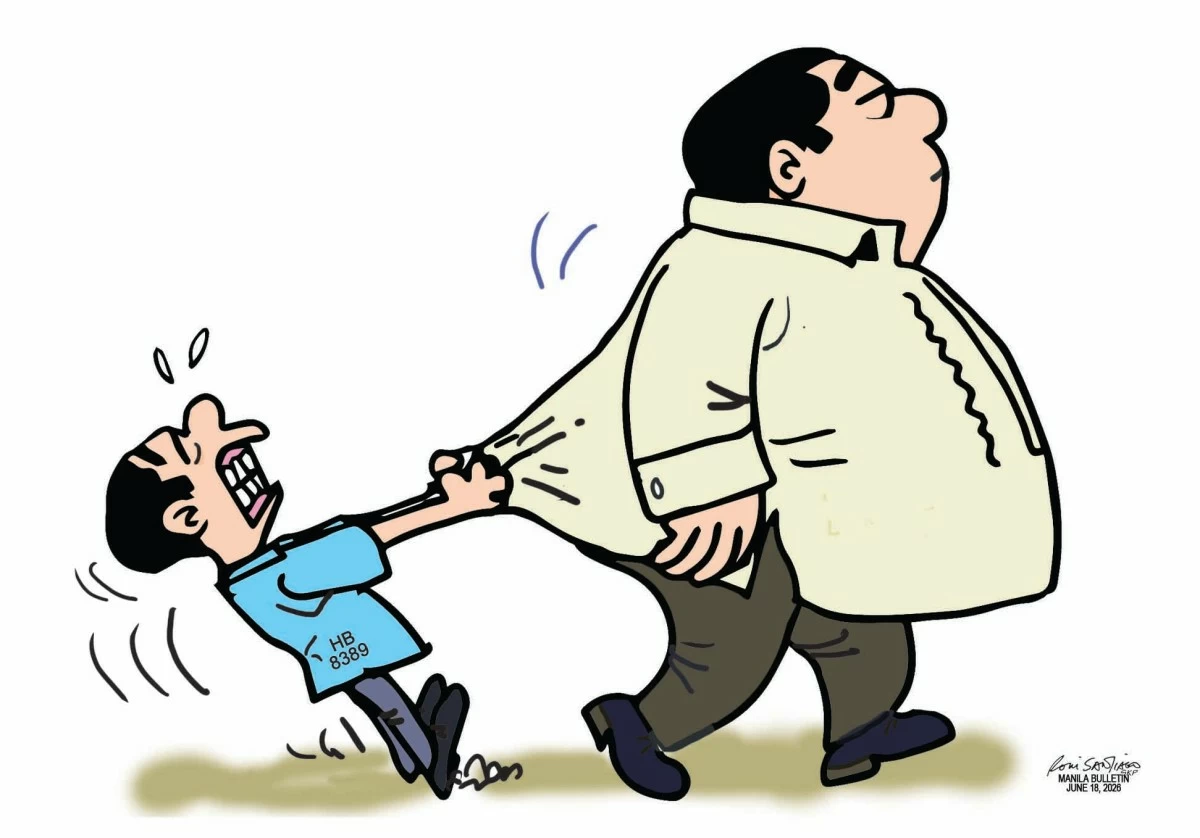
House Bill 8389: Does it stop or legitimize political dynasty?

Published Jun 18, 2026 12:01 am  |  Updated Jun 17, 2026 03:39 pm
The proposed Anti-Political Dynasty Act, which was recently passed in the House of Representatives, has been presented as a long-overdue response to the constitutional mandate against political dynasties. Yet the concerns raised by several respected business and civil society organizations suggest that the measure may ultimately achieve the opposite of its stated objective.
In a joint statement, the Management Association of the Philippines, Makati Business Club, Financial Executives Institute of the Philippines, Shareholders’ Association of the Philippines, Justice Reform Initiative, Parish Pastoral Council for Responsible Voting, and Philippine Institute of Arbitrators argued that House Bill No. 8389 does not meaningfully curtail political dynasties. Rather, they contend that it effectively legitimizes and institutionalizes them.
Their concerns warrant careful review and consideration.
The 1987 Constitution directs the State to prohibit political dynasties as may be defined by law. The intent behind this provision is widely understood: to prevent the excessive concentration of political power within a limited number of families and to encourage broader participation in public service. Any legislation claiming to implement this constitutional mandate should therefore be measured against that objective.
House Bill No. 8389 appears to fall short of that standard.
The measure prohibits spouses and relatives up to the second degree of consanguinity or affinity from simultaneously holding elective office within the same political unit. At first glance, this may appear to impose the intended restrictions. However, critics correctly point out that it leaves intact many of the arrangements that have long enabled political families to perpetuate themselves to power across multiple levels of government.
Under the bill, a family could still simultaneously occupy the offices of governor, congressman, and mayor within a province while another relative holds a national elective position, like being a senator. Such a concentration of political power in one family would remain largely unaffected by the proposed law.
Equally significant is the bill’s apparent failure to address the practice commonly known as political succession. Around the country, term limits have often been circumvented when a spouse, child, sibling, or other close relative succeeds a term-limited official. In other cases, family members simply exchange positions after their respective terms expire, ensuring that political control remains within the same household.
The proposed measure does little to discourage these practices. Consequently, what many citizens regard as circumvention of democratic safeguards could continue with minimal legal restraint.
The bill also leaves substantial room for extended family networks to retain political influence. Relatives beyond the second degree—including cousins, uncles, aunts, nephews, and nieces—would not be subject to the proposed restrictions. In areas where political authority is exercised through large and interconnected family networks, this omission is difficult to overlook.
For these reasons, President Marcos should seriously consider vetoing the measure and returning it to Congress for further refinement. A veto would not signify opposition to anti-dynasty legislation. Rather, it would affirm the need for a law that genuinely fulfills the Constitution’s intent.
Congress, in turn, should seize the opportunity to strengthen the bill by expanding the scope of prohibited relationships, restricting successive family occupancy of the same office, limiting seat-swapping arrangements among close relatives, and addressing the simultaneous exercise of power across local and national positions.
The country has waited nearly four decades for legislation implementing the Constitution’s anti-dynasty provision. That law should be crafted to reduce the concentration of political power, not merely regulate its distribution within political families. Genuine reform should not be symbolic. It requires a law capable of advancing the democratic principles the Constitution sought to protect.

Related Tags

Anti-Political Dynasty Act PHILIPPINE CONSTITUTION
ADVERTISEMENT
.most-popular .layout-ratio{ padding-bottom: 79.13%; } @media (min-width: 768px) and (max-width: 1024px) { .widget-title { font-size: 15px !important; } }

{{ articles_filter_1561_widget.title }}

.most-popular .layout-ratio{ padding-bottom: 79.13%; } @media (min-width: 768px) and (max-width: 1024px) { .widget-title { font-size: 15px !important; } }

{{ static_articles_1562_widget.title }}

.most-popular .layout-ratio{ padding-bottom: 79.13%; } @media (min-width: 768px) and (max-width: 1024px) { .widget-title { font-size: 15px !important; } }

{{ articles_filter_1563_widget.title }}

{{ articles_filter_1564_widget.title }}

.mb-article-details { position: relative; } .mb-article-details .article-body-preview, .mb-article-details .article-body-summary{ font-size: 17px; line-height: 30px; font-family: "Libre Caslon Text", serif; color: #000; } .mb-article-details .article-body-preview iframe , .mb-article-details .article-body-summary iframe{ width: 100%; margin: auto; } .read-more-background { background: linear-gradient(180deg, color(display-p3 1.000 1.000 1.000 / 0) 13.75%, color(display-p3 1.000 1.000 1.000 / 0.8) 30.79%, color(display-p3 1.000 1.000 1.000) 72.5%); position: absolute; height: 200px; width: 100%; bottom: 0; display: flex; justify-content: center; align-items: center; padding: 0; } .read-more-background a{ color: #000; } .read-more-btn { padding: 17px 45px; font-family: Inter; font-weight: 700; font-size: 18px; line-height: 16px; text-align: center; vertical-align: middle; border: 1px solid black; background-color: white; } .hidden { display: none; }
function initializeAllSwipers() { // Get all hidden inputs with cms_article_id document.querySelectorAll('[id^="cms_article_id_"]').forEach(function (input) { const cmsArticleId = input.value; const articleSelector = '#article-' + cmsArticleId + ' .body_images'; const swiperElement = document.querySelector(articleSelector); if (swiperElement && !swiperElement.classList.contains('swiper-initialized')) { new Swiper(articleSelector, { loop: true, pagination: false, navigation: { nextEl: '#article-' + cmsArticleId + ' .swiper-button-next', prevEl: '#article-' + cmsArticleId + ' .swiper-button-prev', }, }); } }); } setTimeout(initializeAllSwipers, 3000); const intersectionObserver = new IntersectionObserver( (entries) => { entries.forEach((entry) => { if (entry.isIntersecting) { const newUrl = entry.target.getAttribute("data-url"); if (newUrl) { history.pushState(null, null, newUrl); let article = entry.target; // Extract metadata const author = article.querySelector('.author-section').textContent.replace('By', '').trim(); const section = article.querySelector('.section-info ').textContent.replace(' ', ' '); const title = article.querySelector('.article-title h1').textContent; // Parse URL for Chartbeat path format const parsedUrl = new URL(newUrl, window.location.origin); const cleanUrl = parsedUrl.host + parsedUrl.pathname; // Update Chartbeat configuration if (typeof window._sf_async_config !== 'undefined') { window._sf_async_config.path = cleanUrl; window._sf_async_config.sections = section; window._sf_async_config.authors = author; } // Track virtual page view with Chartbeat if (typeof pSUPERFLY !== 'undefined' && typeof pSUPERFLY.virtualPage === 'function') { try { pSUPERFLY.virtualPage({ path: cleanUrl, title: title, sections: section, authors: author }); } catch (error) { console.error('ping error', error); } } // Optional: Update document title if (title && title !== document.title) { document.title = title; } } } }); }, { threshold: 0.1 } ); function showArticleBody(button) { const article = button.closest("article"); const summary = article.querySelector(".article-body-summary"); const body = article.querySelector(".article-body-preview"); const readMoreSection = article.querySelector(".read-more-background"); // Hide summary and read-more section summary.style.display = "none"; readMoreSection.style.display = "none"; // Show the full article body body.classList.remove("hidden"); } document.addEventListener("DOMContentLoaded", () => { let loadCount = 0; // Track how many times articles are loaded const offset = [1, 2, 3, 4, 5, 6, 7, 8, 9, 10]; // Offset values const currentUrl = window.location.pathname.substring(1); let isLoading = false; // Prevent multiple calls if (!currentUrl) { console.log("Current URL is invalid."); return; } const sentinel = document.getElementById("load-more-sentinel"); if (!sentinel) { console.log("Sentinel element not found."); return; } function isSentinelVisible() { const rect = sentinel.getBoundingClientRect(); return ( rect.top < window.innerHeight && rect.bottom >= 0 ); } function onScroll() { if (isLoading) return; if (isSentinelVisible()) { if (loadCount >= offset.length) { console.log("Maximum load attempts reached."); window.removeEventListener("scroll", onScroll); return; } isLoading = true; const currentOffset = offset[loadCount]; window.loadMoreItems().then(() => { let article = document.querySelector('#widget_1690 > div:nth-last-of-type(2) article'); intersectionObserver.observe(article) loadCount++; }).catch(error => { console.error("Error loading more items:", error); }).finally(() => { isLoading = false; }); } } window.addEventListener("scroll", onScroll); });

Sign up by email to receive news.