ADVERTISEMENT

AI-native industrial hub to push industrial sector growth in Central Luzon

Leechiu Property Consultant weighs in on the impact of the emerging technology economic zone in Tarlac

Published Jun 18, 2026 11:57 am  |  Updated Jun 18, 2026 03:13 pm
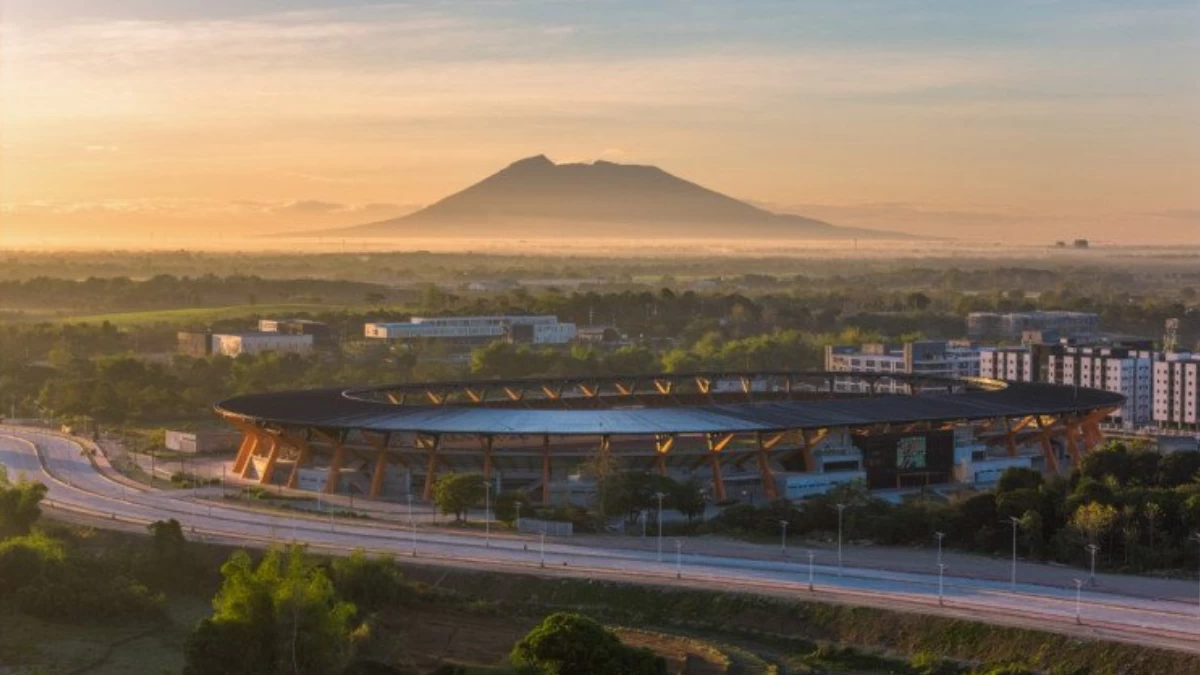
New Clark City (Photo: BCDA)
The United States and the Philippines have recently selected New Clark City in Tarlac as the future site for a 4,000-acre technology economic zone. The landmark US–Philippines deal will soon establish the first AI-native industrial acceleration hub in New Clark City within the Luzon Economic Corridor. The New Clark City Economic Security Zone (ESZ) spans 1,619 hectares of BCDA-managed property.
More than a dozen U.S. companies have expressed interest in joining the Pax Silica initiative, the U.S. Department of State’s flagship program on artificial intelligence (AI) and supply chain security. The hub will host industrial facilities for critical minerals processing, semiconductors, advanced manufacturing, and AI.
The site will also serve as a staging point for a purpose-built platform for allied manufacturing and aims to tap the Philippines' reserves of nickel, copper, chromite, and cobalt—minerals critical to global supply chains.
For Renzo De Guzman of Leechiu Property Consultants, the announcement will further concentrate demand on “industrial sites within and adjacent to New Clark City" and extend “across the Clark-Subic Corridor and into the CALABA Expressway catchment.”
Leechiu’s property market report for the first quarter of 2026 shows that industrial rents have increased by 45 percent since 2019, while office rents have stayed the same, residential has been weighed down due to oversupply, and retail is just starting to recover. The report also highlights that the growth in this sector is due to companies moving their manufacturing from China and looking for alternatives to Taiwan, with more investment coming into Southeast Asia, particularly the Philippines.
De Guzman also underscored that industrial parks are expanding beyond their usual focus on assembly, testing, and packaging to include wafer fabrication, circuit design, and technology transfer, strengthening the country’s position in the semiconductor industry.
“Central Luzon accounts for roughly 80 percent of the 1,200 hectares of industrial supply scheduled for delivery between 2026 and 2028, by far the largest share of any region in the country. Clark shares its advantageous position alongside Subic and Batangas as a designated corridor for export manufacturing, with PEZA green lanes and CREATE Law incentives reducing the cost of doing business for registered locators,” he added.
The infrastructure investment in the region is also a given advantage. Mega Manila's road and rail expansion, spanning over 912 kilometers of planned projects, places Central Luzon closer to the capital's logistics network. In Clark, a dedicated integrated transport system, a project by Index Strategy and Yachiyo Engineering, will create New Clark City's own mobility backbone independent of regional highway capacity.
De Guzman further stated that these developments present growth opportunities to institutional investors. Central Luzon industrial properties are already earning yields of seven to eight percent with steady rent increases, and the new ESZ will add to this demand, offering a unique mix of returns, growth, and a new reason for demand all in one area.
Developers can also take advantage of tenants who cannot secure space inside the ESZ by positioning themselves well within the Clark catchment area to capture the demand overflow.
For agents, the recommendation is to familiarize themselves with New Clark City since the district "will generate significant transaction activity over the next several years, and the professionals who understand it earliest will be best placed to serve the clients who need it most,” concluded De Guzman.

Related Tags

New Clark City Economic Security Zone Leechiu Property Consultants
ADVERTISEMENT
.most-popular .layout-ratio{ padding-bottom: 79.13%; } @media (min-width: 768px) and (max-width: 1024px) { .widget-title { font-size: 15px !important; } }

{{ articles_filter_1561_widget.title }}

.most-popular .layout-ratio{ padding-bottom: 79.13%; } @media (min-width: 768px) and (max-width: 1024px) { .widget-title { font-size: 15px !important; } }

{{ static_articles_1562_widget.title }}

.most-popular .layout-ratio{ padding-bottom: 79.13%; } @media (min-width: 768px) and (max-width: 1024px) { .widget-title { font-size: 15px !important; } }

{{ articles_filter_1563_widget.title }}

{{ articles_filter_1564_widget.title }}

.mb-article-details { position: relative; } .mb-article-details .article-body-preview, .mb-article-details .article-body-summary{ font-size: 17px; line-height: 30px; font-family: "Libre Caslon Text", serif; color: #000; } .mb-article-details .article-body-preview iframe , .mb-article-details .article-body-summary iframe{ width: 100%; margin: auto; } .read-more-background { background: linear-gradient(180deg, color(display-p3 1.000 1.000 1.000 / 0) 13.75%, color(display-p3 1.000 1.000 1.000 / 0.8) 30.79%, color(display-p3 1.000 1.000 1.000) 72.5%); position: absolute; height: 200px; width: 100%; bottom: 0; display: flex; justify-content: center; align-items: center; padding: 0; } .read-more-background a{ color: #000; } .read-more-btn { padding: 17px 45px; font-family: Inter; font-weight: 700; font-size: 18px; line-height: 16px; text-align: center; vertical-align: middle; border: 1px solid black; background-color: white; } .hidden { display: none; }
function initializeAllSwipers() { // Get all hidden inputs with cms_article_id document.querySelectorAll('[id^="cms_article_id_"]').forEach(function (input) { const cmsArticleId = input.value; const articleSelector = '#article-' + cmsArticleId + ' .body_images'; const swiperElement = document.querySelector(articleSelector); if (swiperElement && !swiperElement.classList.contains('swiper-initialized')) { new Swiper(articleSelector, { loop: true, pagination: false, navigation: { nextEl: '#article-' + cmsArticleId + ' .swiper-button-next', prevEl: '#article-' + cmsArticleId + ' .swiper-button-prev', }, }); } }); } setTimeout(initializeAllSwipers, 3000); const intersectionObserver = new IntersectionObserver( (entries) => { entries.forEach((entry) => { if (entry.isIntersecting) { const newUrl = entry.target.getAttribute("data-url"); if (newUrl) { history.pushState(null, null, newUrl); let article = entry.target; // Extract metadata const author = article.querySelector('.author-section').textContent.replace('By', '').trim(); const section = article.querySelector('.section-info ').textContent.replace(' ', ' '); const title = article.querySelector('.article-title h1').textContent; // Parse URL for Chartbeat path format const parsedUrl = new URL(newUrl, window.location.origin); const cleanUrl = parsedUrl.host + parsedUrl.pathname; // Update Chartbeat configuration if (typeof window._sf_async_config !== 'undefined') { window._sf_async_config.path = cleanUrl; window._sf_async_config.sections = section; window._sf_async_config.authors = author; } // Track virtual page view with Chartbeat if (typeof pSUPERFLY !== 'undefined' && typeof pSUPERFLY.virtualPage === 'function') { try { pSUPERFLY.virtualPage({ path: cleanUrl, title: title, sections: section, authors: author }); } catch (error) { console.error('ping error', error); } } // Optional: Update document title if (title && title !== document.title) { document.title = title; } } } }); }, { threshold: 0.1 } ); function showArticleBody(button) { const article = button.closest("article"); const summary = article.querySelector(".article-body-summary"); const body = article.querySelector(".article-body-preview"); const readMoreSection = article.querySelector(".read-more-background"); // Hide summary and read-more section summary.style.display = "none"; readMoreSection.style.display = "none"; // Show the full article body body.classList.remove("hidden"); } document.addEventListener("DOMContentLoaded", () => { let loadCount = 0; // Track how many times articles are loaded const offset = [1, 2, 3, 4, 5, 6, 7, 8, 9, 10]; // Offset values const currentUrl = window.location.pathname.substring(1); let isLoading = false; // Prevent multiple calls if (!currentUrl) { console.log("Current URL is invalid."); return; } const sentinel = document.getElementById("load-more-sentinel"); if (!sentinel) { console.log("Sentinel element not found."); return; } function isSentinelVisible() { const rect = sentinel.getBoundingClientRect(); return ( rect.top < window.innerHeight && rect.bottom >= 0 ); } function onScroll() { if (isLoading) return; if (isSentinelVisible()) { if (loadCount >= offset.length) { console.log("Maximum load attempts reached."); window.removeEventListener("scroll", onScroll); return; } isLoading = true; const currentOffset = offset[loadCount]; window.loadMoreItems().then(() => { let article = document.querySelector('#widget_1690 > div:nth-last-of-type(2) article'); intersectionObserver.observe(article) loadCount++; }).catch(error => { console.error("Error loading more items:", error); }).finally(() => { isLoading = false; }); } } window.addEventListener("scroll", onScroll); });

Sign up by email to receive news.