







Stocks plunge 2.1% as investors brace for BSP rate hike
Published Jun 17, 2026 05:35 pm


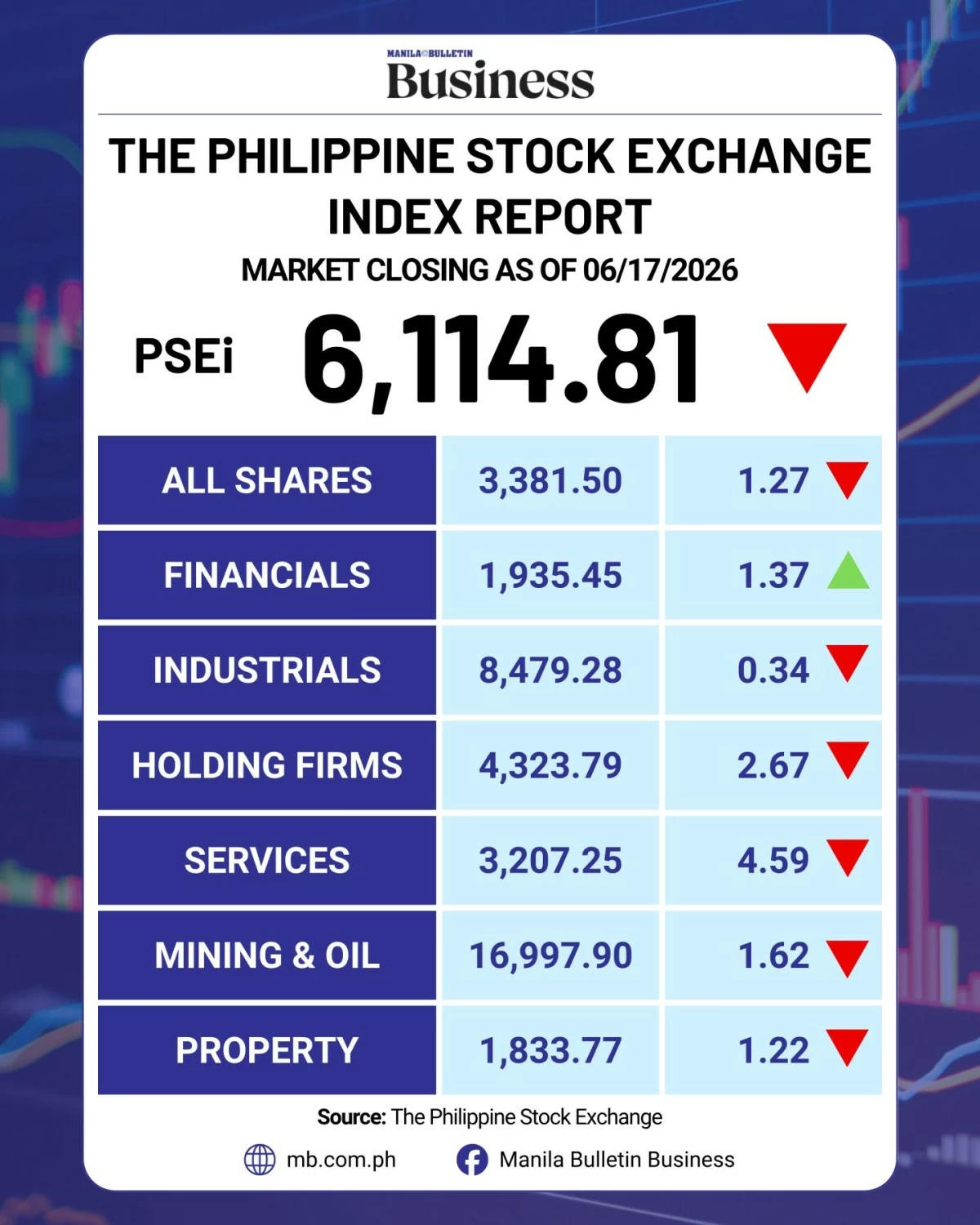
Local equities tumbled the most in more than a month as investors rushed to lock in gains ahead of the central bank’s interest rate decision, with heavyweights leading the retreat.
The Philippine Stock Exchange index (PSEi) plunged by 130.94 points, or 2.1 percent, to close at 6,114.81 on Wednesday, June 17. The services sector led the broad decline, while banking shares managed to buck the downward trend to post modest gains.
Trading volume thinned to 567 million shares valued a ₱8.25 billion. Market breadth was decisively negative, with 90 decliners outnumbering 72 gainers, while 62 issues remained unchanged.
The sharp pullback reflected defensive positioning across the board as traders anticipated the Bangko Sentral ng Pilipinas (BSP) monetary policy meeting.
“The Philippine market opted for continued profit-taking following the sharp increase in the index,” said Luis Limlingan, managing director at Regina Capital Development Corp.
“Market players also lightened their positions ahead of the BSP’s interest rate decision. Investors remained cautious as they awaited further cues from monetary policy developments,” he added.
The selloff concentrated heavily around the index’s most valuable components. International Container Terminal Services, Inc. (ICTSI) saw aggressive liquidations that dragged down the broader aggregate.
“The local market declined further due to profit-taking on its heavyweight ICTSI,” said Japhet Tantiangco, research manager at Philstocks Financial. “ICT is also the main index laggard for the day.”
Tantiangco added that institutional and retail investors alike are moving to the sidelines to limit capital exposure until the central bank delivers its policy guidance.
A multi-month rally in local equities had left valuations stretched, making the market highly sensitive to macroeconomic shifts and impending borrowing costs.
A quarter-point increase by the Monetary Board would push the benchmark reverse repurchase rate higher, potentially squeezing corporate margins and tempering consumer credit.