






Manila Bulletin
 Philippines
National
No US ban on dual citizenship, Philippine envoy tells Filipino-Americans
Philippines
National
No US ban on dual citizenship, Philippine envoy tells Filipino-Americans
Philippines
National
No US ban on dual citizenship, Philippine envoy tells Filipino-Americans
No US ban on dual citizenship, Philippine envoy tells Filipino-Americans
Ambassador Jose Manuel Romualdez says dual citizenship helps Filipino-Americans stay connected to the Philippines, contribute to nation-building, and vote in Philippine elections
Published Jun 17, 2026 10:37 am


At A Glance
- Ambassador Romualdez clarified that the United States does not prohibit dual citizenship for Filipino-Americans.
- Dual citizenship allows overseas Filipinos to maintain ties with the Philippines and participate in national elections, he added.
- The Philippine government is expanding consular services in the US by reopening the Seattle Consulate and planning to open a Miami Consulate.
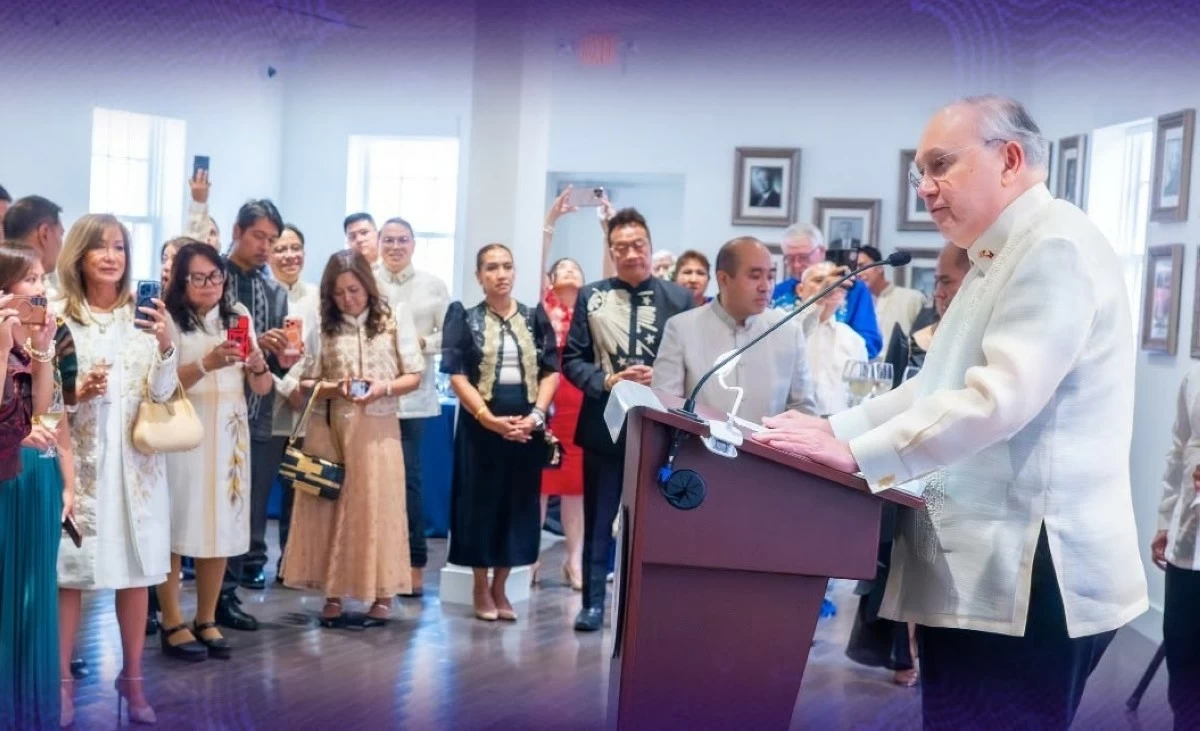
Philippine Ambassador to the United States Jose Manuel Romualdez reassured Filipino-Americans that there is no US ban on dual citizenship and encouraged them to remain engaged in nation-building and democratic participation in the Philippines. (Photo from the Philippine Embassy in Washington, D.C. / Facebook)
Philippine Ambassador to the United States Jose Manuel Romualdez reassured Filipino-Americans that there is no ban on dual citizenship in the United States, emphasizing that maintaining both Philippine and American citizenship offers opportunities for deeper engagement with their homeland and participation in nation-building efforts.
Speaking before members of the Filipino community during a reception marking the 128th anniversary of Philippine Independence and the 80th anniversary of diplomatic relations between the Philippines and the United States at the Philippine Embassy in Washington, D.C., Romualdez addressed what he described as persistent misinformation surrounding dual citizenship.
“Despite the misinformation online, there is no ban on dual citizenship in the U.S. nor is it deemed inimical to your continued residence in the United States: you do not have to choose one citizenship over another,” he said.
Dual citizenship and nation-building
Romualdez underscored the importance of dual citizenship for Filipino-Americans seeking to maintain meaningful ties with the Philippines while continuing to build their lives in the United States.
“As I have said before, dual citizenship has no disadvantages,” Romualdez said. “In fact, it unlocks many opportunities and allows generations of Filipino-Americans to maintain meaningful ties to both countries.”
He also highlighted the role of dual citizenship in enabling overseas Filipinos to participate in Philippine democracy, particularly through voting in national elections.
“It also offers the most direct and meaningful way that you may be able to help in nation-building—by exercising the right to vote for our leaders in the coming national elections,” he added.
Filipino-Americans as ‘real ambassadors’
During his remarks, Romualdez paid tribute to the contributions of the Filipino-American community, describing them as the Philippines’ “real ambassadors” in the United States.
“I have often said that I may be the Ambassador of the Philippines to the United States, but you, all of you here, in your own way, are our real ambassadors,” Romualdez told attendees. “Each and every one of you here has planted the seeds for a thriving Filipino-American diaspora.”
He stressed that relations between the Philippines and the United States are strengthened not only through diplomatic engagements, trade, and official agreements but also through the lives and contributions of millions of Filipinos who have settled in America.
“Our relations with the U.S. are not just measured in treaties, trade, and high-level visits,” Romualdez said, noting that they are “reinforced by millions of personal connections from the lives you lived, families you raised, communities you formed, and people you helped.”
Romualdez noted that decades of migration and community-building have contributed to a significant demographic shift, with more Filipinos in the United States now being American-born than immigrants from the Philippines.
Romualdez stressed that the strength of the Filipino diaspora lies not only in its numbers but also in its enduring connection to the Philippines.
“You may have settled here in America, but I know you will never forget where you come from,” he said. “The Philippines will always be part of your identity. This is why dual citizenship remains of personal significance to our Filipino-American community,” he added.
Expanded consular presence in the US
To better serve the estimated 4.7 million Filipinos living in the United States, Romualdez announced the continued expansion of the Philippines’ diplomatic and consular presence nationwide.
He noted that the Philippine government recently reopened the Philippine Consulate General in Seattle after more than 30 years.
The ambassador also disclosed that preparations are underway for the opening of a Philippine Consulate General in Miami, which could begin operations by the end of the year or early next year.
“You will be pleased to know that after more than 30 years, we have reopened our Philippine Consulate General in Seattle,” he said. “And for our guests tonight who traveled all the way from Florida, I have great news also: our preparations are underway for the opening of the Philippine Consulate General in Miami early next year, if not by yearend,” he added.
Romualdez said the expansion aims to bring government services closer to Filipino communities across the United States and strengthen engagement with the Filipino diaspora.
Celebrating shared history and partnership
Romualdez delivered his remarks at the historic Old Chancery of the Philippine Embassy in Washington, D.C., a building that once housed the first Philippine Commonwealth office in the United States and served as the wartime headquarters of Manuel L. Quezon during his exile in World War II.
He also highlighted the contributions of generations of Filipino migrants, including the Manilamen, regarded as the first Filipino settlers in the United States, and praised Filipino-Americans for helping strengthen ties between the two nations.
The event commemorated the 128th anniversary of Philippine Independence and the 80th anniversary of diplomatic relations between the Philippines and the United States, underscoring what Romualdez described as the enduring friendship and shared future of both countries.
“Filipinos are woven into the fabric of America, and Filipino-Americans remain woven into the fabric of the Philippines,” he said. “The Filipino people are not on the margins of this ironclad alliance—they are central to the future of both our countries,” Romualdez added.