








Davao City eyes AI-powered robots for gov’t services
DAVAO CITY – A Davao City councilor said on Tuesday, June 16, that the city is exploring integrating artificial intelligence-powered robots into the local government's operations as part of its long-term smart city and digitalization initiatives.
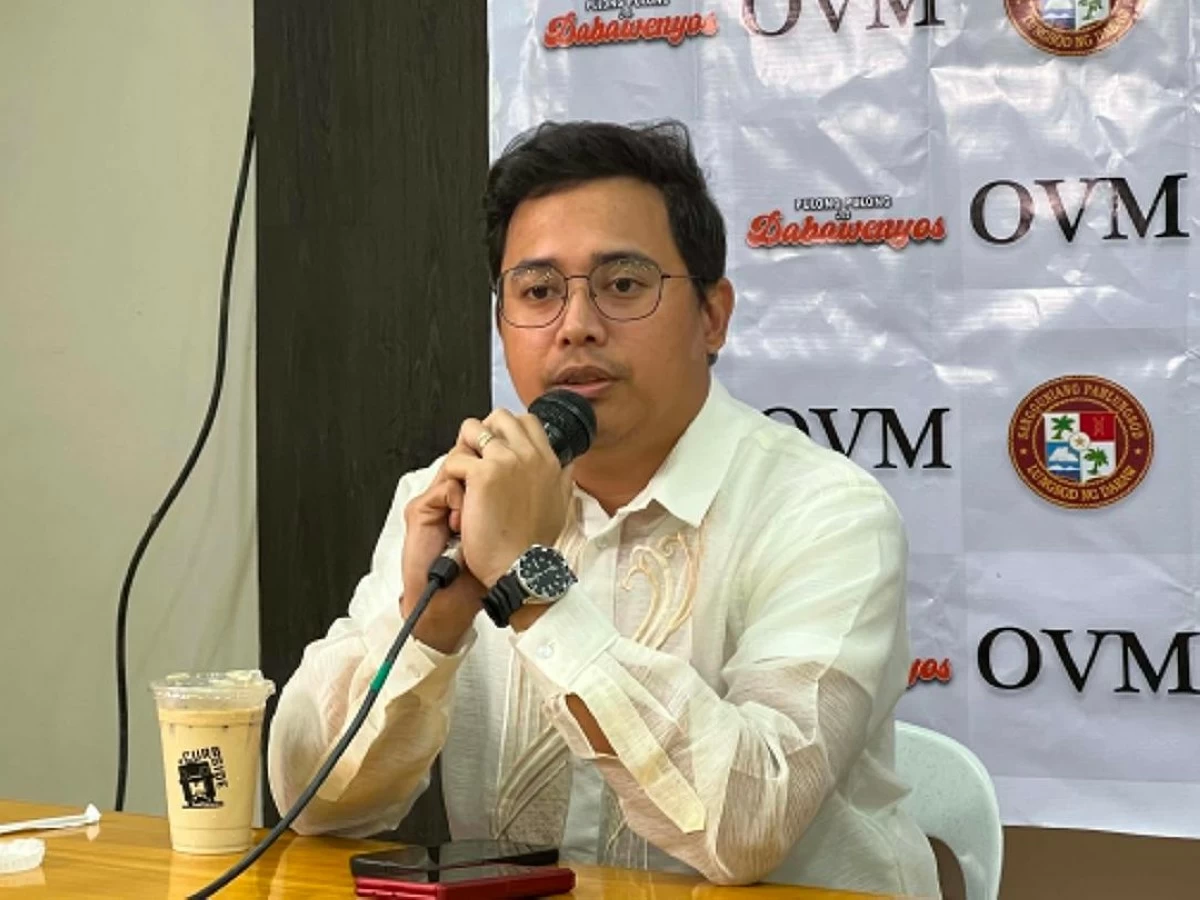
During the Pulong-Pulong sa Dabawenyos media forum at the Sangguniang Panlungsod, Councilor Bonz Andre Militar, chairperson of the Committee on Information Technology, said the city is open to using AI to improve government services and make operations more efficient.
"We are already embracing AI," Militar said. "Davao City could install AI systems once funding becomes available."
He added that the city is also considering developing its own AI platform similar to ChatGPT in the future, though it would require funding and a dedicated server system.
For now, the councilor said the city can use AI tools and robots in its offices to help employees work faster and more efficiently, such as checking information, preparing documents, and speeding up approvals, while employees remain in control of the process.
Militar clarified that adopting AI would not result in job losses among government personnel, including job order workers. "AI will only support employees and make their work faster. Again, it will not replace workers," he added.
He said AI is already part of Davao City's broader digital transformation agenda. He added that the city will not only pursue digital transformation, but will also adopt the latest technology, including AI-powered robots, which are useful in government offices and public spaces.
Militar explained that the city may integrate the robots with an AI facial recognition system previously approved by the City Council. If implemented, he said, the robots could detect individuals included in the watchlists and automatically notify designated public safety personnel.
Unlike stationary closed-circuit television cameras, the councilor said, mobile robots could also patrol areas such as parks, night markets, and government offices, serving as a public safety feature and even a tourism feature in Davao City.
Militar said the city is also studying the use of AI-powered robots as information assistants that can communicate in Cebuano, Tagalog, English, and other languages so that citizens can ask questions, receive guidance, and register for services.
The city is also exploring the potential of robotics in disaster response, Militar said, adding that micro-robots could help search for trapped individuals in collapsed structures by accessing confined spaces that may be difficult for rescuers to reach.
"Since we do not have a budget from the national government, funding for the proposed AI-powered robots initiatives would come from the Davao City government," Militar said, noting that the total project cost would depend on the priorities identified during committee deliberations.
The initial proposal, the councilor said, includes the possible acquisition of three AI-powered robots for deployment at the Sangguniang Panlungsod, City Hall, and selected parks. He added that the proposal remains under consideration and is currently at the first reading stage.
Addressing concerns about data security, Militar emphasized that compliance with Republic Act 10173, or the Philippine Data Privacy Act, would be a primary consideration in the development and deployment of these AI systems.
He said AI tools would access only city databases for processing applications and approvals, and would not be allowed to share information freely. He added that the proposed ordinance would also include penalties for data privacy violations.
Despite advancements in AI technology, Militar emphasized that human supervision would remain essential in government operations. "Robots and AI are not perfect. The city cannot allow AI to approve or release documents on its own. AI will only help government employees work."