ADVERTISEMENT

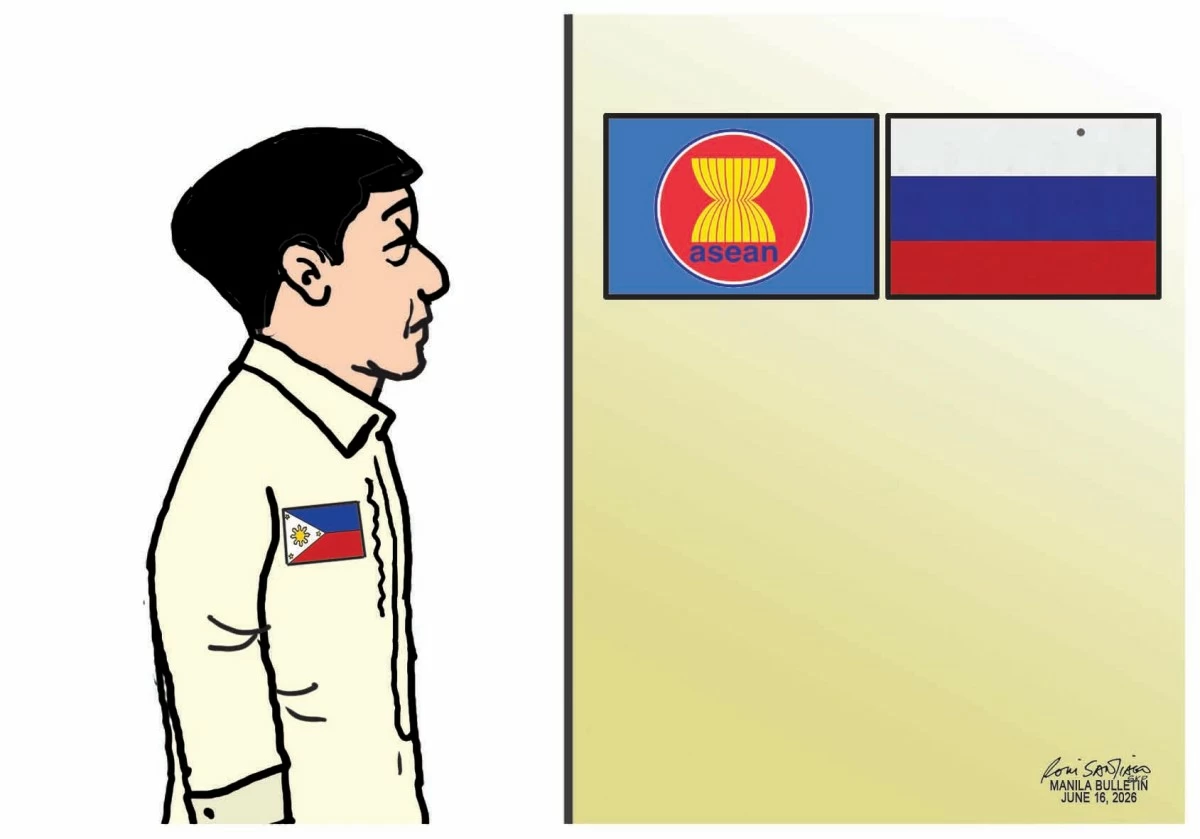
PBBM's ASEAN-Russia Summit participation promotes PH and regional interests

Published Jun 16, 2026 12:05 am  |  Updated Jun 15, 2026 04:39 pm
President Ferdinand R. Marcos Jr.’s participation in the ASEAN-Russia Commemorative Summit in Kazan on June 17-18 is more than a ceremonial diplomatic engagement. It is a strategic opportunity for the Philippines, as current ASEAN Chair, to strengthen regional cooperation, diversify economic partnerships, and reinforce ASEAN’s central role in an increasingly complex global environment.
The summit marks the 35th anniversary of ASEAN-Russia dialogue relations and brings together Southeast Asian leaders and Russian officials to review past achievements and chart future areas of cooperation. As ASEAN Chair, the Philippines is expected to play a leading role in assessing the progress of ASEAN-Russia relations and identifying new avenues for engagement.
At a time when geopolitical tensions continue to shape international affairs, the summit highlights the importance of maintaining open channels of communication with all major partners. ASEAN’s strength has long rested on its ability to engage constructively with diverse powers while preserving regional stability and strategic autonomy. The Philippines’ active participation reflects a foreign policy that seeks productive relations with all nations based on mutual respect and shared interests.
One of the most significant outcomes expected from the summit is the expansion of economic cooperation. Russia remains an important ASEAN dialogue partner with growing trade and investment links across the region. Discussions are likely to focus on trade facilitation, food security, energy cooperation, science and technology, digital innovation, and tourism. These are areas where stronger collaboration can deliver tangible benefits to ASEAN member states and support long-term regional development.
For the Philippines, these discussions come at an opportune time. The country continues to pursue economic growth, infrastructure modernization, and energy security. Enhanced cooperation with Russia and other ASEAN partners could open new markets for Philippine products, encourage investment, and create opportunities in sectors such as agriculture, energy, education, and technology. Diversified economic partnerships also help reduce vulnerability to external shocks and strengthen national resilience.
The summit likewise provides an avenue for cooperation on regional and global challenges. Food supply disruptions, energy volatility, climate change, disaster preparedness, and public health remain pressing concerns for Southeast Asia. Collective action and broader partnerships are essential to addressing these issues effectively. By participating actively in these discussions, the Philippines contributes to solutions that benefit not only its own citizens but the wider ASEAN community.
Equally important is the summit’s contribution to peace and stability. ASEAN has consistently promoted dialogue as the preferred means of resolving differences. Through constructive engagement with Russia and other partners, ASEAN demonstrates that diplomacy remains a vital tool for reducing tensions and fostering mutual understanding. Such engagement strengthens the region’s capacity to navigate global uncertainties while preserving peace and prosperity.
President Marcos’ attendance therefore carries significance beyond protocol. It reflects the Philippines’ commitment to responsible regional leadership and to advancing an inclusive, balanced, and forward-looking foreign policy. As ASEAN Chair, the country has the opportunity to help shape partnerships that promote economic progress, regional security, and sustainable development.
In a rapidly changing world, diplomacy is not merely about maintaining relationships—it is about creating opportunities. The ASEAN-Russia Summit offers precisely that opportunity, and the Philippines stands to benefit from a stronger, more connected, and more resilient regional community.
ADVERTISEMENT
.most-popular .layout-ratio{ padding-bottom: 79.13%; } @media (min-width: 768px) and (max-width: 1024px) { .widget-title { font-size: 15px !important; } }

{{ articles_filter_1561_widget.title }}

.most-popular .layout-ratio{ padding-bottom: 79.13%; } @media (min-width: 768px) and (max-width: 1024px) { .widget-title { font-size: 15px !important; } }

{{ static_articles_1562_widget.title }}

.most-popular .layout-ratio{ padding-bottom: 79.13%; } @media (min-width: 768px) and (max-width: 1024px) { .widget-title { font-size: 15px !important; } }

{{ articles_filter_1563_widget.title }}

{{ articles_filter_1564_widget.title }}

.mb-article-details { position: relative; } .mb-article-details .article-body-preview, .mb-article-details .article-body-summary{ font-size: 17px; line-height: 30px; font-family: "Libre Caslon Text", serif; color: #000; } .mb-article-details .article-body-preview iframe , .mb-article-details .article-body-summary iframe{ width: 100%; margin: auto; } .read-more-background { background: linear-gradient(180deg, color(display-p3 1.000 1.000 1.000 / 0) 13.75%, color(display-p3 1.000 1.000 1.000 / 0.8) 30.79%, color(display-p3 1.000 1.000 1.000) 72.5%); position: absolute; height: 200px; width: 100%; bottom: 0; display: flex; justify-content: center; align-items: center; padding: 0; } .read-more-background a{ color: #000; } .read-more-btn { padding: 17px 45px; font-family: Inter; font-weight: 700; font-size: 18px; line-height: 16px; text-align: center; vertical-align: middle; border: 1px solid black; background-color: white; } .hidden { display: none; }
function initializeAllSwipers() { // Get all hidden inputs with cms_article_id document.querySelectorAll('[id^="cms_article_id_"]').forEach(function (input) { const cmsArticleId = input.value; const articleSelector = '#article-' + cmsArticleId + ' .body_images'; const swiperElement = document.querySelector(articleSelector); if (swiperElement && !swiperElement.classList.contains('swiper-initialized')) { new Swiper(articleSelector, { loop: true, pagination: false, navigation: { nextEl: '#article-' + cmsArticleId + ' .swiper-button-next', prevEl: '#article-' + cmsArticleId + ' .swiper-button-prev', }, }); } }); } setTimeout(initializeAllSwipers, 3000); const intersectionObserver = new IntersectionObserver( (entries) => { entries.forEach((entry) => { if (entry.isIntersecting) { const newUrl = entry.target.getAttribute("data-url"); if (newUrl) { history.pushState(null, null, newUrl); let article = entry.target; // Extract metadata const author = article.querySelector('.author-section').textContent.replace('By', '').trim(); const section = article.querySelector('.section-info ').textContent.replace(' ', ' '); const title = article.querySelector('.article-title h1').textContent; // Parse URL for Chartbeat path format const parsedUrl = new URL(newUrl, window.location.origin); const cleanUrl = parsedUrl.host + parsedUrl.pathname; // Update Chartbeat configuration if (typeof window._sf_async_config !== 'undefined') { window._sf_async_config.path = cleanUrl; window._sf_async_config.sections = section; window._sf_async_config.authors = author; } // Track virtual page view with Chartbeat if (typeof pSUPERFLY !== 'undefined' && typeof pSUPERFLY.virtualPage === 'function') { try { pSUPERFLY.virtualPage({ path: cleanUrl, title: title, sections: section, authors: author }); } catch (error) { console.error('ping error', error); } } // Optional: Update document title if (title && title !== document.title) { document.title = title; } } } }); }, { threshold: 0.1 } ); function showArticleBody(button) { const article = button.closest("article"); const summary = article.querySelector(".article-body-summary"); const body = article.querySelector(".article-body-preview"); const readMoreSection = article.querySelector(".read-more-background"); // Hide summary and read-more section summary.style.display = "none"; readMoreSection.style.display = "none"; // Show the full article body body.classList.remove("hidden"); } document.addEventListener("DOMContentLoaded", () => { let loadCount = 0; // Track how many times articles are loaded const offset = [1, 2, 3, 4, 5, 6, 7, 8, 9, 10]; // Offset values const currentUrl = window.location.pathname.substring(1); let isLoading = false; // Prevent multiple calls if (!currentUrl) { console.log("Current URL is invalid."); return; } const sentinel = document.getElementById("load-more-sentinel"); if (!sentinel) { console.log("Sentinel element not found."); return; } function isSentinelVisible() { const rect = sentinel.getBoundingClientRect(); return ( rect.top < window.innerHeight && rect.bottom >= 0 ); } function onScroll() { if (isLoading) return; if (isSentinelVisible()) { if (loadCount >= offset.length) { console.log("Maximum load attempts reached."); window.removeEventListener("scroll", onScroll); return; } isLoading = true; const currentOffset = offset[loadCount]; window.loadMoreItems().then(() => { let article = document.querySelector('#widget_1690 > div:nth-last-of-type(2) article'); intersectionObserver.observe(article) loadCount++; }).catch(error => { console.error("Error loading more items:", error); }).finally(() => { isLoading = false; }); } } window.addEventListener("scroll", onScroll); });

Sign up by email to receive news.