







Marine turtles face extinction as threats mount
Published Jun 16, 2026 06:21 pm


It was a splendid morning when marine turtle eggs started to hatch from a nest located at Aboitiz Cleanergy Park in Sitio Punta Dumalag, Matina Aplaya, Davao City. One by one, the hatchlings emerged from the sand, ready to embark on their journey to the sea.
These marine turtle hatchlings came from the eighth nest discovered at the park two months earlier. Initially located in an area where the eggs were vulnerable to seawater – a condition that could harm them – they were transferred to the hatchery the following day to keep them dry.
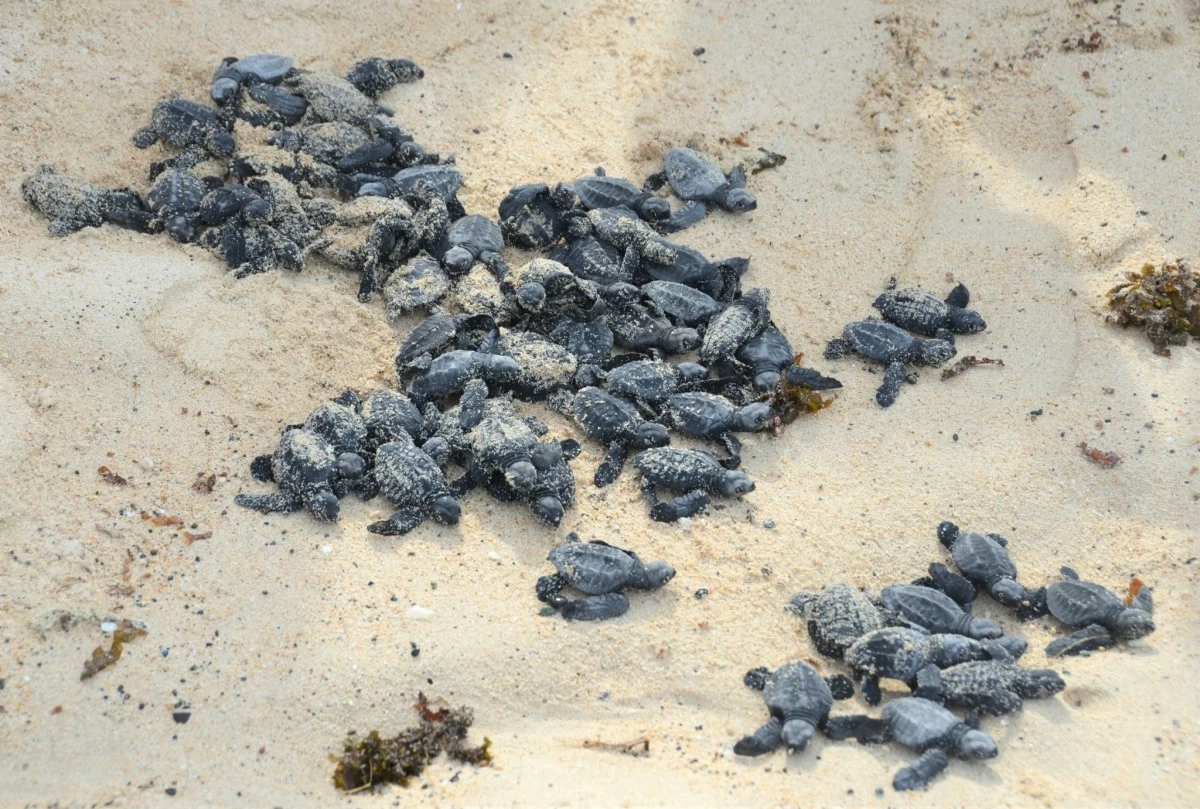
Marine turtles are released, though only one in 100 survives.
Of the 171 eggs that were relocated, 159 successfully hatched after more than 60 days of incubation. The hatchlings were released two days after their emergence.
The Aboitiz Group owns eight hectares within the 37-hectare area. As part of its corporate social responsibility program, it transformed the site into an eight-hectare ecological preserve known as Cleanergy Park, which is managed by Davao Light, a subsidiary of AboitizPower.
The park, which operates entirely wirelessly and is constructed from recycled materials, is dedicated to protecting the nesting habitats of marine turtles, locally known as pawikan. It also serves as a sanctuary for numerous bird species and helps maintain the ecological balance for various marine and terrestrial creatures.
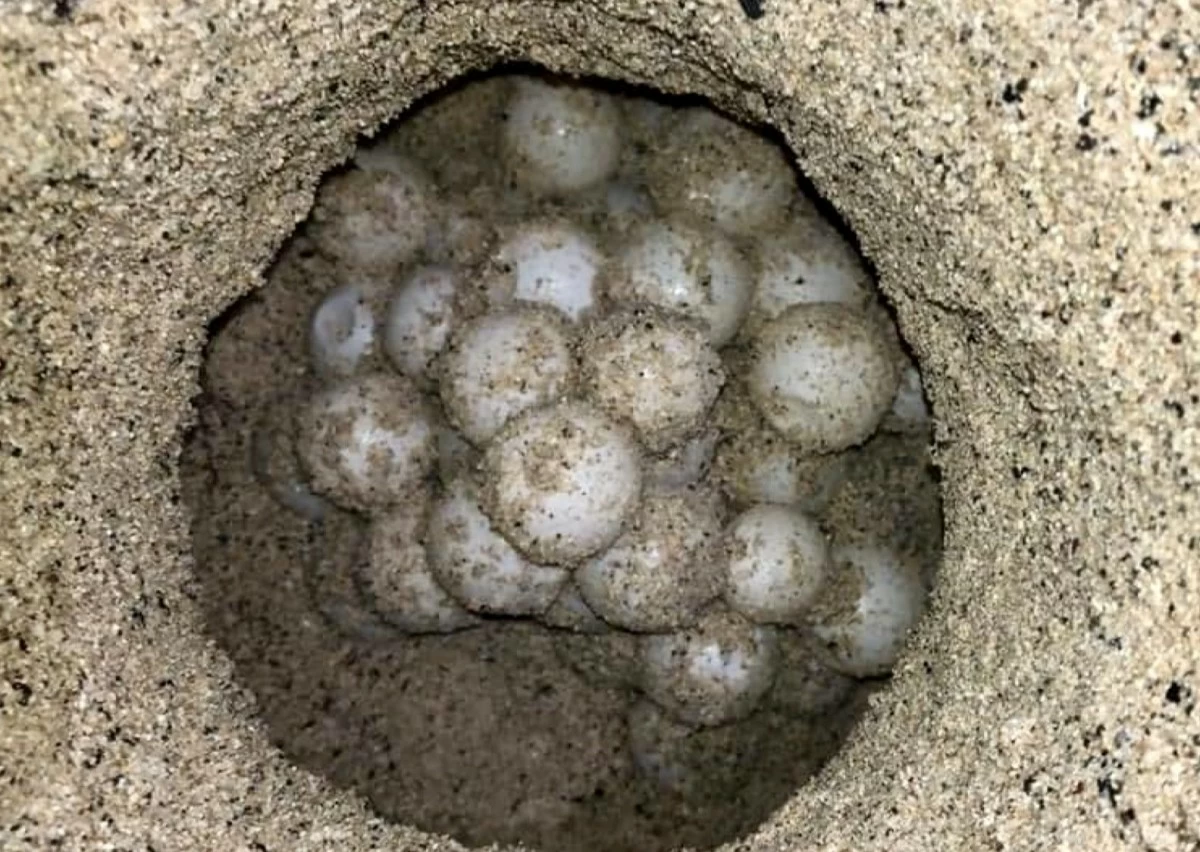
Pawikan eggs were dug up and transferred to a safer area for hatching.
Marine turtles can lay more than 150 eggs in a single nesting event. Mangrove-lined beaches, with their dense undergrowth that offers protection from predators and waves, are among the most favorable sites for nesting. If the eggs are deemed at risk of being swept away by waves, they are transferred to the park’s turtle hatchery.
Why is there such great concern over marine turtles?
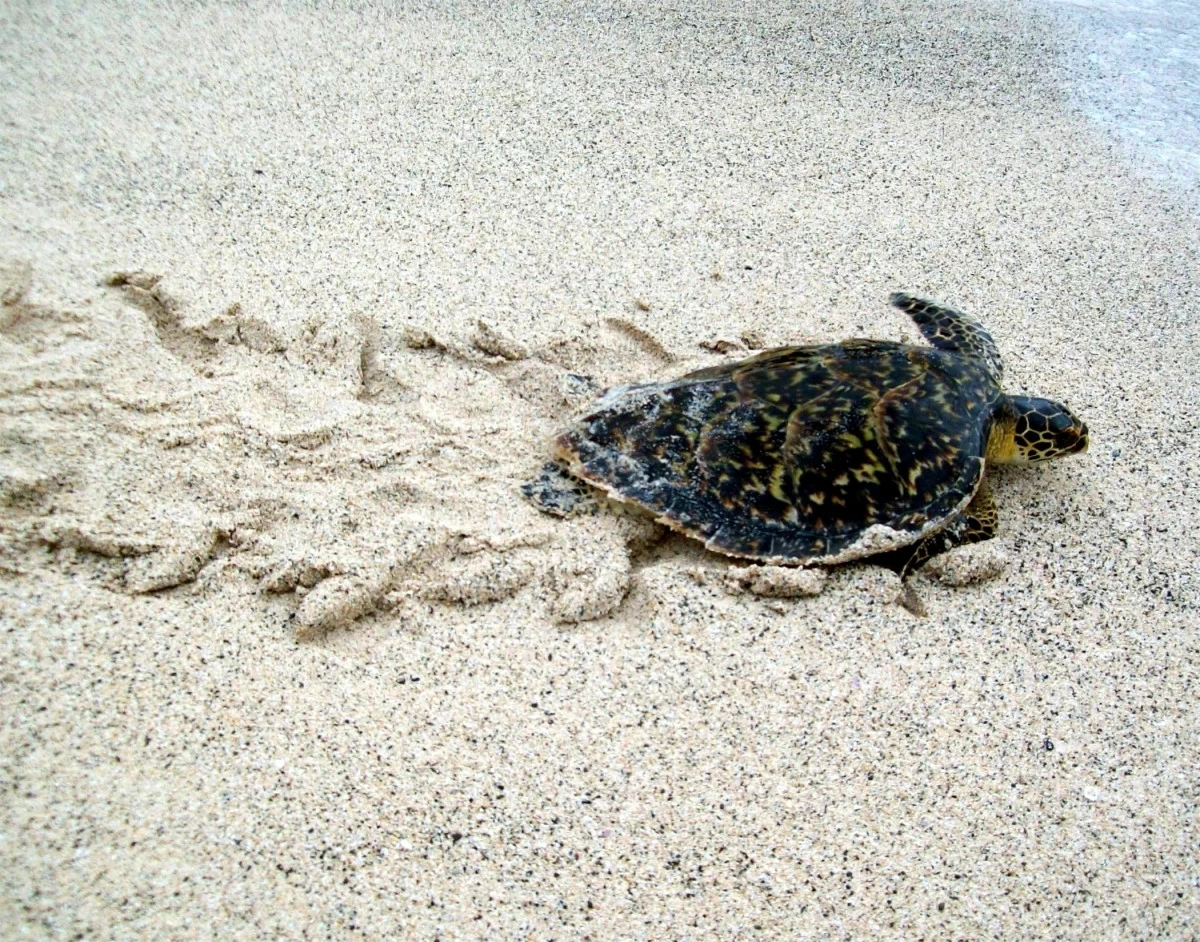
An adult marine turtle is released into the open sea.
These creatures have existed since prehistoric times with very little change in their basic anatomy. Yet since humans discovered their value, they have been disappearing rapidly from ecosystems where they once flourished.
Marine turtles are known for their shells, or carapaces, which protect their vital organs. They can be distinguished from their land and freshwater counterparts by their flattened forelimbs.
Unlike freshwater turtles, which have five claws on each forelimb with clearly identifiable digits, marine turtles possess flattened foreflippers with less distinct digits. The Philippines is home to three species of freshwater turtles: the Malayan pond turtle, the serrated-shelled pond turtle, and the Leyte turtle.
Of the world’s eight marine turtle species, five are found in the Philippines: the Green sea turtle (Chelonia mydas), Hawksbill (Eretmochelys imbricata), Loggerhead (Caretta caretta), Olive Ridley (Lepidochelys olivacea), and Leatherback (Dermochelys coriacea).
The three others are the Kemp’s Ridley (Lepidochelys kempii), Flatback (Natator depressus), and Black sea turtle (Chelonia agassizii).
Unfortunately, all eight species are listed under Appendix I of the Convention on International Trade in Endangered Species of Wild Fauna and Flora (CITES), which means trade in these species and subspecies is prohibited except for educational, scientific, research, and study purposes.
The International Union for Conservation of Nature has likewise classified these species as endangered because “their populations are in danger of extinction and their survival is unlikely if the causal factors continue to operate.”
One major reason for the decline in marine turtle populations is their capture for their valuable shells. As one journalist observed: “It was beauty that all but killed the Hawksbill turtle.” The polished black-and-yellow plates on its back have long been sought after for tortoise-shell jewelry and combs.
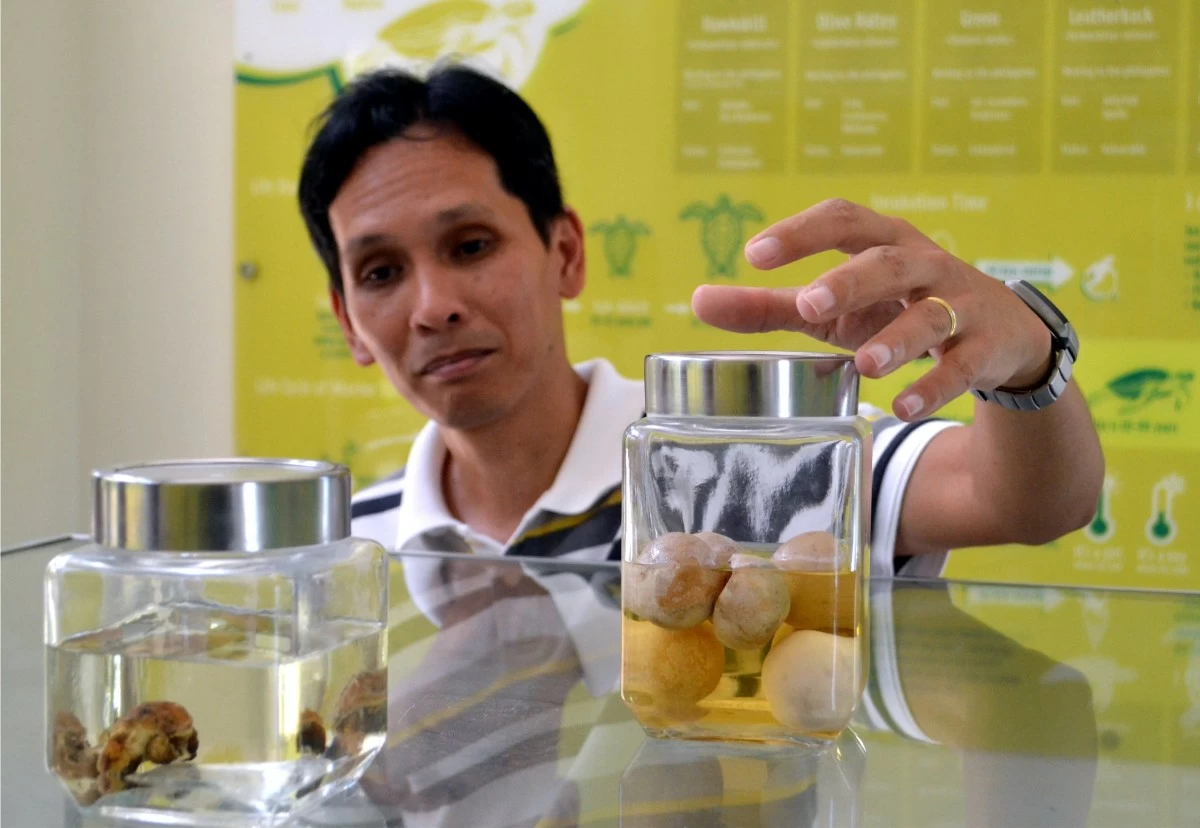
Eggs and embryos of marine turtles are displayed for educational purposes.
The collection of pawikan eggs has also contributed significantly to the decline of marine turtles. Regarded by some Chinese as an aphrodisiac, the ping-pong ball-like eggs are also valued as an energizing source of protein. Marine scientists, however, debunk this belief, saying pawikan eggs are essentially no different from chicken eggs.
Pollution is another major threat. Among the millions of tons of waste dumped into the oceans each year are plastic materials that marine turtles mistake for jellyfish, squid, and other prey. When ingested, plastic waste can block the digestive system, leading to starvation and eventually death.
The rapid expansion of beach resorts has likewise harmed marine turtle populations.
Dr. Arnel “AA” Yaptinchay, founder and director of the Marine Wildlife Watch of the Philippines, said the construction of coastal infrastructure displaces marine turtles from critical habitats, particularly the nesting beaches.
“Lights, infrastructure, noise, domestic animals, and pollution will not only disturb those nesting females but also their hatchlings,” he said. “Marine turtles will not nest when disturbed.”
Marine turtles spend most of their lives at sea, where they feed and mate. But when the time comes to lay their eggs, females return to shore, often to the beaches where they hatched.
“If you imagine a first-time nester approaching its place of birth, how much of its birth place or nesting beach remains after the last 35 to 50 years?” Dr. Yaptinchay asked.
“I would guess there would be very little space left for it to nest and enough disturbance developed to shoo it away. We are preventing them from fulfilling their life purpose. For me, this is very tragic.”
Another challenge is the survival of hatchlings once they reach the open sea.
The World Wildlife Fund reports that only about one in every 1,000 sea turtle hatchlings reaches adulthood. Along the way, they face numerous threats, including dehydration, predators such as birds and crabs, and marine plastic pollution.
It is no wonder that marine turtles in this part of the world are on the verge of extinction.
“Unless we Filipinos seriously take on the task of protecting these endangered marine turtles, these ancient creatures will soon be gone from our waters,” Haribon, a local environmental group, warned.
Fortunately, the Philippine government has enacted laws and regulations aimed at conserving marine turtles.
Executive Order No. 542 prohibits the collection, utilization, possession, transport, removal, disposal, and export of marine turtles, their eggs, and by-products. Violators may face fines or imprisonment.
Bureau of Forest Development Circular No. 08 limits the issuance of new permits covering the collection, utilization, and disposal of marine turtles, their eggs, and by-products. It also requires that authorized harvests be sold only to designated agencies to support the pawikan conservation program.
Fisheries Administrative Order No. 4 establishes a closed season for gathering or killing marine turtles and collecting their eggs or shells, while specifying exemptions.
The Wildlife Resources Conservation and Protection Act (Republic Act 9147) governs the collection, possession, and trade of wildlife, including marine turtles, while promoting biodiversity conservation through habitat protection and the designation of critical habitats.
Despite the efforts of the government and environmental advocates, the decline of this endangered species continues.
“All of the species found in our country are endangered, except the Hawksbill, which is critically endangered,” Dr. Yaptinchay said. “The only sure thing is that marine turtle populations are under tremendous threats and, if these are not stopped, extinction is imminent.”