






Manila Bulletin
 Philippines
National
Draped in rainbows, shadowed by war and faith: The Tel Aviv pride
Philippines
National
Draped in rainbows, shadowed by war and faith: The Tel Aviv pride
Philippines
National
Draped in rainbows, shadowed by war and faith: The Tel Aviv pride
Draped in rainbows, shadowed by war and faith: The Tel Aviv pride
Published Jun 16, 2026 01:13 pm


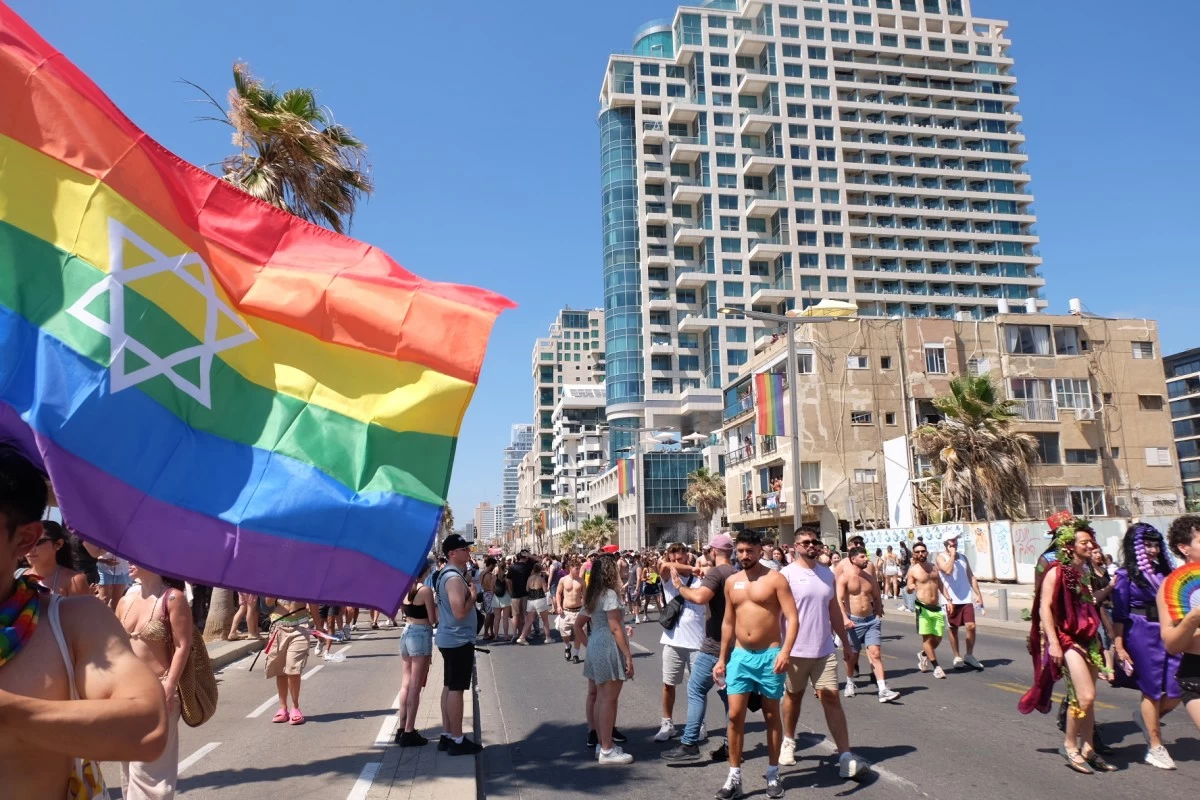
Rainbow flags draped the coast of Tel Aviv—an hour's drive away from the world's holiest site—for the annual Pride Parade.
Tens of thousands of members of the LGBTQ+ community marched under the Mediterranean sun to celebrate diversity and acceptance in a country home to three of the world's major religions.
It was a celebration of expression that practically ran counter to the beliefs of the religious population. And the community fought hard to make it happen.
Recognition of rights for same sex couples wasn't as strong as before. It was a series of compromises and realizations, especially from the government that, although secular, incorporates the conservative Jewish law into the state law.
Israel is the only progressive nation among its neighboring Middle East countries in terms of homosexuality. The government offers recognition to the members of the community to its full extent, without offending the beliefs of the mainly Jewish people that comprise 78 percent of the population.
Its parliament, the Knesset, decriminalized homosexuality in 1988.
Israel doesn't have same-sex marriage as it delegates all marriage authority to religious courts. But since 2006, it has legally recognized same-sex marriage held out of the country.
In the military, gay, lesbian and bisexual individuals have been allowed to serve since 1993, and their common-law partners are qualified for spousal benefits.
Following Hamas' unprecedented attack on Israel in 2023 that killed 1,200 people, including Reserve Captain Sagi Golan, who was set to marry his fiancé, Israel's Defense Forces (IDF) have started recognizing rights of spouses of fallen soldiers.
Tel Aviv's Pride event—which had been cancelled in 2024 and 2025 due to Israel's ongoing wars—pushed through on June 12, 2026 in its 28th year.
It was indeed a celebration as LGBTQ+ members, holding flags, banners and other colorful paraphernalia, marched through the coast for two kilometers, singing, dancing and chanting.
But 70 kilometer down south, in Jerusalem, the pride event was still a protest. There, community members still demand acceptance and tolerance in a place dominated by religious conservatives. "We need to fight for rights there," said Alon Reichman of Rainbow, an LGBTQ+ center in Tel Aviv.
'Pinkwashing'
Yet, Israel's vibrant projection of progressive values exists in the shadow of a humanitarian catastrophe it has caused to Gaza.
Its critics argue its display of tolerance functions as "pinkwashing"—a modern brand of public diplomacy that uses LGBTQ+ rights to mask systemic violations of international law.
Anat Nir, an LGBTQ+ activist who also ran for a position in the Knesset, emphasized "there isn't pride in occupation." She believed a more progressive acceptance of LGBTQ+ rights must be encompassing to the rights of even the Palestinians.
"There should be a Palestinian country and an Israeli country next to each other, living in peace," she stressed.
Israel stands by its right to self-defense, and in doing so, it has led to the destruction of communities and the violation of rights of the civilian population, especially in Gaza.
"We as a gay community, in my eyes, need to make sure that we're fighting for everyone’s human rights, not just our own," Nir said.