






Manila Bulletin
 Business
Trade & Industry
DPWH begins work on ₱320-billion Laguna expressway extension
Business
Trade & Industry
DPWH begins work on ₱320-billion Laguna expressway extension
Business
Trade & Industry
DPWH begins work on ₱320-billion Laguna expressway extension
DPWH begins work on ₱320-billion Laguna expressway extension
Published Jun 16, 2026 03:33 pm


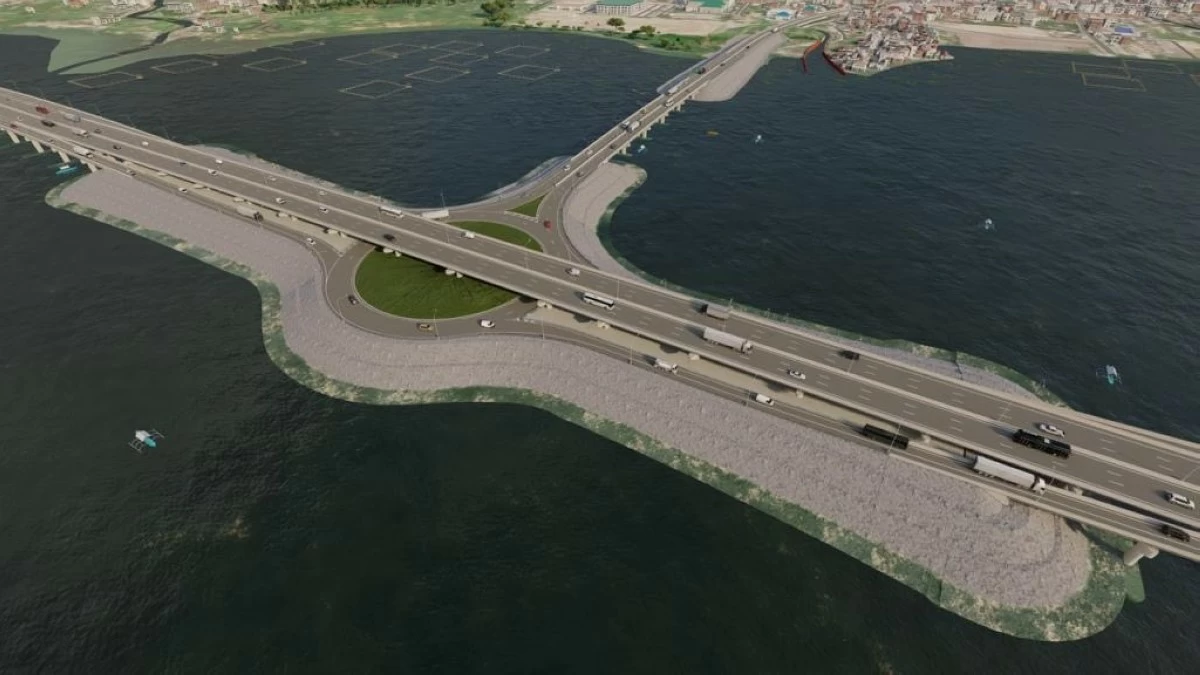
(ADB photo)
The Department of Public Works and Highways (DPWH) has started preliminary work on the ₱320-billion second phase of the Laguna Lakeshore Road Network (LLRN) project, which aims to provide a direct link between Taguig and Laguna.
In a notice, the Environmental Management Bureau (EMB) said it will hold a public scoping activity on June 30 to assess the potential issues and concerns of Taguig residents regarding LLRN Project Phase 2.
Public scoping is the first step of the environmental impact assessment (EIA) process, during which the project proponent—the DPWH in this case—provides an overview of the proposed project.
The completion of the EIA process is necessary for the issuance of an environmental compliance certificate (ECC), which is required for infrastructure projects that may affect the environment.
The DPWH said LLRN Project Phase 1, which covers the portion of the road network spanning the western side of Laguna Lake, has already secured an ECC.
With a total length of 45.56 kilometers (km), the project’s first phase is expected to cost ₱166.42 billion and will be implemented in two construction phases.
The road network is expected to reduce travel time from southern Metro Manila to Calamba, Laguna, from an average of one hour and 15 minutes to 30 minutes, benefiting around 25,000 vehicles daily.
Meanwhile, LLRN Project Phase 2 is expected to have a total indicative length of 73.61 km, consisting mainly of new roads, embankments, viaducts, bridges, hill roads, hillroad embankments, and a tunnel.
Based on the DPWH’s report to the EMB, the project is estimated to cost ₱320 billion, down by 36 percent from its initial estimate of nearly ₱500 billion.
Following the completion of the preliminary engineering design and feasibility study in the fourth quarter of last year, the DPWH is now working on the detailed engineering design.
Construction of the project is scheduled to begin in the second quarter of 2027 and is expected to be completed in the first quarter of 2032.
The DPWH said LLRN Project Phase 2 is the government’s response to ease congestion in Metro Manila and Calabarzon, which often results in long travel times that affect residents, workers, and tourists traveling within the area.
“The economic cost of transportation, which refers to the time cost spent by motorists and passengers and vehicles' operational cost, will continuously rise and the situation will eventually get worse if interventions will not be made,” the agency said.
“Thus, the construction of additional road network…will significantly lessen and ease the transport capacity, improve the performance and reduce the pressure of the existing roads, and vitalize the economic development of the region and nearby provinces,” it added.