

ADVERTISEMENT

DepEd reinforces localized classroom building program; 79 LGUs start infrastructure projects

Published Jun 16, 2026 02:51 pm

At A Glance

  • DepEd Secretary Sonny Angara said devolving greater responsibility to local government leaders allows for a faster and more responsive approach to addressing classroom shortages, but stressed that transparency must remain a core requirement of the program.
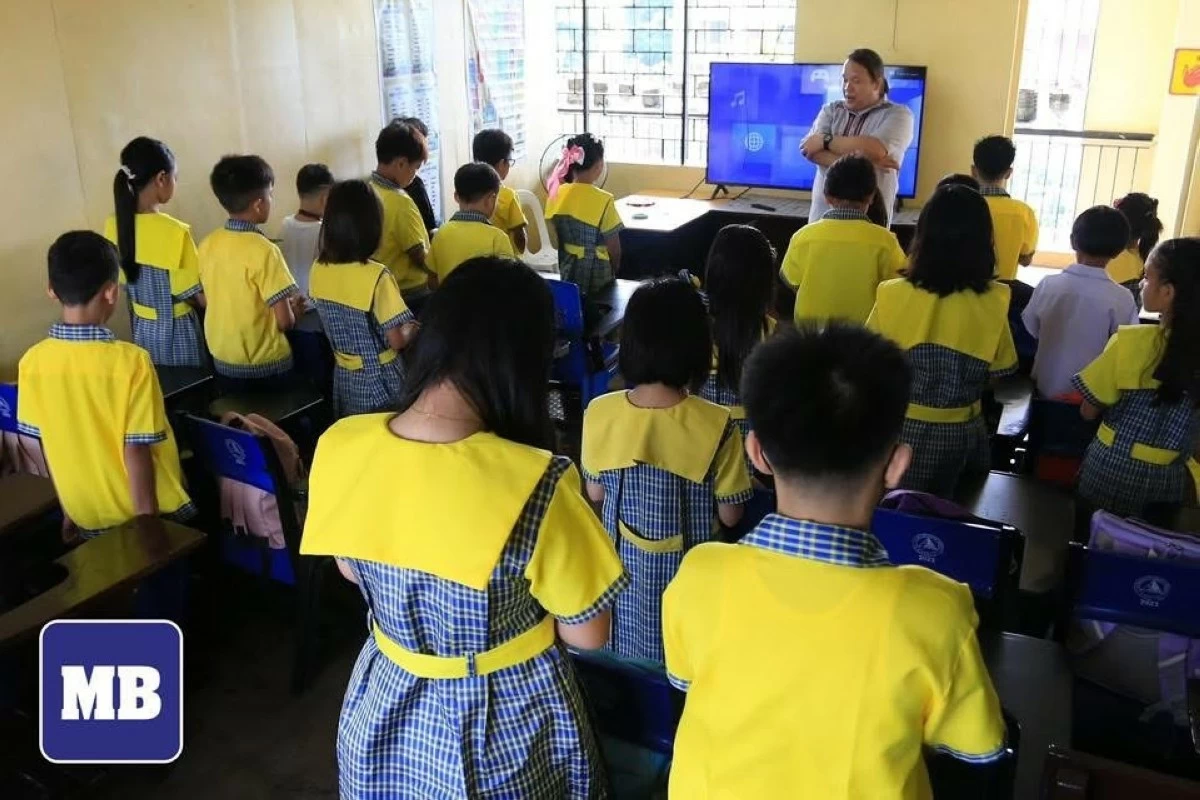
(MB FILE PHOTO)
(MB FILE PHOTO)
In a bid to address classroom and school facility shortages, the Department of Education (DepEd) has strengthened the framework for its nationwide localized classroom-building program as 79 partner local government units (LGUs) begin infrastructure projects across the country.
Through the new guidelines, the agency said it reinforced governance and accountability measures for the program, establishing stricter monitoring protocols to ensure local infrastructure projects are completed on schedule, digitally validated, and managed in accordance with fiscal regulations.
“This strategic rollout leverages the momentum of the 79 pioneering LGUs that have already initiated procurement processes for school infrastructure,” DepEd said in a statement.
According to the agency, the first batch of collaborations involves a P9.3-billion investment that will deliver 2,632 new classrooms across over 600 schools throughout the country.
DepEd Secretary Sonny Angara said devolving greater responsibility to local government leaders allows for a faster and more responsive approach to addressing classroom shortages, but stressed that transparency must remain a core requirement of the program.
“Malaki ang maitutulong ng pakikipagtulungan nating ito sa mga lokal na pamahalaan upang mapabilis ang pagpapatayo ng mga pasilidad (This collaboration with local government units will greatly help accelerate the construction of facilities),” he said.
“Hindi kayang lutasin ng DepEd nang mag-isa ang kakulangan sa silid-aralan, kaya napakahalaga ng tulong ng mga LGU upang masigurong ligtas at komportable ang mga paaralan ng ating mga mag-aaral (DepEd cannot address the classroom shortage on its own, which is why the support of local government units is crucial in ensuring that our students have safe and comfortable schools),” he added.
The DepEd chief said the guidelines were designed not to create additional burdens or delays but to facilitate the faster release of funds while ensuring that projects remain transparent, high-quality, and free from irregularities.
“Inilatag natin ang mga panuntunang ito hindi para maging pabigat o magpatagal sa proseso, kundi para pabilisin ang paglabas ng pondo habang tinitiyak na malinis, de-kalidad, at walang anomalya ang ating mga proyekto (These guidelines were put in place not to add red tape or delay implementation, but to facilitate the faster release of funds while ensuring that projects are carried out with integrity, quality, and accountability),” said Angara.
Per DepEd, strict accountability will be enforced through the newly created Joint Project Implementation and Construction Committee (PICC), which will oversee project implementation and compliance nationwide.
“Furthermore, project monitoring has been completely digitized. LGUs are now required to utilize INSIGHTED, a real-time digital validation and monitoring system designed to track construction progress and eliminate delays,” the agency stated.
“All LGU-implemented projects must strictly adhere to DepEd’s technical standards, safety protocols, and the New Government Procurement Act.”
The education department noted that project funding will be released in three strict installments, which are directly tied to verified construction milestones.
Also, DepEd said a "green lane" financial mechanism will streamline administrative fund releases for compliant LGUs to prevent bureaucratic bottlenecks. 
The agency DepEd said that any project lagging behind its official schedule by 15 percent or more will face automatic cancellation, with the agency taking over the construction.
“Eligible LGUs retain the flexibility to either hire local contractors through competitive bidding or utilize their own city and provincial engineers for the construction work, provided they meet national standards,” it said.
“By reinforcing this accountability framework, DepEd ensures that localized construction needs are met without compromising national quality or timelines.”
DepEd said the localized classroom building program complements its broader infrastructure agenda, which includes a P36.227-billion funding pipeline for new classrooms and the Public-Private Partnership (PPP) School Infrastructure Program.

Related Tags

DepEd classroom construction school facilities infrastructure projects local government units education governance accountability measures DepEd guidelines public infrastructure Philippines education
ADVERTISEMENT
.most-popular .layout-ratio{ padding-bottom: 79.13%; } @media (min-width: 768px) and (max-width: 1024px) { .widget-title { font-size: 15px !important; } }

{{ articles_filter_1561_widget.title }}

.most-popular .layout-ratio{ padding-bottom: 79.13%; } @media (min-width: 768px) and (max-width: 1024px) { .widget-title { font-size: 15px !important; } }

{{ articles_filter_1562_widget.title }}

.most-popular .layout-ratio{ padding-bottom: 79.13%; } @media (min-width: 768px) and (max-width: 1024px) { .widget-title { font-size: 15px !important; } }

{{ articles_filter_1563_widget.title }}

{{ articles_filter_1564_widget.title }}

.mb-article-details { position: relative; } .mb-article-details .article-body-preview, .mb-article-details .article-body-summary{ font-size: 17px; line-height: 30px; font-family: "Libre Caslon Text", serif; color: #000; } .mb-article-details .article-body-preview iframe , .mb-article-details .article-body-summary iframe{ width: 100%; margin: auto; } .read-more-background { background: linear-gradient(180deg, color(display-p3 1.000 1.000 1.000 / 0) 13.75%, color(display-p3 1.000 1.000 1.000 / 0.8) 30.79%, color(display-p3 1.000 1.000 1.000) 72.5%); position: absolute; height: 200px; width: 100%; bottom: 0; display: flex; justify-content: center; align-items: center; padding: 0; } .read-more-background a{ color: #000; } .read-more-btn { padding: 17px 45px; font-family: Inter; font-weight: 700; font-size: 18px; line-height: 16px; text-align: center; vertical-align: middle; border: 1px solid black; background-color: white; } .hidden { display: none; }
function initializeAllSwipers() { // Get all hidden inputs with cms_article_id document.querySelectorAll('[id^="cms_article_id_"]').forEach(function (input) { const cmsArticleId = input.value; const articleSelector = '#article-' + cmsArticleId + ' .body_images'; const swiperElement = document.querySelector(articleSelector); if (swiperElement && !swiperElement.classList.contains('swiper-initialized')) { new Swiper(articleSelector, { loop: true, pagination: false, navigation: { nextEl: '#article-' + cmsArticleId + ' .swiper-button-next', prevEl: '#article-' + cmsArticleId + ' .swiper-button-prev', }, }); } }); } setTimeout(initializeAllSwipers, 3000); const intersectionObserver = new IntersectionObserver( (entries) => { entries.forEach((entry) => { if (entry.isIntersecting) { const newUrl = entry.target.getAttribute("data-url"); if (newUrl) { history.pushState(null, null, newUrl); let article = entry.target; // Extract metadata const author = article.querySelector('.author-section').textContent.replace('By', '').trim(); const section = article.querySelector('.section-info ').textContent.replace(' ', ' '); const title = article.querySelector('.article-title h1').textContent; // Parse URL for Chartbeat path format const parsedUrl = new URL(newUrl, window.location.origin); const cleanUrl = parsedUrl.host + parsedUrl.pathname; // Update Chartbeat configuration if (typeof window._sf_async_config !== 'undefined') { window._sf_async_config.path = cleanUrl; window._sf_async_config.sections = section; window._sf_async_config.authors = author; } // Track virtual page view with Chartbeat if (typeof pSUPERFLY !== 'undefined' && typeof pSUPERFLY.virtualPage === 'function') { try { pSUPERFLY.virtualPage({ path: cleanUrl, title: title, sections: section, authors: author }); } catch (error) { console.error('ping error', error); } } // Optional: Update document title if (title && title !== document.title) { document.title = title; } } } }); }, { threshold: 0.1 } ); function showArticleBody(button) { const article = button.closest("article"); const summary = article.querySelector(".article-body-summary"); const body = article.querySelector(".article-body-preview"); const readMoreSection = article.querySelector(".read-more-background"); // Hide summary and read-more section summary.style.display = "none"; readMoreSection.style.display = "none"; // Show the full article body body.classList.remove("hidden"); } document.addEventListener("DOMContentLoaded", () => { let loadCount = 0; // Track how many times articles are loaded const offset = [1, 2, 3, 4, 5, 6, 7, 8, 9, 10]; // Offset values const currentUrl = window.location.pathname.substring(1); let isLoading = false; // Prevent multiple calls if (!currentUrl) { console.log("Current URL is invalid."); return; } const sentinel = document.getElementById("load-more-sentinel"); if (!sentinel) { console.log("Sentinel element not found."); return; } function isSentinelVisible() { const rect = sentinel.getBoundingClientRect(); return ( rect.top < window.innerHeight && rect.bottom >= 0 ); } function onScroll() { if (isLoading) return; if (isSentinelVisible()) { if (loadCount >= offset.length) { console.log("Maximum load attempts reached."); window.removeEventListener("scroll", onScroll); return; } isLoading = true; const currentOffset = offset[loadCount]; window.loadMoreItems().then(() => { let article = document.querySelector('#widget_1690 > div:nth-last-of-type(2) article'); intersectionObserver.observe(article) loadCount++; }).catch(error => { console.error("Error loading more items:", error); }).finally(() => { isLoading = false; }); } } window.addEventListener("scroll", onScroll); });

Sign up by email to receive news.