ADVERTISEMENT

Business groups: New 'anti-dynasty' law trap to protect powerful clans

Published Jun 16, 2026 12:17 pm
The country’s prominent business and civil society groups want President Ferdinand “Bongbong” Marcos Jr. to reject the proposed Anti-Political Dynasty Law, warning that the measure would only legitimize and strengthen the presence of political dynasties.
In a joint statement on Tuesday, June 16, the groups described the measure as a “pro-dynasty bill” aimed at protecting political dynasties rather than putting an end to the controversial practice.
“Instead of fulfilling the mandate of our 1987 Constitution to dismantle political dynasties, it does the exact opposite: it institutionalizes the entrenched control of political families,” the groups said.
The statement was signed by the Management Association of the Philippines, Makati Business Club, Financial Executives Institute of the Philippines, Shareholders’ Association of the Philippines, Justice Reform Initiative, Parish Pastoral Council for Responsible Voting, and Philippine Institute of Arbitrators.
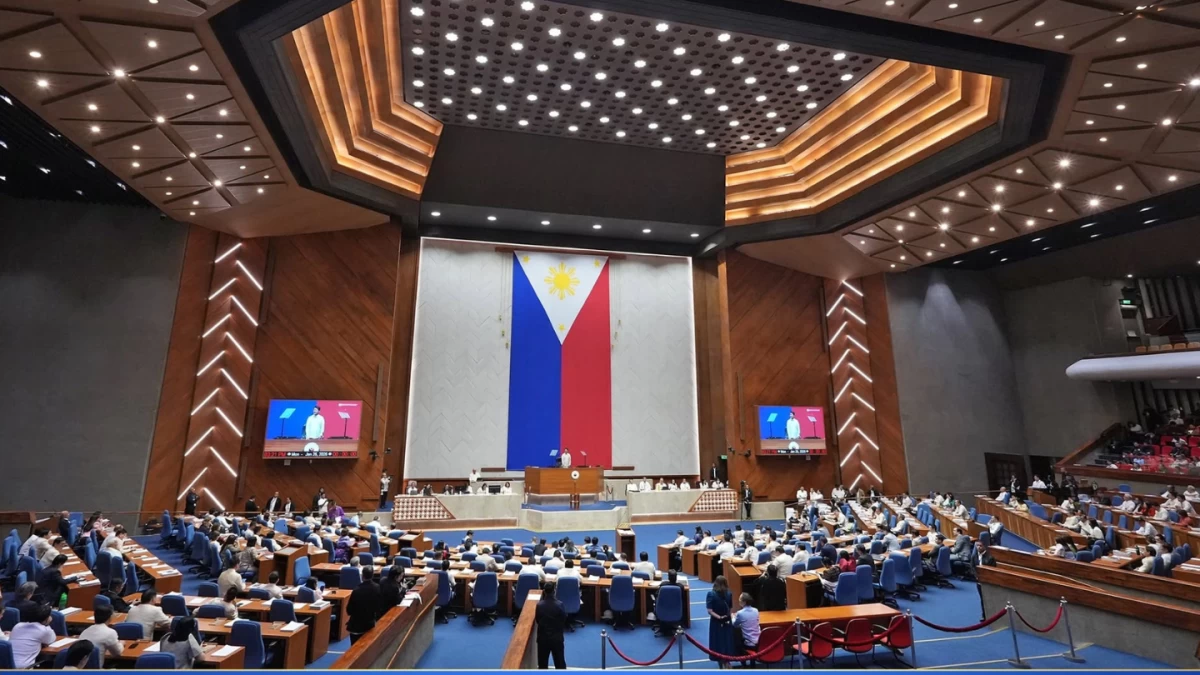
Embodied in House Bill (HB) No. 8389, the proposed Anti-Political Dynasty Act was approved on third and final reading by the House of Representatives on June 3.
The measure is one of nine priority legislative bills that Marcos is asking both chambers of Congress to approve during a special session on Wednesday.
It seeks to prohibit spouses and relatives up to the second degree of consanguinity or affinity from simultaneously holding public office within the same political unit.
“This sounds like a restriction. It is not. We have all seen a single family hold the governorship, the congressional seat, and the mayoralty of a province simultaneously, while a brother or son sits in the Senate,” the groups said.
If HB No. 8389 is enacted into law, the groups said it would only legitimize the practice of a single family simultaneously holding the offices of governor, congressman, and mayor in one province while other family members hold national positions.
They said this would also institutionalize the practice of “unlimited succession,” where a term-limited official hands the position to a spouse, child, or sibling, as well as the practice of members of the same family merely swapping seats once their respective terms expire.
In addition, the groups said the bill provides no restrictions on relatives beyond the second degree, such as uncles, aunts, and cousins, allowing them to hold offices across every level of government.
“This is not reform but protection of dynasties and making sure there are no reforms,” the groups said.
Letting political dynasties continue to dominate the political landscape would further concentrate public resources within family networks and crowd out independent candidates, they said.
“Filipinos should be spared of HB 8389 and, as a nation, should finally rid itself of the affliction of dynasties,” the statement read.
The business and civil society groups said a true anti-dynasty law would never come from a Congress dominated by political dynasties, underscoring the need for the public to step up and push for genuine reform.
To this end, the groups noted that they support the “Dapat Isa Lang” campaign of the People’s Initiative Coalition Against Dynasties (PICAD).
The PICAD is proposing to limit family members up to the fourth degree to one national and one local position at a time, with clear prohibitions on succession and seat-switching.
“This can be achieved through the People's Initiative—the constitutional mechanism that allows citizens to legislate directly when their representatives in Congress will not,” the groups said.

Related Tags

POLITICAL DYNASTY business groups
ADVERTISEMENT
.most-popular .layout-ratio{ padding-bottom: 79.13%; } @media (min-width: 768px) and (max-width: 1024px) { .widget-title { font-size: 15px !important; } }

{{ articles_filter_1561_widget.title }}

.most-popular .layout-ratio{ padding-bottom: 79.13%; } @media (min-width: 768px) and (max-width: 1024px) { .widget-title { font-size: 15px !important; } }

{{ static_articles_1562_widget.title }}

.most-popular .layout-ratio{ padding-bottom: 79.13%; } @media (min-width: 768px) and (max-width: 1024px) { .widget-title { font-size: 15px !important; } }

{{ articles_filter_1563_widget.title }}

{{ articles_filter_1564_widget.title }}

.mb-article-details { position: relative; } .mb-article-details .article-body-preview, .mb-article-details .article-body-summary{ font-size: 17px; line-height: 30px; font-family: "Libre Caslon Text", serif; color: #000; } .mb-article-details .article-body-preview iframe , .mb-article-details .article-body-summary iframe{ width: 100%; margin: auto; } .read-more-background { background: linear-gradient(180deg, color(display-p3 1.000 1.000 1.000 / 0) 13.75%, color(display-p3 1.000 1.000 1.000 / 0.8) 30.79%, color(display-p3 1.000 1.000 1.000) 72.5%); position: absolute; height: 200px; width: 100%; bottom: 0; display: flex; justify-content: center; align-items: center; padding: 0; } .read-more-background a{ color: #000; } .read-more-btn { padding: 17px 45px; font-family: Inter; font-weight: 700; font-size: 18px; line-height: 16px; text-align: center; vertical-align: middle; border: 1px solid black; background-color: white; } .hidden { display: none; }
function initializeAllSwipers() { // Get all hidden inputs with cms_article_id document.querySelectorAll('[id^="cms_article_id_"]').forEach(function (input) { const cmsArticleId = input.value; const articleSelector = '#article-' + cmsArticleId + ' .body_images'; const swiperElement = document.querySelector(articleSelector); if (swiperElement && !swiperElement.classList.contains('swiper-initialized')) { new Swiper(articleSelector, { loop: true, pagination: false, navigation: { nextEl: '#article-' + cmsArticleId + ' .swiper-button-next', prevEl: '#article-' + cmsArticleId + ' .swiper-button-prev', }, }); } }); } setTimeout(initializeAllSwipers, 3000); const intersectionObserver = new IntersectionObserver( (entries) => { entries.forEach((entry) => { if (entry.isIntersecting) { const newUrl = entry.target.getAttribute("data-url"); if (newUrl) { history.pushState(null, null, newUrl); let article = entry.target; // Extract metadata const author = article.querySelector('.author-section').textContent.replace('By', '').trim(); const section = article.querySelector('.section-info ').textContent.replace(' ', ' '); const title = article.querySelector('.article-title h1').textContent; // Parse URL for Chartbeat path format const parsedUrl = new URL(newUrl, window.location.origin); const cleanUrl = parsedUrl.host + parsedUrl.pathname; // Update Chartbeat configuration if (typeof window._sf_async_config !== 'undefined') { window._sf_async_config.path = cleanUrl; window._sf_async_config.sections = section; window._sf_async_config.authors = author; } // Track virtual page view with Chartbeat if (typeof pSUPERFLY !== 'undefined' && typeof pSUPERFLY.virtualPage === 'function') { try { pSUPERFLY.virtualPage({ path: cleanUrl, title: title, sections: section, authors: author }); } catch (error) { console.error('ping error', error); } } // Optional: Update document title if (title && title !== document.title) { document.title = title; } } } }); }, { threshold: 0.1 } ); function showArticleBody(button) { const article = button.closest("article"); const summary = article.querySelector(".article-body-summary"); const body = article.querySelector(".article-body-preview"); const readMoreSection = article.querySelector(".read-more-background"); // Hide summary and read-more section summary.style.display = "none"; readMoreSection.style.display = "none"; // Show the full article body body.classList.remove("hidden"); } document.addEventListener("DOMContentLoaded", () => { let loadCount = 0; // Track how many times articles are loaded const offset = [1, 2, 3, 4, 5, 6, 7, 8, 9, 10]; // Offset values const currentUrl = window.location.pathname.substring(1); let isLoading = false; // Prevent multiple calls if (!currentUrl) { console.log("Current URL is invalid."); return; } const sentinel = document.getElementById("load-more-sentinel"); if (!sentinel) { console.log("Sentinel element not found."); return; } function isSentinelVisible() { const rect = sentinel.getBoundingClientRect(); return ( rect.top < window.innerHeight && rect.bottom >= 0 ); } function onScroll() { if (isLoading) return; if (isSentinelVisible()) { if (loadCount >= offset.length) { console.log("Maximum load attempts reached."); window.removeEventListener("scroll", onScroll); return; } isLoading = true; const currentOffset = offset[loadCount]; window.loadMoreItems().then(() => { let article = document.querySelector('#widget_1690 > div:nth-last-of-type(2) article'); intersectionObserver.observe(article) loadCount++; }).catch(error => { console.error("Error loading more items:", error); }).finally(() => { isLoading = false; }); } } window.addEventListener("scroll", onScroll); });

Sign up by email to receive news.