ADVERTISEMENT

6.7 magnitude earthquake shakes part of Indonesia, causing scattered damage

Published Jun 16, 2026 01:05 pm
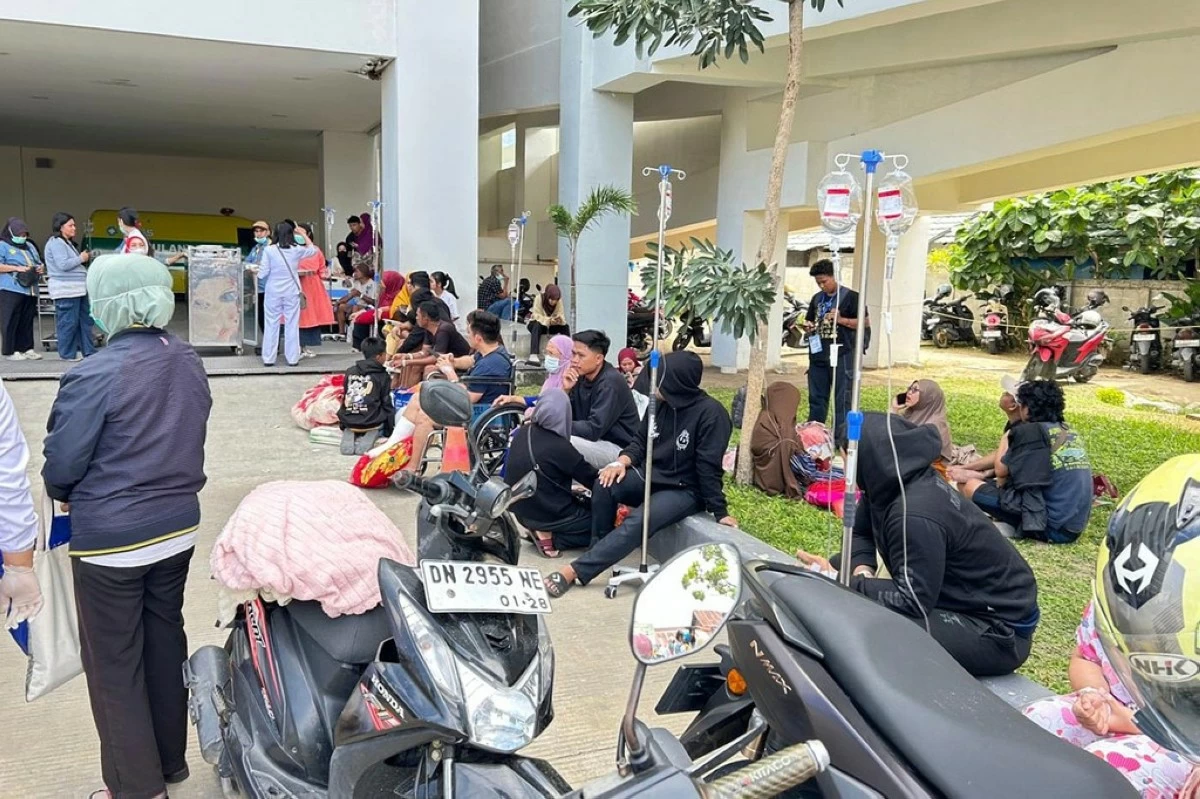
Patients are evacuated outside a local hospital following an earthquake in Palu, Central Sulawesi, Indonesia Tuesday, June 16, 2026. (AP Photo/Taufan Bustan)
PALU, Indonesia (AP) — A 6.7 magnitude earthquake shook part of central Indonesia’s Sulawesi island Tuesday, causing scattered damage and rattling residents of a city devastated by a quake and tsunami eight years ago.
The strong shaking sent people fleeing into open areas in and around Palu, a city of about 400,000 people and the capital of Central Sulawesi province. Several hospitals evacuated patients, some with IV drips, outdoors as a safety measure.
Images from the area showed heavily damaged structures with partially collapsed roofs, shattered walls and debris scattered across the streets. The National Disaster Management Agency said information on the damage, possible casualties and displaced people was still being gathered.
“We have evacuated all guests from the hotel, including several guests who remained in their rooms,” said Effendi Natali, a general manager of a four-star hotel in Palu.
“They all panicked, which is a natural reaction during an earthquake, but everyone is safe,” Natali said, adding that the hotel sustained only minor damage.
The initial quake was centered 43 kilometers (27 miles) east-southeast of Palu, and the U.S. Geological Survey said it was about 10 kilometers (6 miles) deep. Several aftershocks followed, the strongest being 5.2 magnitude.
People also moved away from coastal areas as a precaution if the quake set off a tsunami. Indonesia's Meteorology, Climatology, and Geophysical Agency said there was no danger of a tsunami but warned aftershocks could continue.
“The earthquake shaking was extremely strong,” Palu resident Muhtar Ahmad said. “We are still traumatized by the previous earthquake, so we chose to remain outside because we are afraid that aftershocks may continue.”
Indonesia is crossed by several seismic faults, and earthquakes and volcanic activity are common.
Many Sulawesi residents are haunted by the magnitude 7.5 earthquake that devastated Palu in 2018, setting of 3-meter (10-foot) high tsunami and a phenomenon called liquefaction in which soil collapses into itself. More than 4,000 people were killed, including many who were buried when whole neighborhoods were swallowed in the falling ground.
In January 2021, a magnitude 6.2 earthquake near the city of Mamuju on Sulawesi island left at least 100 people dead, with thousands sleeping outdoors for days out of fear of aftershocks.

Related Tags

world news Indonesia EARTHQUAKE
ADVERTISEMENT
.most-popular .layout-ratio{ padding-bottom: 79.13%; } @media (min-width: 768px) and (max-width: 1024px) { .widget-title { font-size: 15px !important; } }

{{ articles_filter_1561_widget.title }}

.most-popular .layout-ratio{ padding-bottom: 79.13%; } @media (min-width: 768px) and (max-width: 1024px) { .widget-title { font-size: 15px !important; } }

{{ static_articles_1562_widget.title }}

.most-popular .layout-ratio{ padding-bottom: 79.13%; } @media (min-width: 768px) and (max-width: 1024px) { .widget-title { font-size: 15px !important; } }

{{ articles_filter_1563_widget.title }}

{{ articles_filter_1564_widget.title }}

.mb-article-details { position: relative; } .mb-article-details .article-body-preview, .mb-article-details .article-body-summary{ font-size: 17px; line-height: 30px; font-family: "Libre Caslon Text", serif; color: #000; } .mb-article-details .article-body-preview iframe , .mb-article-details .article-body-summary iframe{ width: 100%; margin: auto; } .read-more-background { background: linear-gradient(180deg, color(display-p3 1.000 1.000 1.000 / 0) 13.75%, color(display-p3 1.000 1.000 1.000 / 0.8) 30.79%, color(display-p3 1.000 1.000 1.000) 72.5%); position: absolute; height: 200px; width: 100%; bottom: 0; display: flex; justify-content: center; align-items: center; padding: 0; } .read-more-background a{ color: #000; } .read-more-btn { padding: 17px 45px; font-family: Inter; font-weight: 700; font-size: 18px; line-height: 16px; text-align: center; vertical-align: middle; border: 1px solid black; background-color: white; } .hidden { display: none; }
function initializeAllSwipers() { // Get all hidden inputs with cms_article_id document.querySelectorAll('[id^="cms_article_id_"]').forEach(function (input) { const cmsArticleId = input.value; const articleSelector = '#article-' + cmsArticleId + ' .body_images'; const swiperElement = document.querySelector(articleSelector); if (swiperElement && !swiperElement.classList.contains('swiper-initialized')) { new Swiper(articleSelector, { loop: true, pagination: false, navigation: { nextEl: '#article-' + cmsArticleId + ' .swiper-button-next', prevEl: '#article-' + cmsArticleId + ' .swiper-button-prev', }, }); } }); } setTimeout(initializeAllSwipers, 3000); const intersectionObserver = new IntersectionObserver( (entries) => { entries.forEach((entry) => { if (entry.isIntersecting) { const newUrl = entry.target.getAttribute("data-url"); if (newUrl) { history.pushState(null, null, newUrl); let article = entry.target; // Extract metadata const author = article.querySelector('.author-section').textContent.replace('By', '').trim(); const section = article.querySelector('.section-info ').textContent.replace(' ', ' '); const title = article.querySelector('.article-title h1').textContent; // Parse URL for Chartbeat path format const parsedUrl = new URL(newUrl, window.location.origin); const cleanUrl = parsedUrl.host + parsedUrl.pathname; // Update Chartbeat configuration if (typeof window._sf_async_config !== 'undefined') { window._sf_async_config.path = cleanUrl; window._sf_async_config.sections = section; window._sf_async_config.authors = author; } // Track virtual page view with Chartbeat if (typeof pSUPERFLY !== 'undefined' && typeof pSUPERFLY.virtualPage === 'function') { try { pSUPERFLY.virtualPage({ path: cleanUrl, title: title, sections: section, authors: author }); } catch (error) { console.error('ping error', error); } } // Optional: Update document title if (title && title !== document.title) { document.title = title; } } } }); }, { threshold: 0.1 } ); function showArticleBody(button) { const article = button.closest("article"); const summary = article.querySelector(".article-body-summary"); const body = article.querySelector(".article-body-preview"); const readMoreSection = article.querySelector(".read-more-background"); // Hide summary and read-more section summary.style.display = "none"; readMoreSection.style.display = "none"; // Show the full article body body.classList.remove("hidden"); } document.addEventListener("DOMContentLoaded", () => { let loadCount = 0; // Track how many times articles are loaded const offset = [1, 2, 3, 4, 5, 6, 7, 8, 9, 10]; // Offset values const currentUrl = window.location.pathname.substring(1); let isLoading = false; // Prevent multiple calls if (!currentUrl) { console.log("Current URL is invalid."); return; } const sentinel = document.getElementById("load-more-sentinel"); if (!sentinel) { console.log("Sentinel element not found."); return; } function isSentinelVisible() { const rect = sentinel.getBoundingClientRect(); return ( rect.top < window.innerHeight && rect.bottom >= 0 ); } function onScroll() { if (isLoading) return; if (isSentinelVisible()) { if (loadCount >= offset.length) { console.log("Maximum load attempts reached."); window.removeEventListener("scroll", onScroll); return; } isLoading = true; const currentOffset = offset[loadCount]; window.loadMoreItems().then(() => { let article = document.querySelector('#widget_1690 > div:nth-last-of-type(2) article'); intersectionObserver.observe(article) loadCount++; }).catch(error => { console.error("Error loading more items:", error); }).finally(() => { isLoading = false; }); } } window.addEventListener("scroll", onScroll); });

Sign up by email to receive news.