

ADVERTISEMENT

What is the Mercedes-Benz MB 100D?

A van from a different time

Published Jun 15, 2026 07:26 pm

At A Glance

  • The Mercedes-Benz MB 100D is actually a Ssangyong Istana.
  • The model was offered from 1996 to around 2003.
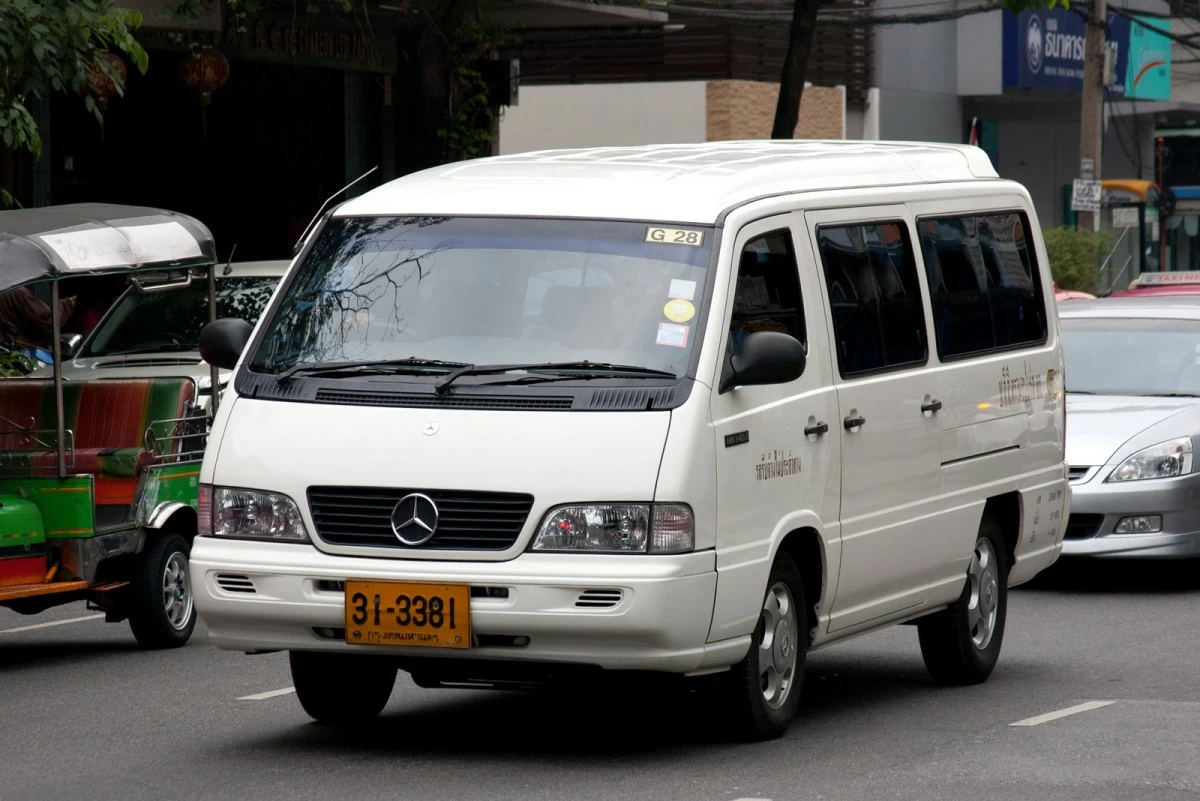
Photo by Ilya Plekhanov for Wikimedia Commons
Just recently, motoring vlogger, Banawe Boy, shared a post about a Mercedes-Benz MB100D he spotted on the road. Amused by the unique vehicle, he asked his followers what they knew about the vehicle. After all, such an old car still running should serve as a testament of its abilities.
Many of our younger staff in Manila Bulletin were not too familiar with the vehicle either. As such, we’ve decided to give you a little primer on one of the favorite vans of Filipinos from 30 years ago.
Mercedes at heart
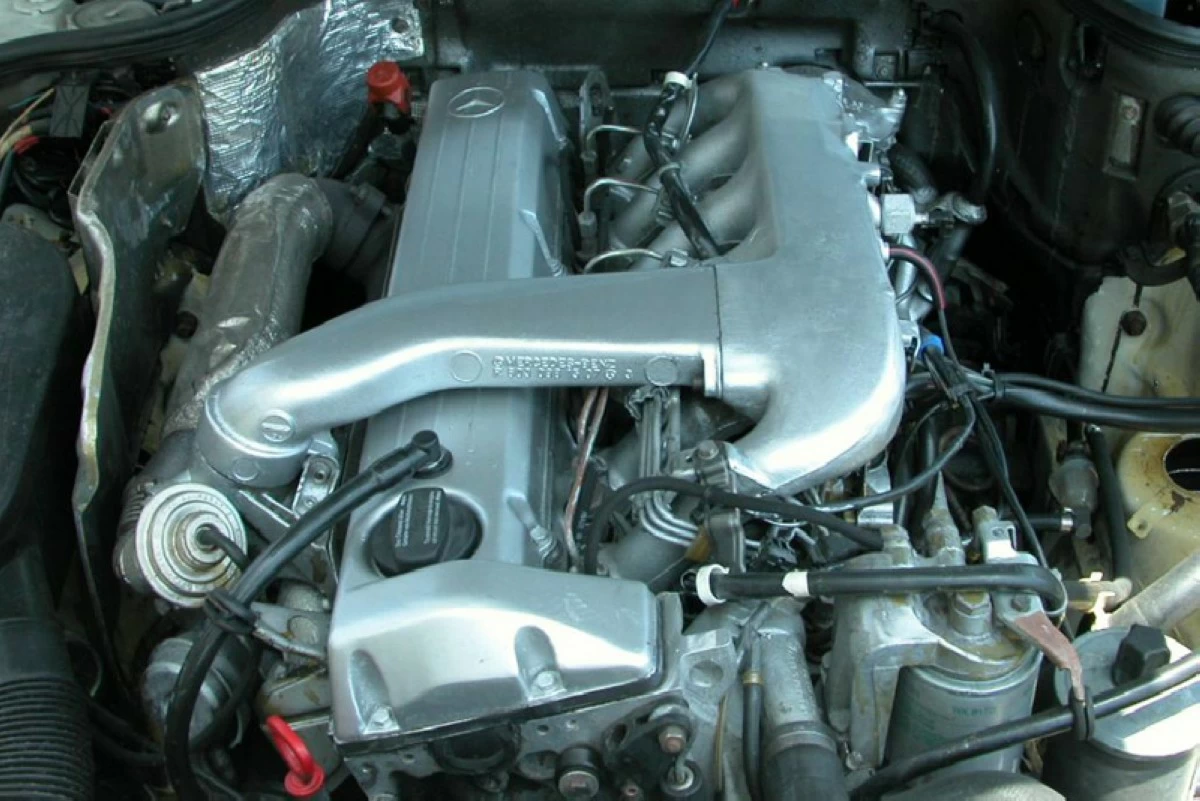
Mercedes-Benz OM602 5-cylinder diesel engine
The Mercedes-Benz MB 100D is actually a Ssangyong Istana. The model was offered from 1996 to around 2003 and sold at Mercedes-Benz dealers in the Philippines. While it may bear the Mercedes-Benz badge, it was actually wholly designed in Korea. Ssangyong, now known as KG Mobility, started a technology partnership with Daimler-Benz to develop vehicles using Mercedes-Benz technology. The Musso, which some may remember, was the first product of this partnership, followed by the Istana and other Ssangyong models.
Examples sold in the country were assembled in the Philippines by Commercial Motors Corp. (CMC). Perhaps its only real link to Mercedes-Benz is the 2.9-liter inline-5 cylinder OM602 diesel engine sourced from Mercedes-Benz. This vehicle was only offered in Asia Pacific and some parts of South America. It was never offered in markets were Mercedes had a more robust presence and where its better-equipped Vito van was already gaining popularity.
It's no coincidence that CMC had been assembling this vehicle as the company also assembled the Mercedes-Benz E-Class (W123) locally. One of the engines it was offered with happened to be the OM602 engine (since 1985). As such, CMC was quite familiar with the engine and Mercedes-Benz local assembly.
CMC, after all, was the official distributor of Mercedes-Benz vehicles before CATS Motors (now Inchcape Philippines), was designated the new distributor and importer.
Quirky design
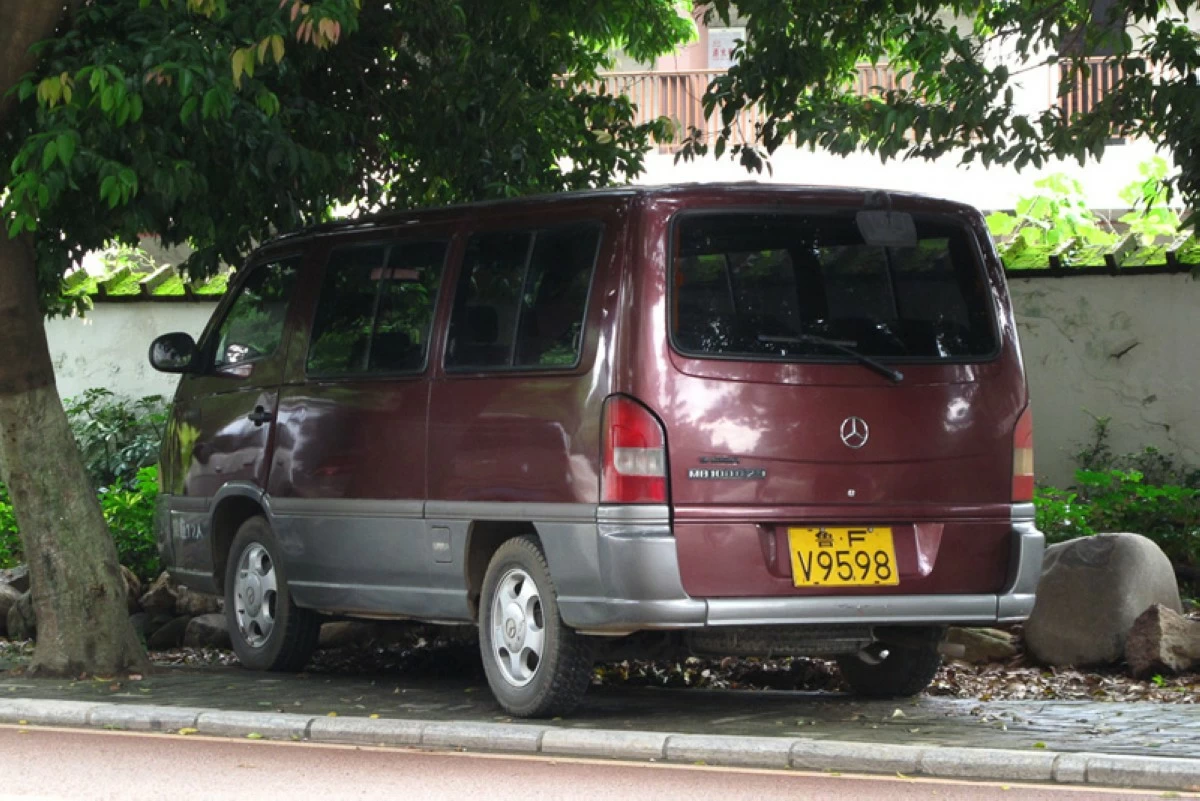
Photo by Rutger van der Maar for Wikimedia Commons
The Mercedes-Benz MB 100D became quite popular when it was introduced. After all, since it was a rebadged Ssangyong, it came in a surprisingly affordable price, comparing favorably against the benchmark Japanese and Korean vans at the time. It was even affordable compared to other Mercedes-Benzes. In fact, it was the only van offered by a luxury car brand. As such, many families snatched up this car, seeing it as a rare chance to own a Mercedes-Benz.
The MB 100D had some unique characteristics that also made it stand out against popular van choices at the time, like the Toyota HiAce, Nissan Urvan, and Kia Pregio. For one, there was its powertrain layout: it had a front-engine, front-wheel drive configuration. All its competitors used the standard front-mid engine and rear-wheel drive configuration. It had a standard five-door layout (sliding doors on both sides) and could seat as many as 14 people. It had a high seating position, giving drivers a great view of the road and over most sedans that populated the road. Its steering wheel, however, was nearly horizontal and its pedals hung from the dashboard, feeling practically like a bus to drive. Nevertheless, for well-to-do families that had drivers, it wasn’t their problem.
Dated design
While the MB 100D undoubtedly sold well, its time on Philippine roads did have to come to an end. Though the MB 100D did have a three-pointed star, many could argue it didn’t do its parent brand any favors. It could be argued that its interior amenities and bouncy ride quality were not up to Mercedes-Benz standards. With CATS Motors given exclusive distributor and importer control, it was phased out in favor of the more globally recognized and newer Vito van.
In addition, vehicle import restrictions on foreign vehicles were steadily being eased. Korean brands like Hyundai and Kia were beginning to offer more and more competitively priced vans with newer and more efficient engines that easily smoked the MB 100D’s nearly 20-year old engine. That OM602 could only produce 105 Hp and 185 Nm of torque while newer models were easily making 150 Hp and 250 Nm with smaller, less thirsty engines. Filipino car buyers were starting to look with envy at new car platform-based minivans like the Kia Carnival, Honda Odyssey, or Chevy Venture. And in just a few years, the Toyota Innova would be introduced that offered the reliability and power of then new, computer-controlled common-rail turbo diesel engines, with a car-like ride and ease to drive.
The Mercedes-Benz MB 100D was certainly an icon of its time. And it shouldn’t come as a surprise that some are still running to this day. After all, it’s powered by the same engine that propelled the unstoppable Mercedes-Benz 300D (E-Class). However, besides the very reliable engine, there was little else for many families to justify keeping this large van, built for a different time and different needs.
If you’d like to know more about what the Mercedes-Benz MB 100D was like, Carguide still has a review of this vehicle when it was new in 2001.

Related Tags

Mercedes-Benz
ADVERTISEMENT
.most-popular .layout-ratio{ padding-bottom: 79.13%; } @media (min-width: 768px) and (max-width: 1024px) { .widget-title { font-size: 15px !important; } }

{{ articles_filter_1561_widget.title }}

.most-popular .layout-ratio{ padding-bottom: 79.13%; } @media (min-width: 768px) and (max-width: 1024px) { .widget-title { font-size: 15px !important; } }

{{ articles_filter_1562_widget.title }}

.most-popular .layout-ratio{ padding-bottom: 79.13%; } @media (min-width: 768px) and (max-width: 1024px) { .widget-title { font-size: 15px !important; } }

{{ articles_filter_1563_widget.title }}

{{ articles_filter_1564_widget.title }}

.mb-article-details { position: relative; } .mb-article-details .article-body-preview, .mb-article-details .article-body-summary{ font-size: 17px; line-height: 30px; font-family: "Libre Caslon Text", serif; color: #000; } .mb-article-details .article-body-preview iframe , .mb-article-details .article-body-summary iframe{ width: 100%; margin: auto; } .read-more-background { background: linear-gradient(180deg, color(display-p3 1.000 1.000 1.000 / 0) 13.75%, color(display-p3 1.000 1.000 1.000 / 0.8) 30.79%, color(display-p3 1.000 1.000 1.000) 72.5%); position: absolute; height: 200px; width: 100%; bottom: 0; display: flex; justify-content: center; align-items: center; padding: 0; } .read-more-background a{ color: #000; } .read-more-btn { padding: 17px 45px; font-family: Inter; font-weight: 700; font-size: 18px; line-height: 16px; text-align: center; vertical-align: middle; border: 1px solid black; background-color: white; } .hidden { display: none; }
function initializeAllSwipers() { // Get all hidden inputs with cms_article_id document.querySelectorAll('[id^="cms_article_id_"]').forEach(function (input) { const cmsArticleId = input.value; const articleSelector = '#article-' + cmsArticleId + ' .body_images'; const swiperElement = document.querySelector(articleSelector); if (swiperElement && !swiperElement.classList.contains('swiper-initialized')) { new Swiper(articleSelector, { loop: true, pagination: false, navigation: { nextEl: '#article-' + cmsArticleId + ' .swiper-button-next', prevEl: '#article-' + cmsArticleId + ' .swiper-button-prev', }, }); } }); } setTimeout(initializeAllSwipers, 3000); const intersectionObserver = new IntersectionObserver( (entries) => { entries.forEach((entry) => { if (entry.isIntersecting) { const newUrl = entry.target.getAttribute("data-url"); if (newUrl) { history.pushState(null, null, newUrl); let article = entry.target; // Extract metadata const author = article.querySelector('.author-section').textContent.replace('By', '').trim(); const section = article.querySelector('.section-info ').textContent.replace(' ', ' '); const title = article.querySelector('.article-title h1').textContent; // Parse URL for Chartbeat path format const parsedUrl = new URL(newUrl, window.location.origin); const cleanUrl = parsedUrl.host + parsedUrl.pathname; // Update Chartbeat configuration if (typeof window._sf_async_config !== 'undefined') { window._sf_async_config.path = cleanUrl; window._sf_async_config.sections = section; window._sf_async_config.authors = author; } // Track virtual page view with Chartbeat if (typeof pSUPERFLY !== 'undefined' && typeof pSUPERFLY.virtualPage === 'function') { try { pSUPERFLY.virtualPage({ path: cleanUrl, title: title, sections: section, authors: author }); } catch (error) { console.error('ping error', error); } } // Optional: Update document title if (title && title !== document.title) { document.title = title; } } } }); }, { threshold: 0.1 } ); function showArticleBody(button) { const article = button.closest("article"); const summary = article.querySelector(".article-body-summary"); const body = article.querySelector(".article-body-preview"); const readMoreSection = article.querySelector(".read-more-background"); // Hide summary and read-more section summary.style.display = "none"; readMoreSection.style.display = "none"; // Show the full article body body.classList.remove("hidden"); } document.addEventListener("DOMContentLoaded", () => { let loadCount = 0; // Track how many times articles are loaded const offset = [1, 2, 3, 4, 5, 6, 7, 8, 9, 10]; // Offset values const currentUrl = window.location.pathname.substring(1); let isLoading = false; // Prevent multiple calls if (!currentUrl) { console.log("Current URL is invalid."); return; } const sentinel = document.getElementById("load-more-sentinel"); if (!sentinel) { console.log("Sentinel element not found."); return; } function isSentinelVisible() { const rect = sentinel.getBoundingClientRect(); return ( rect.top < window.innerHeight && rect.bottom >= 0 ); } function onScroll() { if (isLoading) return; if (isSentinelVisible()) { if (loadCount >= offset.length) { console.log("Maximum load attempts reached."); window.removeEventListener("scroll", onScroll); return; } isLoading = true; const currentOffset = offset[loadCount]; window.loadMoreItems().then(() => { let article = document.querySelector('#widget_1690 > div:nth-last-of-type(2) article'); intersectionObserver.observe(article) loadCount++; }).catch(error => { console.error("Error loading more items:", error); }).finally(() => { isLoading = false; }); } } window.addEventListener("scroll", onScroll); });

Sign up by email to receive news.