






Manila Bulletin
 Business
Trade & Industry
UN warns US-led Pax Silica risks splitting global mineral markets
Business
Trade & Industry
UN warns US-led Pax Silica risks splitting global mineral markets
Business
Trade & Industry
UN warns US-led Pax Silica risks splitting global mineral markets
UN warns US-led Pax Silica risks splitting global mineral markets
Published Jun 15, 2026 12:00 am
|
Updated Jun 13, 2026 01:59 pm


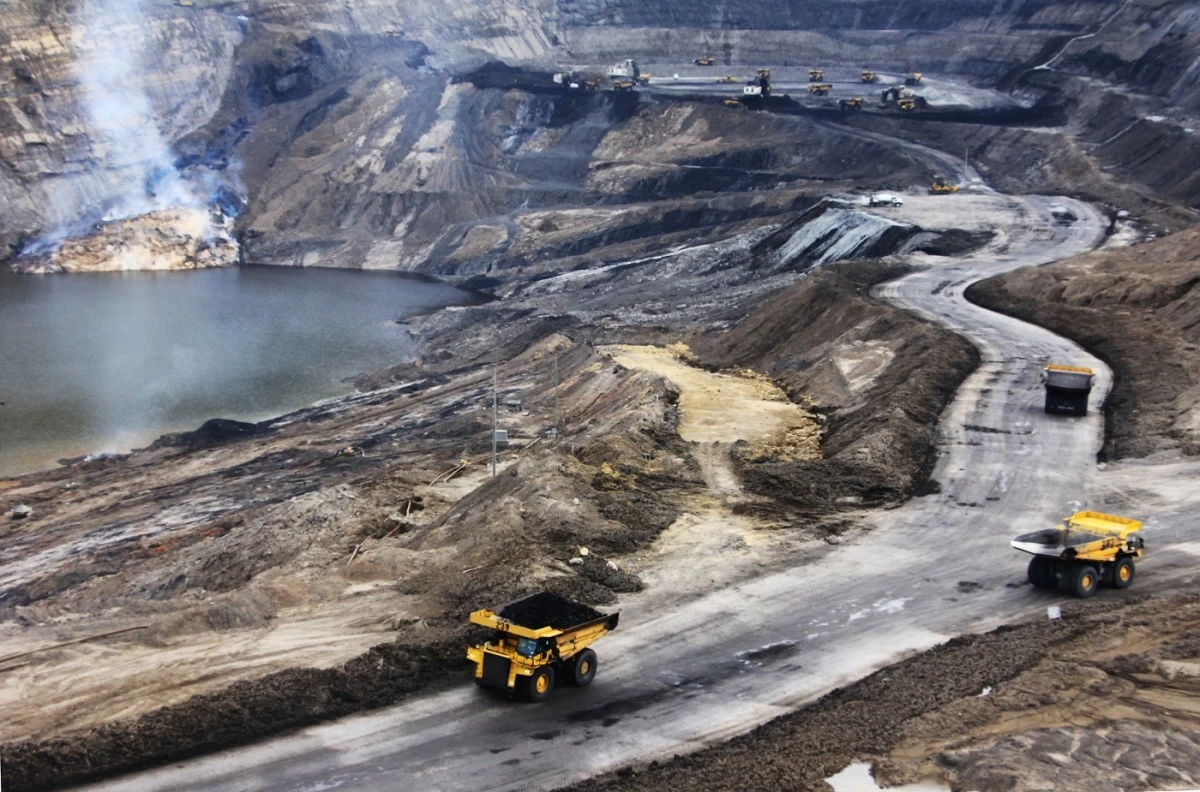
ONE of the coal pits of Semirara Mining and Power Corp. (SMPC), the country’s largest coal producer, in Caluya town, Antique province. (Tara Yap)
The United Nations Conference on Trade and Development (UNCTAD) warned that critical mineral partnerships, such as the United States-led Pax Silica initiative, must align with multilateral trading rules to avoid exacerbating the fragmentation of the global trade system.
In its latest global trade update, UNCTAD noted that more than 70 partnership agreements are currently in place to secure supply chains for critical energy transition minerals (CETMs) like nickel, copper, and rare earths.
These minerals have become indispensable to global trade due to their vital roles in renewable energy, digitalization, defense, aerospace, and broader industrial electrification.
According to UNCTAD, recent CETM partnerships have expanded their scope across the value chain to secure direct access to raw materials and value-added processing.
The Geneva-based trade body observed that governments are increasingly using a combination of trade, industrial, and investment policy tools, which frequently include export restrictions and preferential arrangements.
“In some cases, they also incorporate coordinated pricing mechanisms, offtake agreements, export credit support, and structured supply commitments, reflecting a more active role for governments in shaping markets and ensuring stable access,” UNCTAD said.
The report pointed out that US-led partnerships favor a market-oriented approach, coordinating supply chain security through preferential trade arrangements and proposed price-floor frameworks. However, because these policies extend beyond traditional trade measures, UNCTAD questioned their consistency with World Trade Organization (WTO) rules.
“Their consistency with WTO disciplines, particularly those relating to tariffs, quotas, subsidies, and non-discrimination, remains context-specific and, in many cases, not yet fully tested,” the report noted. “Moreover, many provisions are still at a framework or coordination stage, with their detailed design and implementation remaining under development, leaving their ultimate impact uncertain.”
UNCTAD warned that these dynamics risk locking mineral-rich developing countries, like the Philippines, into roles limited to raw mineral extraction, hindering their ability to capture higher-value segments of the supply chain.
“To address this, they may seek stronger provisions on local processing, technology transfer, and skills development to support more diversified and sustainable participation,” the report added.
To maintain transparency, predictability, and non-discrimination, UNCTAD emphasized that critical mineral partnerships must remain aligned with global trade rules. The body stated this alignment would mitigate trade fragmentation and lower the risk of the global mining market splitting into competing blocs.
The warning comes after the Philippines became the 13th signatory to the Pax Silica initiative, a US-led agreement aimed at securing the global supply chains for critical minerals and energy inputs vital to artificial intelligence (AI) and other emerging technologies.
Under the initiative, the US and the Philippines are partnering to establish a first-of-its-kind industrial hub in New Clark City, Tarlac, aimed at attracting investments to serve the evolving market and the growing Pax Silica network.