






 Philippines
National
Marcos off to Russia for first Putin meeting, ASEAN-Russia Summit in Kazan
Philippines
National
Marcos off to Russia for first Putin meeting, ASEAN-Russia Summit in Kazan
Marcos off to Russia for first Putin meeting, ASEAN-Russia Summit in Kazan


At A Glance
- President Marcos will travel to Kazan, Russia, on June 17-18 to co-chair the ASEAN-Russia Commemorative Summit with Russian President Vladimir Putin.
- Marcos and Putin are expected to hold a bilateral meeting focused on energy security, food security, and other areas of mutual interest.
- The trip marks Marcos' first visit to Russia as President and comes as the Philippines and Russia celebrate 50 years of diplomatic relations.
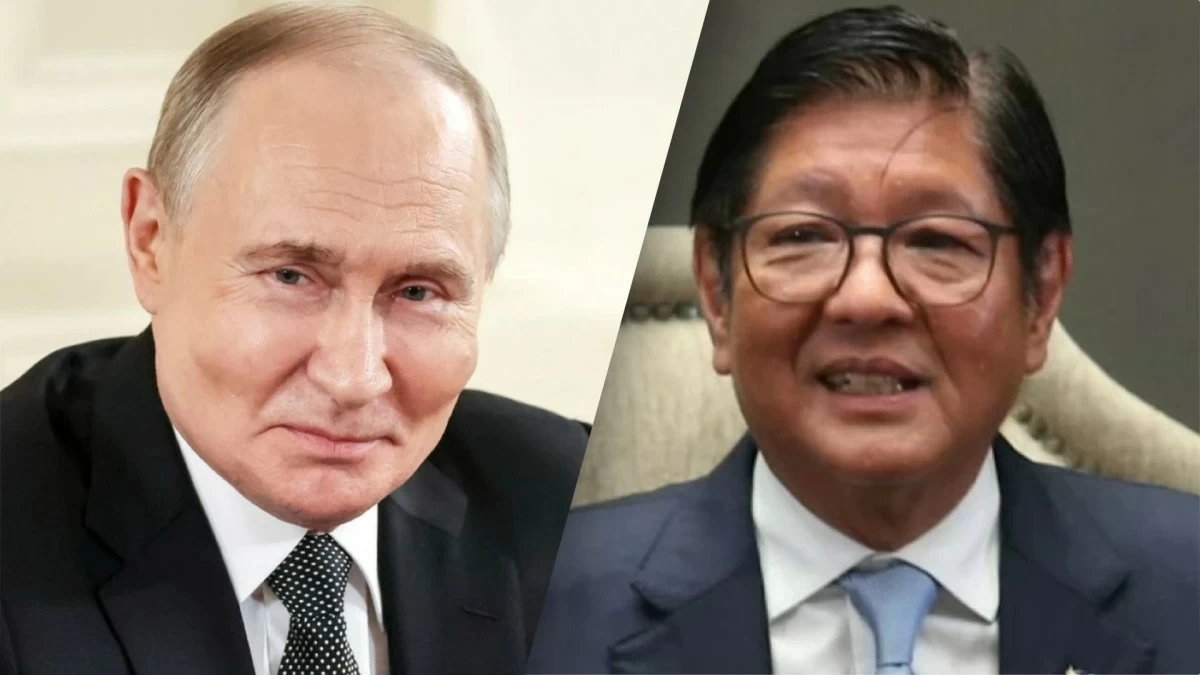
President Marcos will travel to Kazan, Russia, next week for his first meeting with Russian President Vladimir Putin and to co-chair the ASEAN-Russia Commemorative Summit marking the 35th anniversary of dialogue relations between the regional bloc and Moscow.
The June 17-18 summit will bring together Association of Southeast Asian Nations leaders and Russia to review progress on their strategic partnership and chart its future direction, according to the Department of Foreign Affairs (DFA) ASEAN 2026 Philippines Spokesperson Dominic Xavier Imperial.
As ASEAN Chair, Marcos will co-chair the summit alongside Putin.
The summit holds particular significance for the Philippines as it coincides with the 50th anniversary of diplomatic relations between Manila and Moscow this year and marks Marcos' first visit to Russia since assuming office.
Bilateral meeting with Putin
On the sidelines of the summit, Marcos and Putin are expected to hold a bilateral meeting centered on energy security and food security, which the DFA said are mutually important to both countries.
Imperial said the two leaders are also expected to discuss regional and international issues, as well as ways to deepen cooperation in tourism, education, culture, science and technology, and people-to-people exchanges.
“The meeting will most likely focus on food security and energy security. That is mutually important for both countries, for the Philippines and Russia,” he said in a pre-departure press briefing in Malacañan on Monday, June 15.
The DFA official added that the ongoing tensions in the Middle East and their implications on global energy and food supplies are also expected to figure prominently in the discussions.
Imperial said discussions on energy security could cover several areas, including oil, natural gas, and cooperation on nuclear energy, including civilian applications of nuclear technology.
He said support for existing regional mechanisms, such as the ASEAN Framework Agreement on Petroleum Security and the ASEAN Power Grid, could also be discussed.
Asked whether the Philippines could explore importation deals with Russia as it seeks to diversify oil sources amid concerns over the Strait of Hormuz, Imperial said he could not give a definitive answer but noted that such discussions could arise during the summit and bilateral meeting.
“Anything can be discussed under that area or agenda during the meeting of the two leaders,” he said.
ASEAN-Russia roadmap
Meanwhile, the commemorative summit is expected to adopt several key documents that will guide ASEAN-Russia relations in the coming years.
These include the Kazan Declaration 2026, joint statements on energy and cultural cooperation, and the ASEAN-Russia Comprehensive Plan of Action 2026-2030, which will serve as the principal roadmap for cooperation in the political-security, economic, and socio-cultural pillars of the partnership.
ASEAN and Russia are also expected to discuss cooperation in biosafety and biosecurity, outer space and satellite applications, trade and investment, tourism, education, and people-to-people exchanges.
No Ukraine declaration
Despite the ongoing Russia-Ukraine war, the DFA official said no statement or declaration on the conflict is expected to emerge from the summit.
Imperial said the outcome documents would instead focus on areas of cooperation between ASEAN and Russia.
He, however, noted that leaders could still discuss regional and international issues during their closed-door meetings.
Why Russia matters
Imperial explained Manila’s continued engagement with Moscow despite sanctions imposed by some countries, including Singapore, against certain Russian sectors.
He stressed that Russia has long been an ASEAN dialogue partner and that the Philippines, as ASEAN Chair, has the responsibility to pursue and strengthen the bloc's external relations.
He said the Philippines and the region stand to benefit from cooperation with Russia in areas such as counterterrorism, transnational crime, climate change, health, disaster management, and capacity building for law enforcement agencies.
The official also pointed to growing tourism and people-to-people exchanges, noting that the Philippines recorded more than 30,000 Russian visitors in 2024, the highest number on record.
He added that around 15,000 Filipinos currently reside in Russia, including workers in the service sector as well as engineers, teachers, professors, students, researchers, and artists.
Small delegation
President Marcos will be accompanied by Foreign Affairs Secretary Ma. Theresa Lazaro and a small delegation from the Department of Trade and Industry (DTI) due to the summit's focus on economic engagement and trade.
The President's schedule in Kazan includes the ASEAN-Russia plenary session, a working lunch, a business forum, a bilateral meeting with Putin, a gala dinner for leaders, and a joint press conference.
The summit will also be the first in-person engagement between ASEAN and Russia at the leaders' level since a special virtual meeting during the Covid-19 pandemic.