






Manila Bulletin
 Business
Trade & Industry
DA rolls out ₱140-million vaccine plan to fight ASF crisis
Business
Trade & Industry
DA rolls out ₱140-million vaccine plan to fight ASF crisis
Business
Trade & Industry
DA rolls out ₱140-million vaccine plan to fight ASF crisis
DA rolls out ₱140-million vaccine plan to fight ASF crisis
Published Jun 15, 2026 05:06 pm


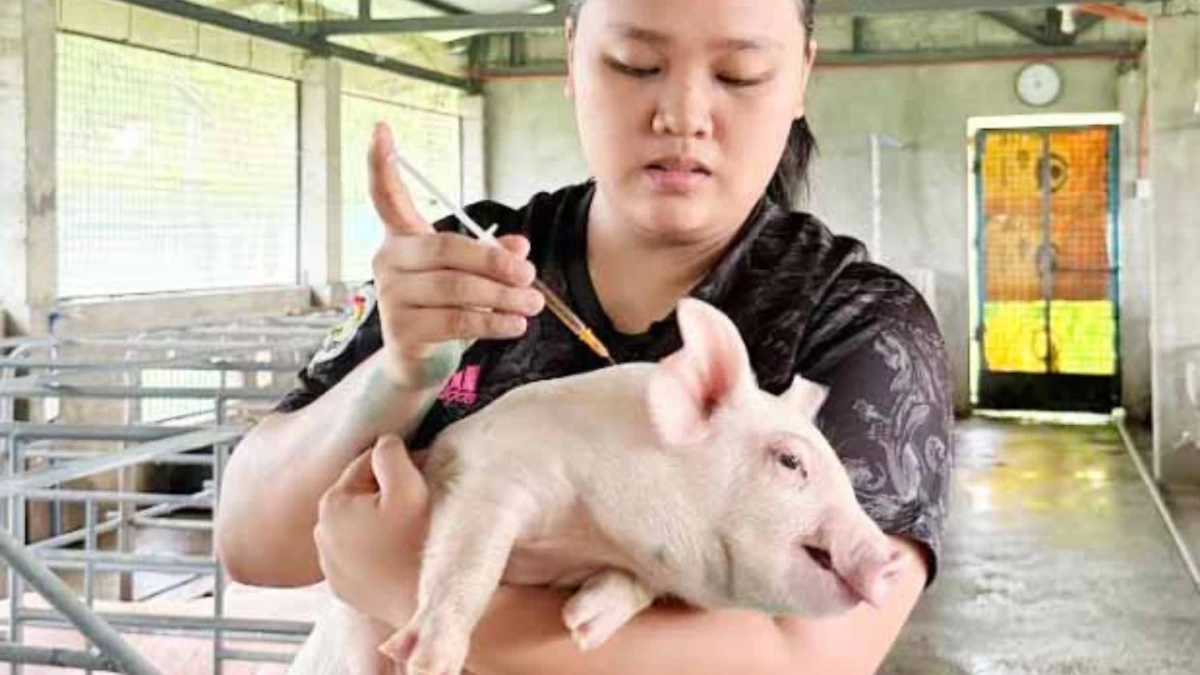
The Department of Agriculture (DA) is spending more than ₱140 million to strengthen the country’s capacity to develop its own vaccines against animal diseases threatening the livestock sector, including African swine fever (ASF).
The DA said it formally launched the Animal Vaccine Development Program (AVDP) on Monday, June 15, to kickstart the development of locally produced animal vaccines.
The AVDP is part of an inter-agency agreement under the DA’s national livestock program, which also includes the Bureau of Animal Industry (BAI), Philippine Carabao Center (PCC), and Central Luzon State University (CLSU).
The program aims to develop vaccines against diseases such as ASF, which continues to threaten local hog production.
At present, the domestic swine industry has yet to recover from ASF, prompting the country to resort to imports to augment the insufficient local hog supply.
Agriculture Secretary Francisco Tiu Laurel said the AVDP reflects the government’s efforts to strengthen the country’s safeguards against diseases while also restoring the industry’s long-term confidence in the sector’s viability.
“For a sector that has spent years battling costly animal diseases, the initiative represents a significant step toward greater self-reliance and resilience,” he said.
According to the DA, the AVDP will have a total budget of ₱140.9 million over a three-year period.
This year, the program will have a funding of ₱77.6 million, followed by ₱30.6 million in 2027, and ₱32.7 million in 2028.
“Investing in science, research, and innovation is critical to protecting livelihoods, strengthening our food systems, and building a more resilient future for the livestock sector,” said Tiu Laurel.
The centerpiece of the AVDP is the establishment of a Biosafety Level 3 facility, which will allow scientists to accelerate vaccine development through the safe handling of high-risk animal pathogens.
The program will initially focus on developing vaccine candidates for ASF and foot-and-mouth disease.
Tiu Laurel said developing these vaccines locally is more advantageous than relying on imported varieties because local scientists can tailor them to specific domestic pathogen strains, potentially improving their effectiveness.