






Manila Bulletin
 Philippines
National
Solon bent on helping House catch up with Senate on CADENA bill
Philippines
National
Solon bent on helping House catch up with Senate on CADENA bill
Philippines
National
Solon bent on helping House catch up with Senate on CADENA bill
Solon bent on helping House catch up with Senate on CADENA bill
Published Jun 13, 2026 01:18 am


At A Glance
- The House is consolidating 29 CADENA bills to create a Digital Budget Platform for full public disclosure of government transactions.
- Agencies and GOCCs will be required to upload detailed budget documents, with penalties for non-disclosure or fraud.
- Villafuerte is pushing swift House passage to align with the Senate-approved version and meet LEDAC priority status.
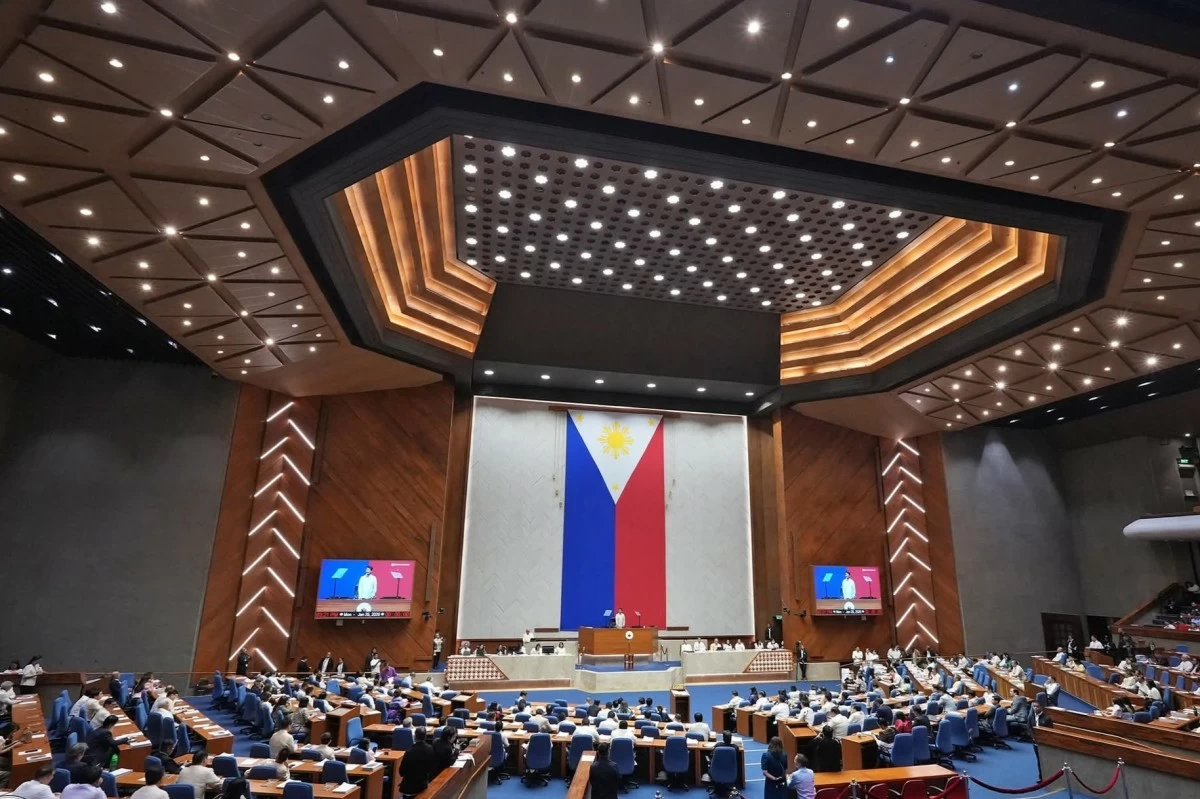
The House plenary (Facebook)
The House of Representatives is playing catch-up with the Senate when it comes to the proposed Citizen Access and Disclosure of Expenditures for National Accountability (CADENA) Act, a budget transparency measure.
But Camarines Sur 2nd district Rep. Migz Villafuerte, whose committee is handling the passage of the measure in the House, is determined to even things up.
Villafuerte said the Committee on Information and Communications Technology, which he chairs, tackled in its recent meeting the consolidation of all bills on the proposed CADENA measure, the Senate version of which was already passed in December 2025.
“Our ICT committee in the House is fast-tracking the consolidation of 29 similar bills into a substitute one creating a CADENA online portal that would provide timely, accurate, tamper-resistant, interoperable and traceable publication of all government budget transactions, in the hope of encouraging greater public engagement in the national budgeting process and deterring shenanigans in government,” Villafuerte said.
This proposed online portal or Digital Budget Platform is a LEDAC (Legislative-Executive Development Advisory Council) priority bill that aims to make sure that all government appropriations, disbursements, procurements and expenditures are disclosed and made publicly accessible at all times to citizens and oversight institutions.
The former Camarines Sur governor said that alongside putting up the proposed Digital Budget Platform, the would-be substitute bill shall mandate all national government agencies (NGs) and government-owned or -controlled corporations (GOCCs) to upload their respective detailed budget-related documents onto this tamper-proof online public ledger.
These documents for uploading on the proposed online budget platform shall include the annual National Expenditure Program (NEP), General Appropriation Bill (GAB), procurement contracts, project costs, bills of materials, procurement records and audit reports, among others.
“Having an open source platform online where budget-related data of all government offices shall be loaded onto and maintained is the surefire guarantee that all such files are publicly accessible, tamper-proof, traceable and verifiable,” Villafuerte said.
The Senate-passed CADENA version—Senate Bill (SB) No. 1506—was principally authored by Sen. Paolo Benigno “ Bam” Aquino IV.
Villafuerte met with Aquino in January to discuss the CADENA bill and committed to the senator to push its approval in the House to lead to its hoped-for enactment.
The 29 CADENA bills being consolidated by the ICT panel include House Bill (HB) No. 7461, which is Villafuerte’s version.
The Bicolano has expressed the hope that the 300-plus strong House could pass the final CADENA bill soon enough, considering that this measure is among the 48 bills that President Marcos and LEDAC had listed for priority action by the 20th Congress.
The House already approved 21 of these LEDAC priority measures since last year, of which 12 bills were co-authored by Villafuerte, and Deputy Majority Leader Camarines Sur 2nd district Rep. Luigi Villafuerte, Camarines Sur 1st district Rep. Tsuyoshi Anthony Horibata and Bicol Saro Party-list Rep. Terry Ridon.
Under this proposed online platform, criminal and administrative penalties await government officials who shall fail or refuse to disclose required documents or who shall upload fraudulent information.
Aside from NGs and GCCs, the CADENA bill shall also apply to all projects and programs funded through public-private partnerships (PPPs) or foreign-assisted programs (FAPs) insofar as they utilize, disburse, or account for public funds through national government agencies or mechanisms.
Local government units (LGUs) are not covered by this Act but are encouraged to adopt similar mechanisms consistent with the principles and standards established under this bill, to strengthen fiscal transparency, participatory governance, and public accountability at the local level.
The Villafuerte bill mandates the government to maintain data integrity, which refers to the accuracy, consistency and reliability of data throughout its life-cycle, ensuring that public fiscal information has not been altered or tampered with after its creation.
It also tasks the government to harness a data embassy, which refers to a secure server or storage facility located outside the Philippines but placed under Philippine ownership, jurisdiction, and control, for data backup and continuity of critical fiscal systems.