






Manila Bulletin
 Lifestyle
Arts and Culture
Leonor Orosa Goquingco, the 'OG' of Philippine dance, gets an encore
Lifestyle
Arts and Culture
Leonor Orosa Goquingco, the 'OG' of Philippine dance, gets an encore
Lifestyle
Arts and Culture
Leonor Orosa Goquingco, the 'OG' of Philippine dance, gets an encore
Leonor Orosa Goquingco, the 'OG' of Philippine dance, gets an encore
A decades-old friendship with H.R. Ocampo is helping fulfill the National Artist's final wish to revive her celebrated masterpiece, Filipinescas
Published Jun 13, 2026 04:43 pm


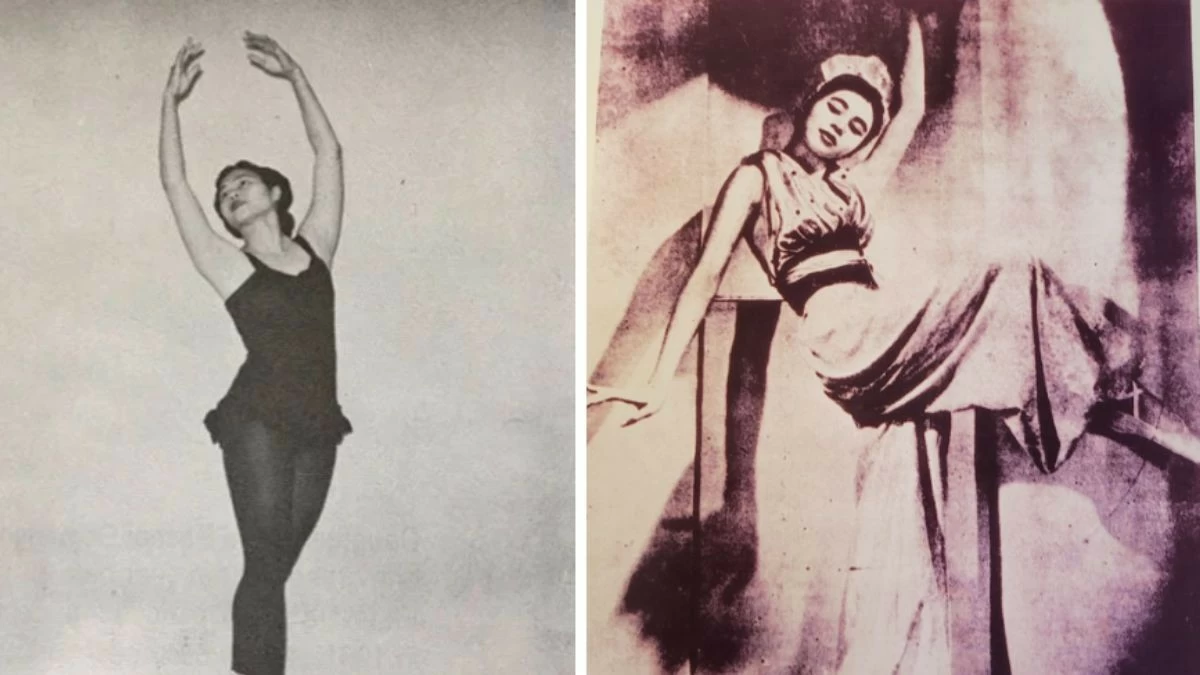
A young Leonor continued with her ballet lessons while completing her collegiate degree. (Photo: The Filipinescas Story: 1960-1970)
Words by Devi de Veyra
Conferred the National Artist Award for Dance in 1976, Leonor Orosa Goquingco did not live to see a sustained interest in her works, unlike most other awardees, especially those from the field of visual arts. Instead, Leonor saw her iconic ballet productions fade from the public consciousness, as she herself lamented in an article by Virgilio A. Reyes Jr.:
“I envy my foreign counterparts—Bournonville of Copenhagen, Fokine and Petipa of Moscow, Balanchine of New York, Ashton of London—because even after their retirement, even after their death, their works are kept alive through continuous performance… But what steps are being taken to preserve choreographies created in the Philippines? Where are the dance-dramas I created and which won me the title of National Artist? Nowhere to be seen.”
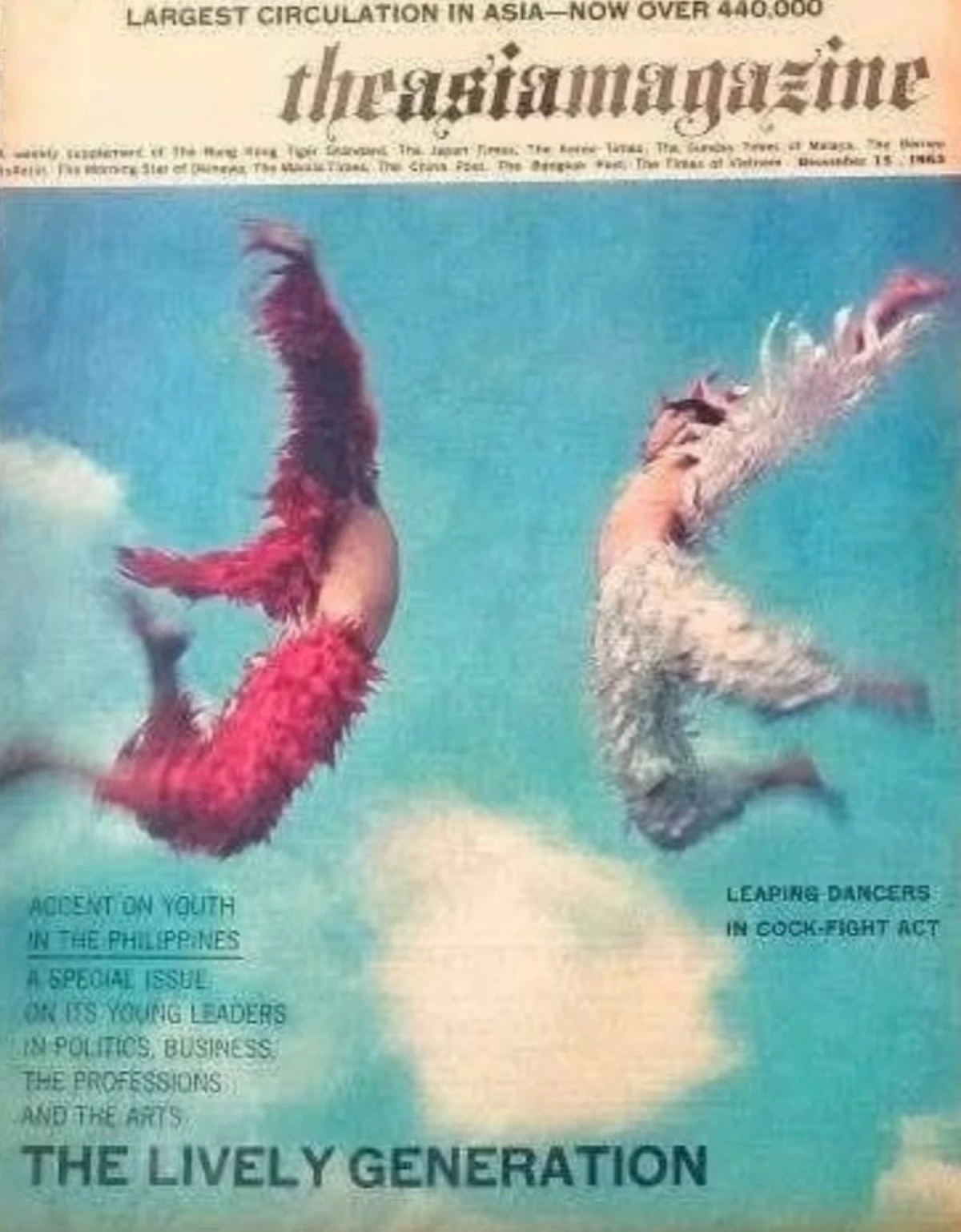
Two dancers (including Edru Abraham, right), as fighting cocks in Leonor Orosa Goquingco’s epic Filipinescas ballet production. (Photo: The Asia Magazine)
Her longing did not stem from vanity, but from a profound nationalistic pride that ran deep through her work as a dancer, choreographer, and critic. Throughout her lifetime, she boldly marched into uncharted artistic terrains to craft a singular style grounded in tradition yet driven by a modernist vision.
Leonor’s extraordinary talent was apparent early on, as a girl growing up in various parts of the country, dancing intuitively to the sounds of nature around her.
In a National Commission for Culture and the Arts interview, Prof. Basilio Esteban Villaruz (Professor Emeritus, UP College of Music, artistic director UP Dance Company) saw this as an advantage: “This is the gift of the probinsyano. That the people who grew up in the capital don’t always have. It is that orientation that gives her work particular uniqueness and individuality.”
Formal lessons began at the age of 12 in Bacolod, sparked by a performance by the Russian ballerina, Olga Dontsoff. Ballet lessons would continue in Manila, where she studied for two years at the Philippine Women’s University, before graduating summa cum laude with a degree in education at St. Scholastica’s College. Yet, she didn’t choose to be a teacher, answering instead the siren call of dance to express her artistry through movement.
Leonor had several suitors, including H.R. Ocampo, before marrying Benjamin “Ben” Goquingco Sr.. In Ben she saw an ideal partner, a diligent man who could provide a life she was accustomed to, as the daughter of two doctors descendent from prominent Batangas families, and who could support her passion for dance.
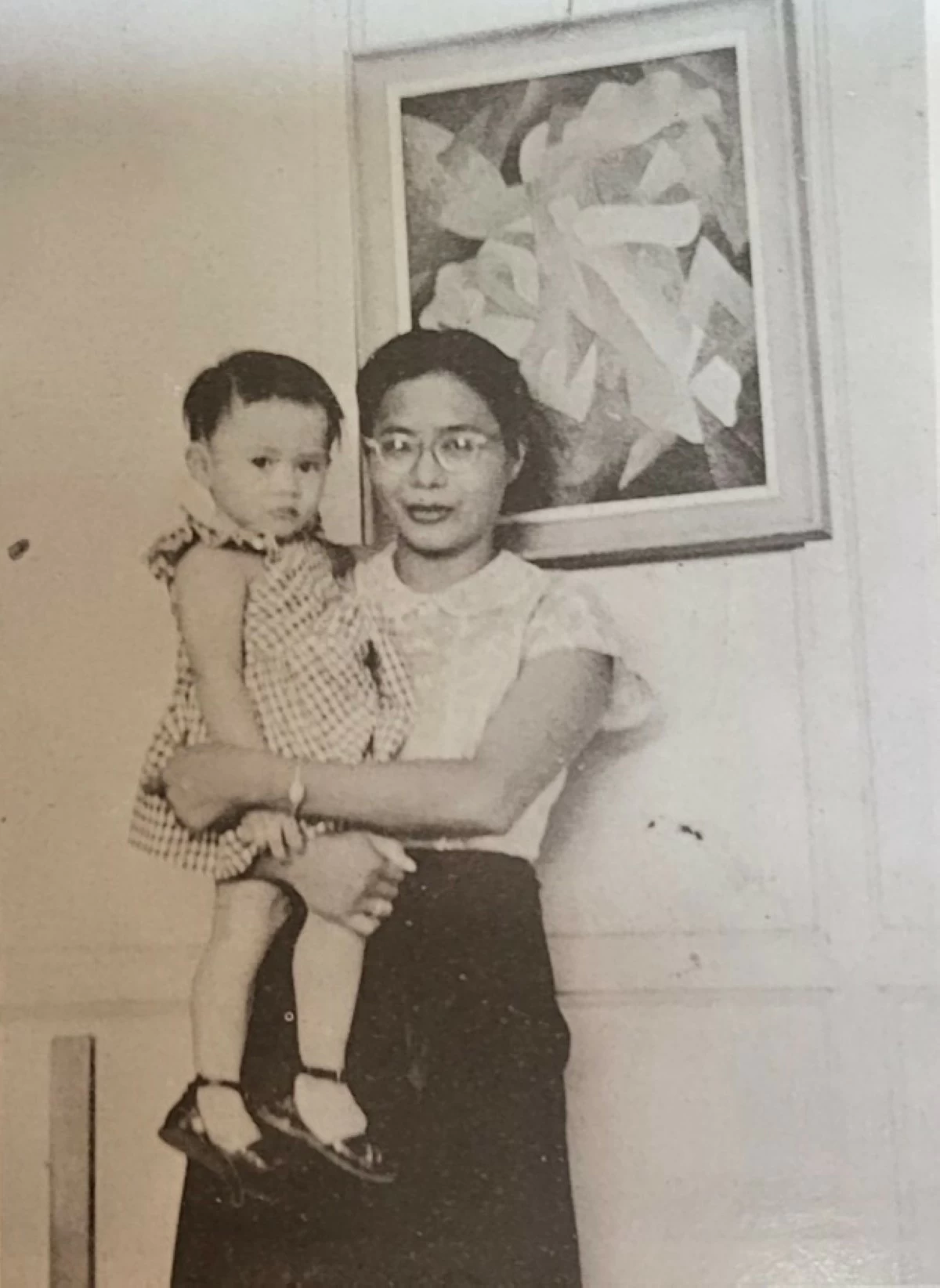
A young Leonor continued with her ballet lessons while completing her collegiate degree. (Photo: The Filipinescas Story: 1960-1970)
“She said one of my criteria for getting married is, ‘Can he support what I want?,’” recalls Leonor’s son, Benjamin “Benjie” Goquingco Jr. “And she saw that he was very hardworking, so she thought ‘This is the guy for me.’”
Ben proved to be her ultimate collaborator, even selling the couple’s Manila Golf Club shares to finance her overseas dance tours. Yet, even with three children, Leonor’s ultimate devotion belonged to the stage.
“As a mother, she left us mostly to our devices because she was busy with her Filipinescas and all her artistic endeavors,” Benjie candidly shares. “Even when we’re already sleeping, she would knock on our doors. Ano na yan ha, mga 2AM in the morning, 3AM. She would ask us, ‘I tried this step … does it look okay?’ Hindi siya makatulog when she has a bee in her bonnet. She would ask our opinion about her steps, about her plans and artistic direction.”
Unsurprisingly, her last “bilin” would still be about dance, leaving the somber charge with Benjie. “‘Can you recreate Filipinescas for me?,’” Benjie recalls her asking. To fund the massive undertaking, she gave her son permission to sell a collection of paintings that held deep sentimental value—the works of fellow National Artist H.R. Ocampo. “That’s why I’m unloading them,” says Benjie. “Sad to say, but it's necessary. That's what my mom wants.”
At Salcedo Auctions’ Finer Pursuits sale last June 6, two of H.R.’s paintings were put on the auction block. In two strikes of the gavel, Leonor’s final wish moved closer to fruition: H.R. 's mother and child abstraction, “53-A”, closed at P7,592,000. His earlier work, “Arabesque,” would soar even higher, with a final price of P9,928,000.
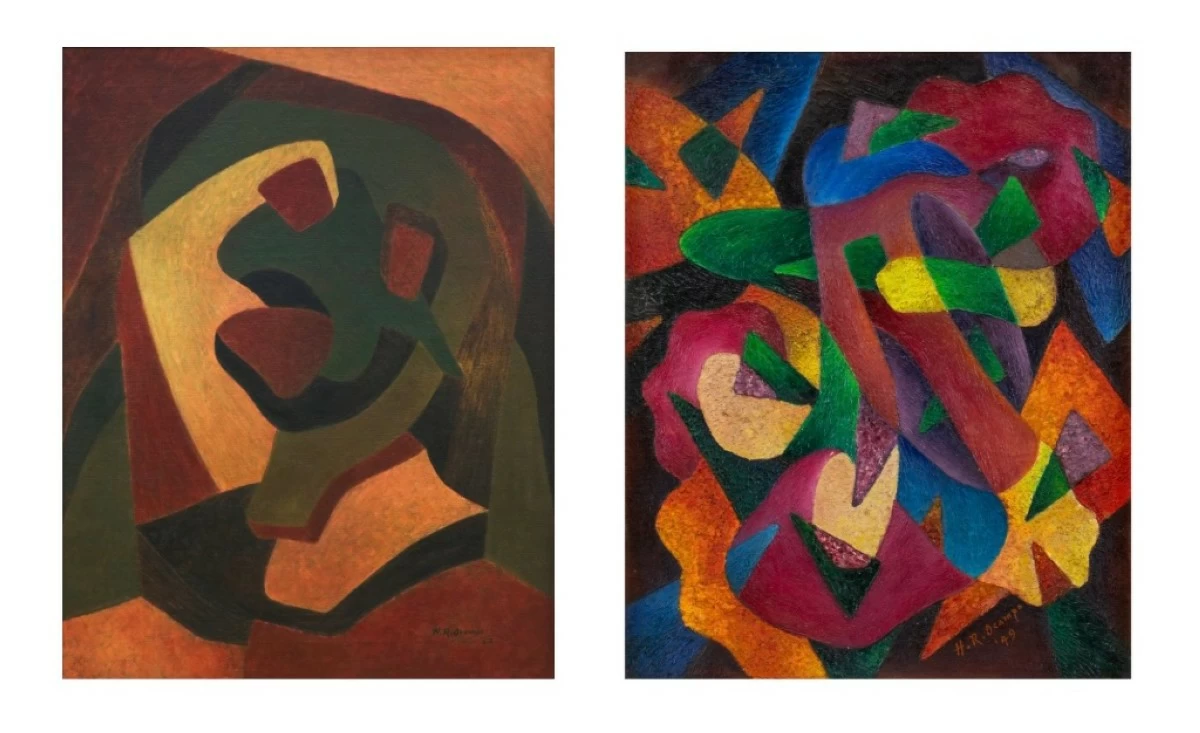
At Salcedo Auctions June 6 sale, H.R. Ocampo’s “A-53” (mother and child), left, and “Arabesque” (left) closed at P7,592,000 and P9,928,000, respectively. (Photo: Salcedo Auctions)
Prior to the auction, Benjie produced an excerpt from Filipinescas at Salcedo Auctions. To the audience in attendance, it became clear why Leonor chose to revive Filipinescas - a ballet that completely embodied her vision. Widely regarded as her magnum opus, the ballet wove together folk dances, mythology, ritual, music, and even sporting traditions from across the archipelago, transforming them through her modernist imagination into a sweeping celebration of Filipino identity.
“I was awed by how it was presented,” dancer-choreographer Edru Abraham says, recalling his reaction upon watching Filipinescas. “That was 1962 or ‘63, the first showing of Filipinescas in Manila, in the wake of a critically-acclaimed European tour. I was stunned.”
Abraham, who refers to Leonor as his "art mother," auditioned for her company three years later at age 18. He eventually fulfilled his dream of interpreting her choreography, famously dancing the role of the white fighting cock in the iconic sabong segment of Filipinescas.
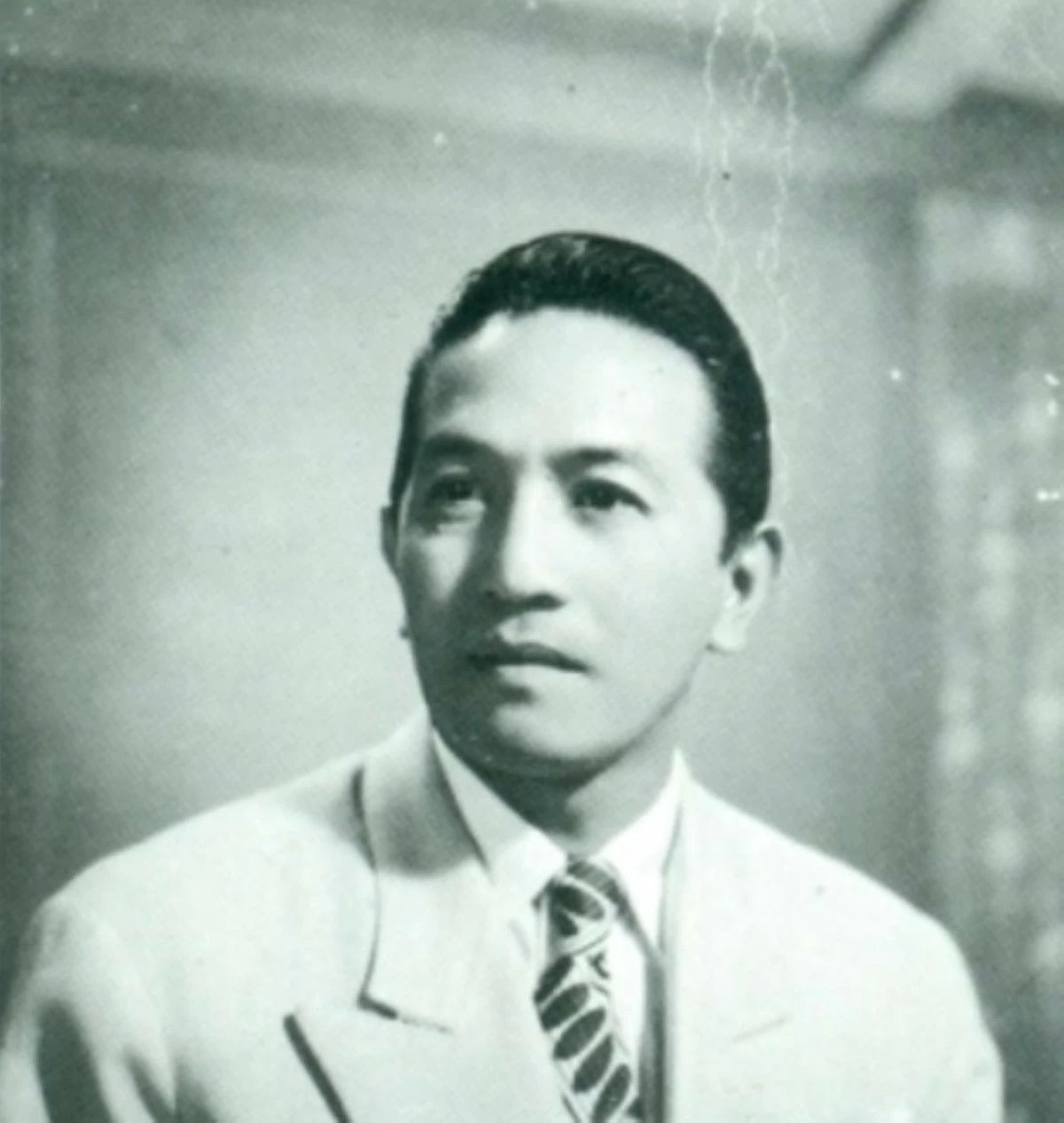
A young H.R. Ocampo.
As the next chapter of Filipinescas unfolds, it brings a poignant resolution to the real-life story of H.R. and Leonor. Though she ultimately chose Ben as her life partner—wryly noting back then that the charismatic H.R. was a ‘palikero’ who would break her heart—it is Ocampo’s artwork that is now bringing her beloved masterpiece back to life.
In a beautiful twist of fate, this revival stands as a grand, posthumous collaboration between two National Artists who became good friends—united once again, five decades after Leonor’s conferment, and 35 years after H.R.’s, to ensure Leonor’s legacy lives on for generations to come.