ADVERTISEMENT

OECD: Flood-control corruption shows weak infra safeguards in Philippines

Published Jun 12, 2026 03:55 pm
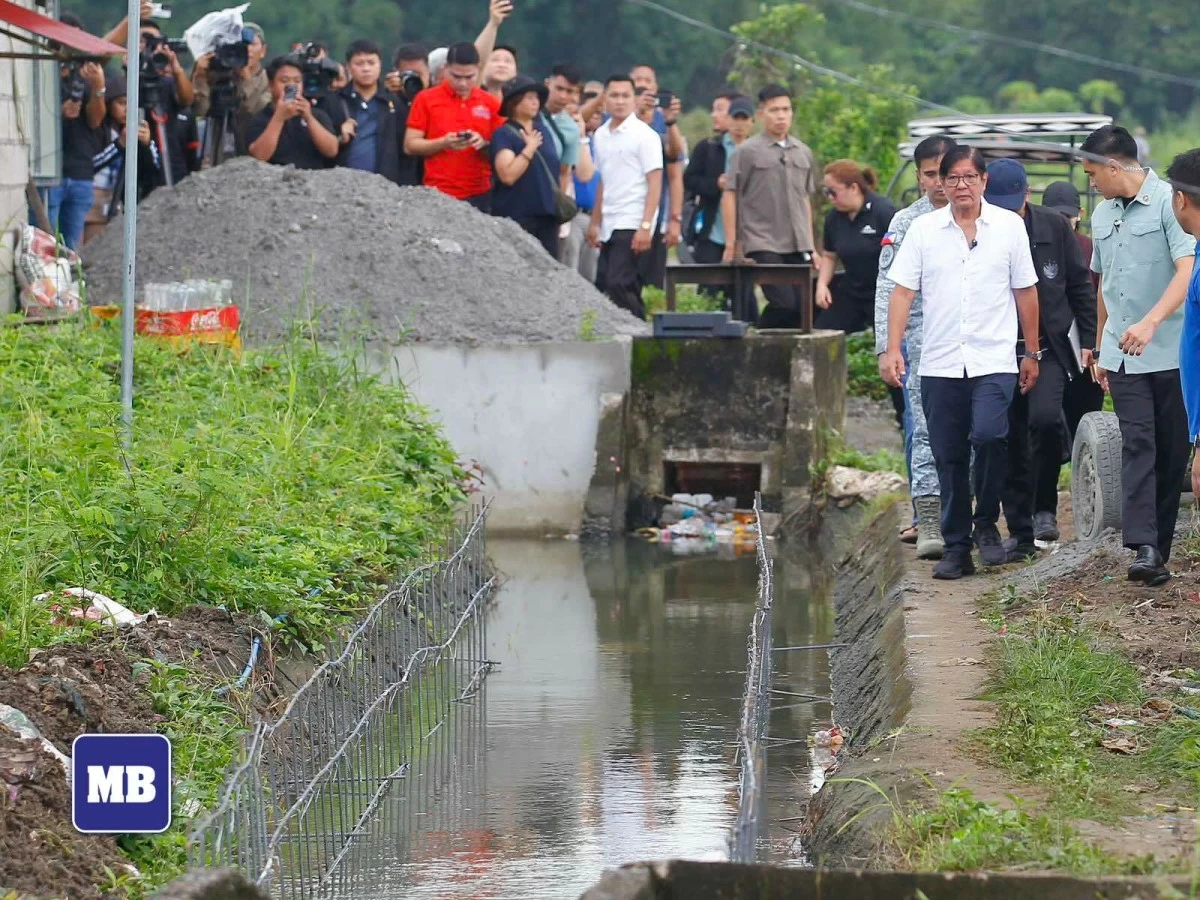
President Ferdinand R. Marcos Jr. leads the inspection of a riverwall in Barangay Piel, Baliuag, Bulacan which was tagged as a 'ghost project.' (Mark Balmores)

The Organization for Economic Cooperation and Development (OECD) has flagged corruption as a major risk to Philippine infrastructure delivery, warning that the multibillion-peso flood-control corruption scandal show that current accountability safeguards remain insufficient to prevent the misuse of public funds.

In its report titled “Accelerating Sustainable Infrastructure Investments: Assessing Policies for Planning, Delivery and Financing in Central and Southeast Asia” published on Friday, June 12, the Paris-based OECD said procurement weaknesses continue to undermine infrastructure development in the Philippines despite existing legal frameworks and reform initiatives.

“Corruption remains a major risk in infrastructure delivery” in the country, OECD said, citing persistent procurement vulnerabilities despite measures such as the Integrity Initiative and online blacklisting.

OECD said anti-corruption clauses should be embedded in public procurement and public-private partnership (PPP) contracts, while transparency mechanisms should be expanded to strengthen oversight over infrastructure projects.

It said recent high-profile scandals involving infrastructure rollout, particularly flood-control projects, showed that existing accountability mechanisms were not enough to prevent the improper use of public funds.

OECD devoted a section of its Philippines chapter to flood-control governance failures, citing reports in a University of the Philippines Center for Integrative and Development Studies (UP CIDS) policy brief on irregularities affecting projects worth more than ₱545 billion, or about $9.5 billion, since 2022.

According to OECD, UP CIDS reported that a significant share of contracts had been awarded to a small number of firms, while some projects were found to be non-existent or poorly executed.

The report also cited estimates that corruption in flood-control spending may have cost the government ₱42 billion to ₱118 billion, or $700 million to $2 billion, a year.

OECD said the case showed how corruption and mismanagement could weaken climate resilience while wasting scarce public funds in a country highly exposed to climate-related flooding.

To address these risks, OECD said the Philippines should strengthen procurement transparency, independent audits, competitive bidding, and project-level monitoring.

It also recommended publishing contract data and linking budget releases to verified project completion to help protect public resources as well as ensure that infrastructure investments deliver actual resilience and development outcomes.

OECD said public procurement, PPPs, and state-owned enterprises (SOEs), or locally known as government-owned and/or controlled -corporations (GOCCs), should “lead by example” in promoting responsible business conduct (RBC) in infrastructure.

While the Government Procurement Reform Act (GPRA) already includes RBC-related provisions, OECD said bidding documents still lack references to climate resilience and broader RBC risks.

The report also noted that the PPP Code mandates environmental and social safeguards, but gaps remain in standardized procedures as well as the capacity of local government units (LGUs) to implement them.

According to OECD, GOCCs, which committed $7.5 billion to infrastructure in 2021, should expand governance frameworks to include risk-based due diligence and stakeholder engagement reporting.

OECD also recommended that the Philippines adopt a national action plan on RBC or integrate such principles into its business and human rights framework.

It said RBC indicators, including environmental and social impact assessment completion, free, prior, and informed consent compliance, as well as grievance mechanisms, should be embedded in the Philippine Development Plan (PDP) results matrix to support systematic monitoring.

The report also said the former National Economic and Development Authority (NEDA), now the Department of Economy, Planning, and Development (DEPDev), should issue national guidance on meaningful stakeholder engagement as well as require operational grievance mechanisms in all infrastructure contracts.

OECD added that environmental safeguards should move beyond procedural compliance toward proactive risk management, with environmental impact statement systems and environmental clearance certificates integrating climate adaptation as well as nature-based solutions across project life cycles.

These recommendations were made as the Philippines continues to pursue its big-ticket infrastructure pipeline under the Marcos Jr. administration’s flagship Build Better More (BBM) program while facing rising climate risks, especially from flooding, typhoons, and other extreme weather events.

OECD said the Philippines has strong foundations in long-term infrastructure planning, affordability assessments, project benchmarks, and use of climate data. However, it noted that the country still lacks a framework to evaluate procurement against green and social objectives.

The report said improving governance, procurement, transparency, and accountability would be crucial to ensuring that infrastructure spending supports climate resilience, attracts responsible investment, as well as avoids the diversion of public resources away from projects that communities actually need.

Related Tags

Organization for Economic Cooperation and Development (OECD) Build Better More (BBM) flood control corruption flood control scandal public-private partnership (PPP) Department of Economy Planning and Development (DEPDev) GOCC Government Procurement Reform Act (GPRA) local government units (LGUs) Philippine Development Plan (PDP) 2023-2028
ADVERTISEMENT
.most-popular .layout-ratio{ padding-bottom: 79.13%; } @media (min-width: 768px) and (max-width: 1024px) { .widget-title { font-size: 15px !important; } }

{{ articles_filter_1561_widget.title }}

.most-popular .layout-ratio{ padding-bottom: 79.13%; } @media (min-width: 768px) and (max-width: 1024px) { .widget-title { font-size: 15px !important; } }

{{ articles_filter_1562_widget.title }}

.most-popular .layout-ratio{ padding-bottom: 79.13%; } @media (min-width: 768px) and (max-width: 1024px) { .widget-title { font-size: 15px !important; } }

{{ articles_filter_1563_widget.title }}

{{ articles_filter_1564_widget.title }}

.mb-article-details { position: relative; } .mb-article-details .article-body-preview, .mb-article-details .article-body-summary{ font-size: 17px; line-height: 30px; font-family: "Libre Caslon Text", serif; color: #000; } .mb-article-details .article-body-preview iframe , .mb-article-details .article-body-summary iframe{ width: 100%; margin: auto; } .read-more-background { background: linear-gradient(180deg, color(display-p3 1.000 1.000 1.000 / 0) 13.75%, color(display-p3 1.000 1.000 1.000 / 0.8) 30.79%, color(display-p3 1.000 1.000 1.000) 72.5%); position: absolute; height: 200px; width: 100%; bottom: 0; display: flex; justify-content: center; align-items: center; padding: 0; } .read-more-background a{ color: #000; } .read-more-btn { padding: 17px 45px; font-family: Inter; font-weight: 700; font-size: 18px; line-height: 16px; text-align: center; vertical-align: middle; border: 1px solid black; background-color: white; } .hidden { display: none; }
function initializeAllSwipers() { // Get all hidden inputs with cms_article_id document.querySelectorAll('[id^="cms_article_id_"]').forEach(function (input) { const cmsArticleId = input.value; const articleSelector = '#article-' + cmsArticleId + ' .body_images'; const swiperElement = document.querySelector(articleSelector); if (swiperElement && !swiperElement.classList.contains('swiper-initialized')) { new Swiper(articleSelector, { loop: true, pagination: false, navigation: { nextEl: '#article-' + cmsArticleId + ' .swiper-button-next', prevEl: '#article-' + cmsArticleId + ' .swiper-button-prev', }, }); } }); } setTimeout(initializeAllSwipers, 3000); const intersectionObserver = new IntersectionObserver( (entries) => { entries.forEach((entry) => { if (entry.isIntersecting) { const newUrl = entry.target.getAttribute("data-url"); if (newUrl) { history.pushState(null, null, newUrl); let article = entry.target; // Extract metadata const author = article.querySelector('.author-section').textContent.replace('By', '').trim(); const section = article.querySelector('.section-info ').textContent.replace(' ', ' '); const title = article.querySelector('.article-title h1').textContent; // Parse URL for Chartbeat path format const parsedUrl = new URL(newUrl, window.location.origin); const cleanUrl = parsedUrl.host + parsedUrl.pathname; // Update Chartbeat configuration if (typeof window._sf_async_config !== 'undefined') { window._sf_async_config.path = cleanUrl; window._sf_async_config.sections = section; window._sf_async_config.authors = author; } // Track virtual page view with Chartbeat if (typeof pSUPERFLY !== 'undefined' && typeof pSUPERFLY.virtualPage === 'function') { try { pSUPERFLY.virtualPage({ path: cleanUrl, title: title, sections: section, authors: author }); } catch (error) { console.error('ping error', error); } } // Optional: Update document title if (title && title !== document.title) { document.title = title; } } } }); }, { threshold: 0.1 } ); function showArticleBody(button) { const article = button.closest("article"); const summary = article.querySelector(".article-body-summary"); const body = article.querySelector(".article-body-preview"); const readMoreSection = article.querySelector(".read-more-background"); // Hide summary and read-more section summary.style.display = "none"; readMoreSection.style.display = "none"; // Show the full article body body.classList.remove("hidden"); } document.addEventListener("DOMContentLoaded", () => { let loadCount = 0; // Track how many times articles are loaded const offset = [1, 2, 3, 4, 5, 6, 7, 8, 9, 10]; // Offset values const currentUrl = window.location.pathname.substring(1); let isLoading = false; // Prevent multiple calls if (!currentUrl) { console.log("Current URL is invalid."); return; } const sentinel = document.getElementById("load-more-sentinel"); if (!sentinel) { console.log("Sentinel element not found."); return; } function isSentinelVisible() { const rect = sentinel.getBoundingClientRect(); return ( rect.top < window.innerHeight && rect.bottom >= 0 ); } function onScroll() { if (isLoading) return; if (isSentinelVisible()) { if (loadCount >= offset.length) { console.log("Maximum load attempts reached."); window.removeEventListener("scroll", onScroll); return; } isLoading = true; const currentOffset = offset[loadCount]; window.loadMoreItems().then(() => { let article = document.querySelector('#widget_1690 > div:nth-last-of-type(2) article'); intersectionObserver.observe(article) loadCount++; }).catch(error => { console.error("Error loading more items:", error); }).finally(() => { isLoading = false; }); } } window.addEventListener("scroll", onScroll); });

Sign up by email to receive news.