






Manila Bulletin
 Philippines
National
NDRRMC: Mindanao quake death toll hits 55; 13 areas under state of calamity
Philippines
National
NDRRMC: Mindanao quake death toll hits 55; 13 areas under state of calamity
Philippines
National
NDRRMC: Mindanao quake death toll hits 55; 13 areas under state of calamity
NDRRMC: Mindanao quake death toll hits 55; 13 areas under state of calamity
Published Jun 12, 2026 10:55 am


At A Glance
- The death toll from the June 8 magnitude 7.8 earthquake in Maasim, Sarangani has risen to 55, as 13 localities in Southern Mindanao were placed under a state of calamity amid widespread damage and displacement.
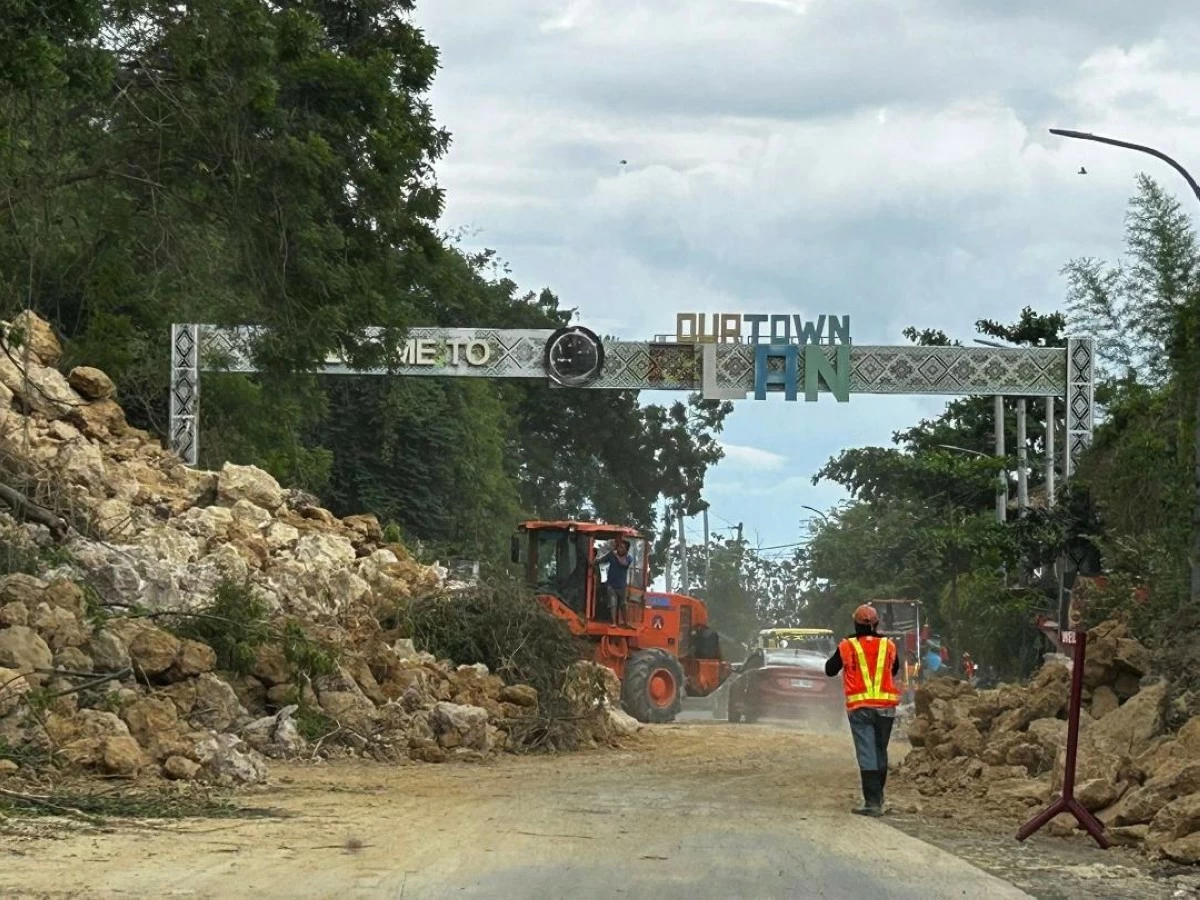
ROAD clearing operations in Glan, Sarangani following the earthquake. (OCD-12)
The death toll from the magnitude 7.8 earthquake that struck Maasim, Sarangani on June 8 has climbed to 55 while 13 cities and municipalities in Southern Mindanao have been placed under a state of calamity as authorities grapple with widespread destruction, disrupted transport links, and thousands of displaced families.
The National Disaster Risk Reduction and Management Council (NDRRMC) reported Friday, June 12, that 1,120 people were injured and 38 remained missing following the powerful quake, which affected 392,806 individuals or 86,135 families across 352 barangays in the Zamboanga Peninsula (Region 9), Davao (Region 11), Soccsksargen (Region 12), and the Bangsamoro Autonomous Region in Muslim Mindanao (BARMM).
The state of calamity declarations now cover the entire province of Davao Occidental with five municipalities, namely the capital of Malita, Don Marcelino, Jose Abad Santos, Santa Maria, and Sarangani in Region 11; and the entire province of Sarangani (different from Sarangani town in Davao Occidental) with seven municipalities including the quake's epicenter in Maasim, capital town of Alabel, Glan, Kiamba, Maitum, Malapatan, and Malungon; as well as General Santos City in South Cotabato, all in Region 12.
Rescue and relief operations continued in areas where roads, bridges, ports, and other critical infrastructure sustained heavy damage. A total of 93 road sections and 28 bridges were affected in Regions 11 and 12 while 24 roads and seven bridges remain impassable.
Office of Civil Defense (OCD) deputy administrator for administration Assistant Secretary Bernardo Rafaelito Alejandro IV said airports and ports remained among the major logistical concerns, complicating relief efforts particularly in Glan, Sarangani and parts of Davao Occidental.
“Our airport remains closed and non-operational to commercial flights up to now. However, military and humanitarian assistance flights can still land at General Santos City Airport,” Alejandro said.
“We have major ports that remain non-operational, such as the port of Glan. That is why we are using helicopters and sea vessels from the Coast Guard and the Philippine Navy to deliver assistance,” he added.
Alejandro said the Department of Public Works and Highways had reopened major road networks leading to Glan on a limited basis.
“Light vehicles can now pass through. There are still challenges in bringing additional assistance to the area. We are using all available sea and air assets to reach Glan and even Jose Abad Santos municipality in Davao Occidental,” he said.
Evacuees aided
The NDRRMC reported that out of more than 392,000 affected individuals, there were 2,409 families or 10,783 individuals staying in 31 evacuation centers while another 30,265 people were receiving aid outside evacuation facilities.
“All of them are being provided assistance by the local government units and, of course, supported by national government agencies such as the DSWD,” he said.
Government data showed that 19,095 houses were damaged by the quake. Of the total, 15,610 were partially damaged and 3,485 were totally destroyed.
Power outages also affected 48 cities and municipalities. Electricity has been restored in seven localities in Region 11 while 41 areas remain without power. Communication services were also restored in 19 of the 20 affected localities.
Meanwhile, the Department of Social Welfare and Development and partner agencies have so far provided P30.04 million worth of food packs, non-food items, and financial assistance.
Of the 16,140 families identified as needing aid, there were 14,252 families or 88.3 percent who have already received assistance.
“In terms of assistance, it has already reached P30 million worth of food and non-food items and financial assistance provided by the DSWD. The Department of Health is also continuously providing medical support,” Alejandro said.
The government has also dispatched 22,416 additional food packs to Regions 11 and 12.
Search, rescue, retrieval
Search, rescue, and retrieval operations remain underway in several hard-hit areas. Alejandro said 3,773 personnel from the Armed Forces of the Philippines, Philippine Coast Guard, Philippine National Police, and Bureau of Fire Protection had been deployed.
The Philippine Army's Urban Search and Rescue team worked at a collapsed supermarket in Barangay Calumpang, General Santos City, where responders searched for survivors trapped beneath debris.
Army Humanitarian Assistance and Disaster Response teams also cleared roads, distributed relief supplies, and deployed a mobile water purification system in General Santos City and nearby communities.
Meanwhile, Philippine Navy-Naval Forces Eastern Mindanao transported relief supplies to isolated communities in Sarangani and Davao Occidental.
The Philippine Air Force conducted multiple airlift and medical evacuation missions, while the Philippine Coast Guard used helicopters to deliver relief goods to Malapatan, Sarangani.
The Office of the Presidential Adviser on Peace, Reconciliation and Unity (OPAPRU) also activated its Crisis Response Team to assess the condition of former rebels and their families in affected communities.
Initial field assessments validated 23 cases involving former rebels and family members whose homes and livelihoods were severely affected by the earthquake. The agency also confirmed one former rebel who died in Sitio Faglidong in Malita, Davao Occidental, where recovery operations continue amid landslides and blocked roads.